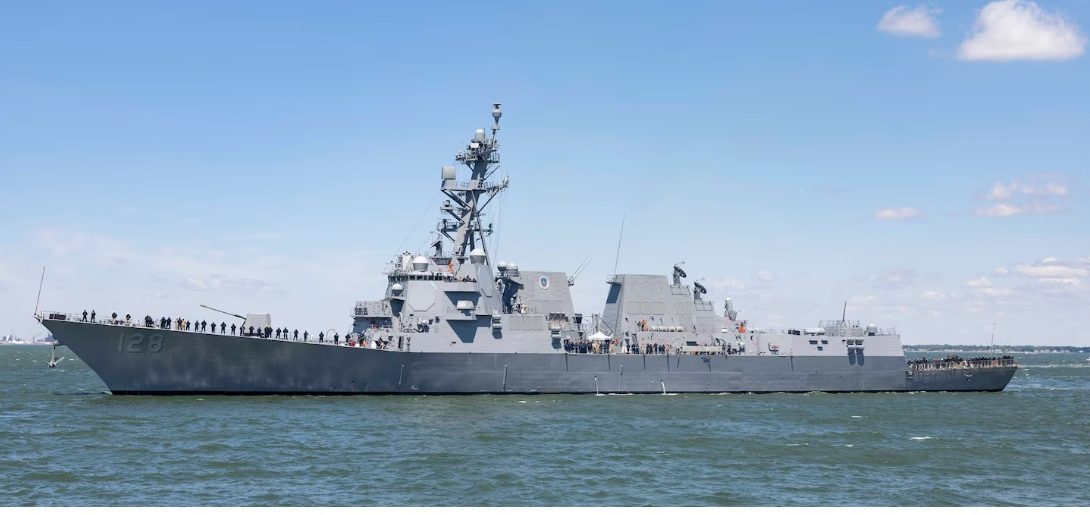
Navy League Panama Welcomed Aboard USS Ted Stevens (DDG-128): A Glimpse into the US Navy’s Newest Generation of Warships
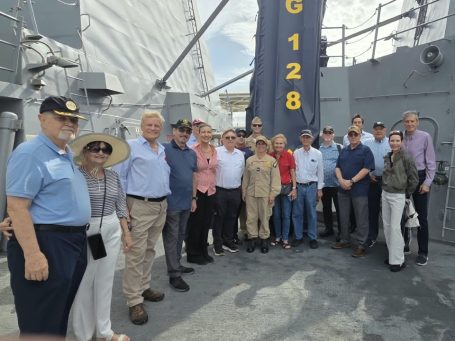
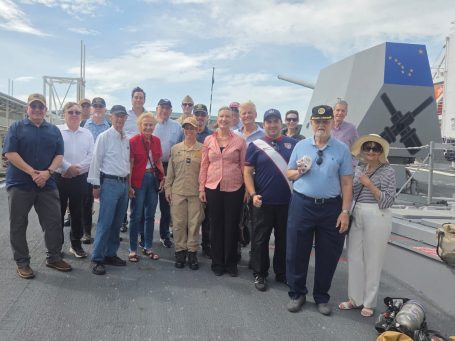
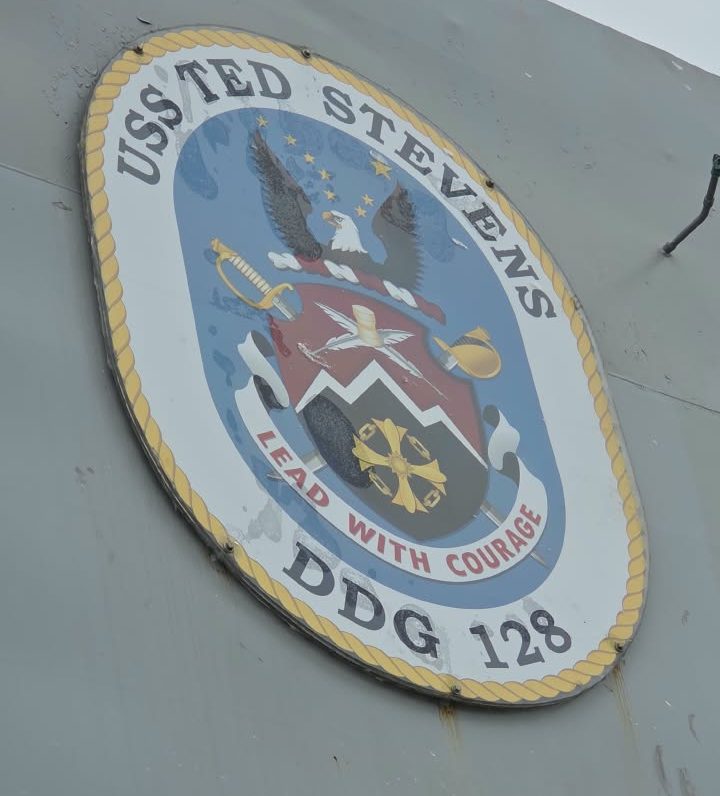
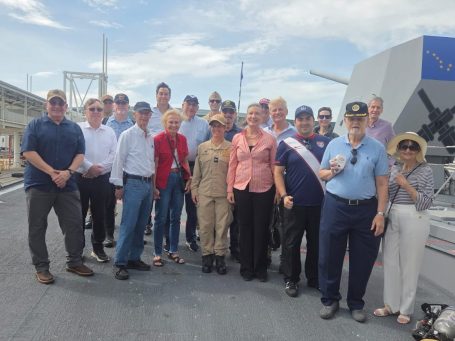
Members of the Navy League of the United States – Panama Council were recently privileged to receive an invitation aboard one of the United States Navy’s newest and most technologically advanced warships, the USS Ted Stevens (DDG-128), during her visit to Panama on 30 October 2026.
October 30, 2026
A Visit Aboard USS Ted Stevens
A Real Privilege
Commissioned less than a month earlier, on 3 October 2026, USS Ted Stevens represents the latest evolution of the highly successful Arleigh Burke-class guided-missile destroyers, incorporating advanced radar, weapons and combat management systems designed to meet the increasingly complex challenges of modern naval warfare.
For the Navy League Panama delegation, the visit was a particularly memorable occasion, bringing together former officers of the United States Navy, Royal Canadian Navy and British Royal Navy, united by their shared maritime heritage and continuing interest in naval affairs.
What made the occasion especially meaningful was that this was not a ceremonial visit to a museum ship or a vessel prepared for public display. USS Ted Stevens was an operational warship conducting her duties, making a working port call in Panama that included refuelling and essential logistical activities.
Understandably, these operational commitments restricted the areas accessible to visitors. Nevertheless, the ship’s commanding officer and crew made every effort to provide a fascinating and informative introduction to their remarkable vessel.
A New Generation of American Naval Power
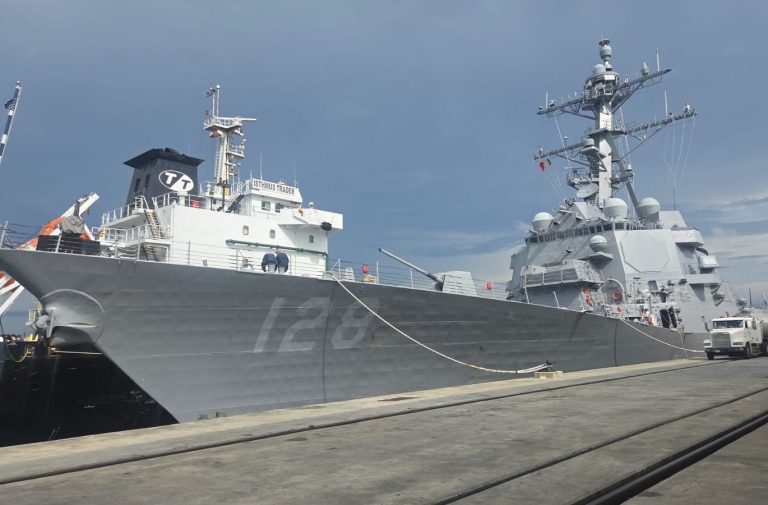
USS Ted Stevens (DDG-128) is a Flight III Arleigh Burke-class guided-missile destroyer, constructed by Huntington Ingalls Industries at its Ingalls Shipbuilding facility in Pascagoula, Mississippi.
Her construction and entry into service mark several important milestones in the continuing development of the US Navy’s surface fleet.
The ship’s keel was laid on 9 March 2022, followed by her launch in August 2023 and christening on 19 August 2023. After extensive construction, fitting-out and sea trials, she was formally delivered to the United States Navy on 29 December 2025.
On 3 October 2026, USS Ted Stevens was commissioned into active service in Whittier, Alaska, an especially appropriate location given the distinguished career of the man whose name she carries.
NavalCoverMuseum+3
The ship is named in honour of the late US Senator Ted Stevens of Alaska (1923–2010), a decorated Second World War veteran who served as a military transport pilot before embarking on a distinguished political career. Stevens represented Alaska in the United States Senate for four decades and remained a strong advocate for the US armed forces and national defence.
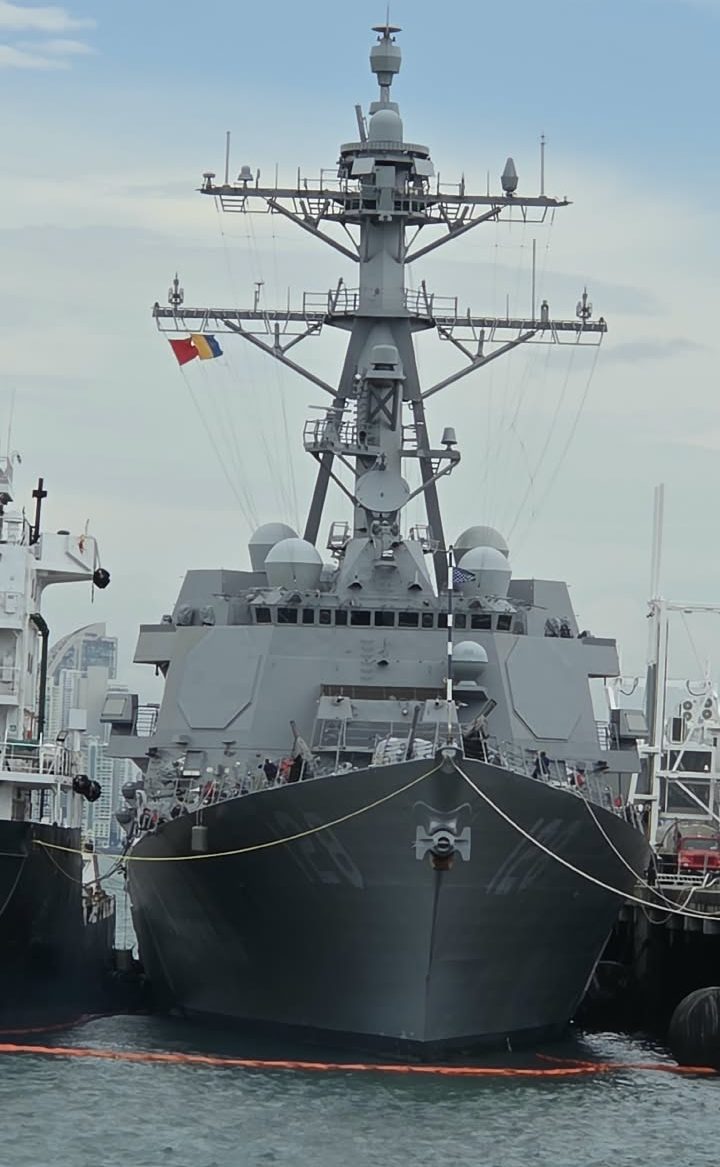
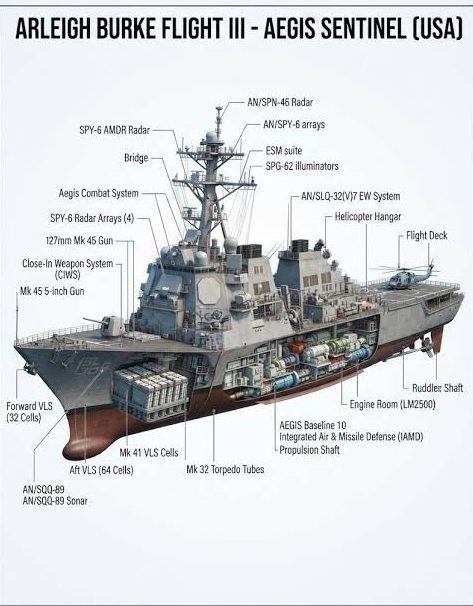
Upgraded ship
As a Flight III destroyer, DDG-128 incorporates significant improvements over earlier Arleigh Burke-class vessels, most notably the powerful AN/SPY-6(V)1 Air and Missile Defense Radar, supported by the Aegis Baseline 10 combat system.
These advancements greatly enhance the ship’s ability to detect, track and respond to multiple threats, including aircraft, cruise missiles and ballistic missiles, while retaining the flexibility to undertake anti-submarine, anti-surface and land-attack missions.
Although outwardly recognisable as an Arleigh Burke-class destroyer, USS Ted Stevens represents a substantial technological advance over her predecessors.
A Working Warship, Not a Showpiece
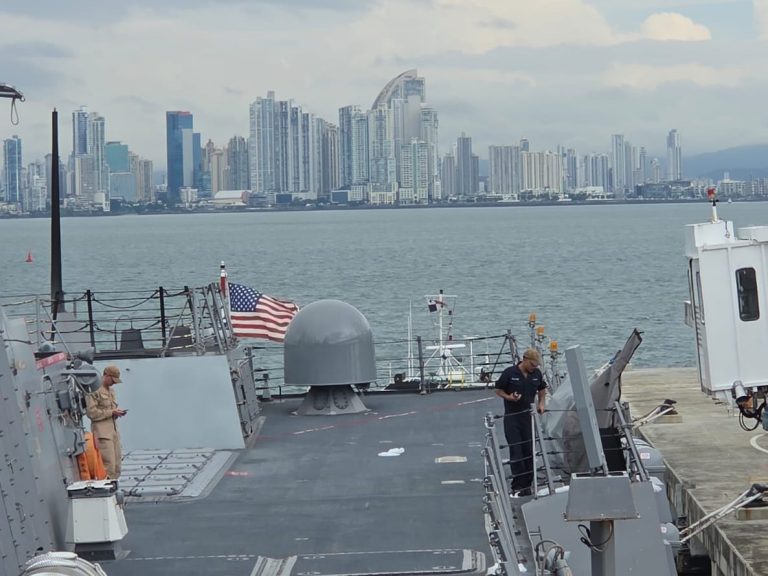
From the moment the delegation stepped aboard, it was evident that USS Ted Stevens was a fully operational fighting ship.
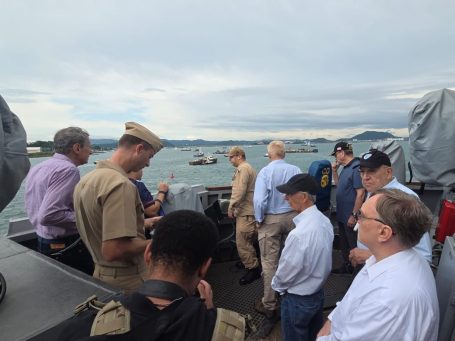
With refuelling and other shipboard duties taking place, the crew continued their normal responsibilities throughout our visit. Access was necessarily limited to selected areas, including the midships section, the forecastle, the bridge and its adjoining wings.
For the former naval officers amongst our party, this working environment was particularly familiar. Warships are never truly at rest, even alongside, and the constant demands of maintenance, replenishment, training and operational readiness remain a fact of naval life.
Despite these constraints, the visit offered an excellent opportunity to appreciate both the sophistication of the ship and the professionalism of her crew.
An Exceptional Welcome from the Commanding Officer
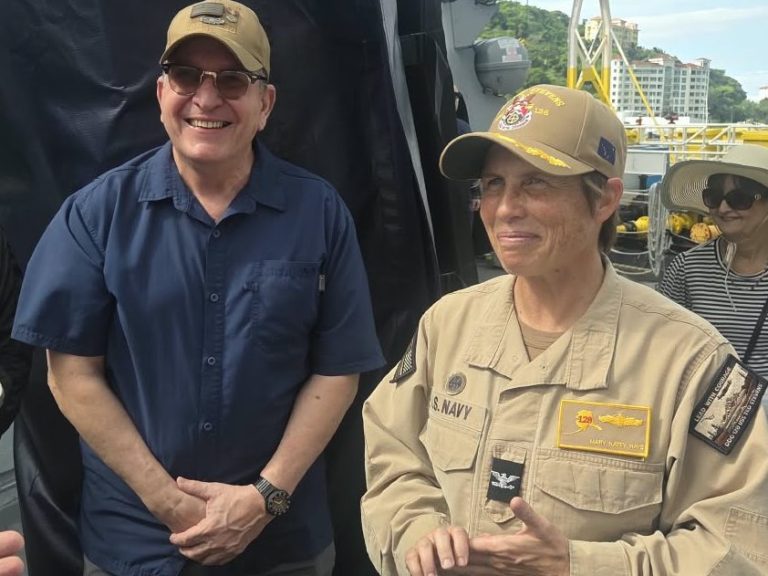
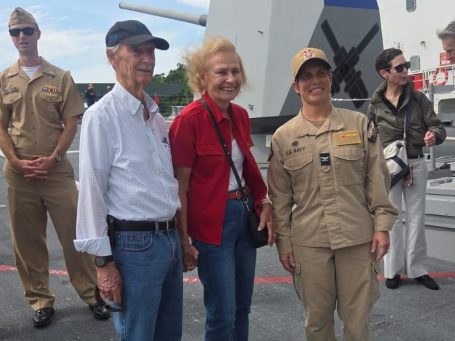
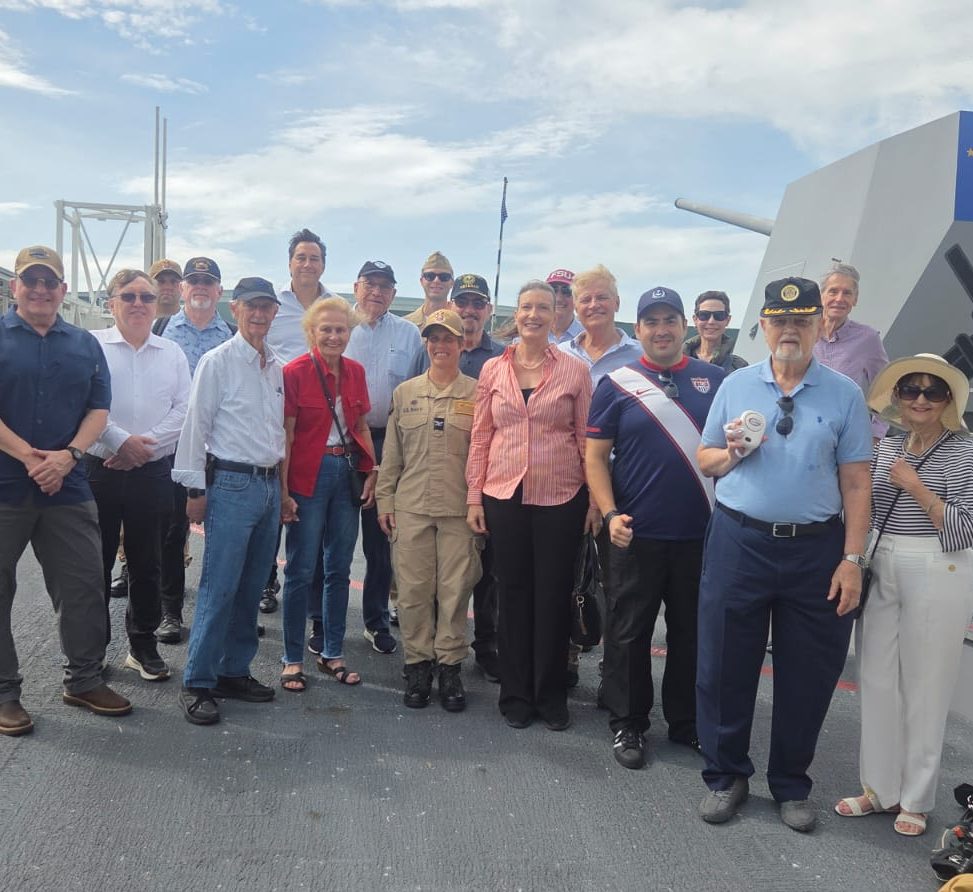
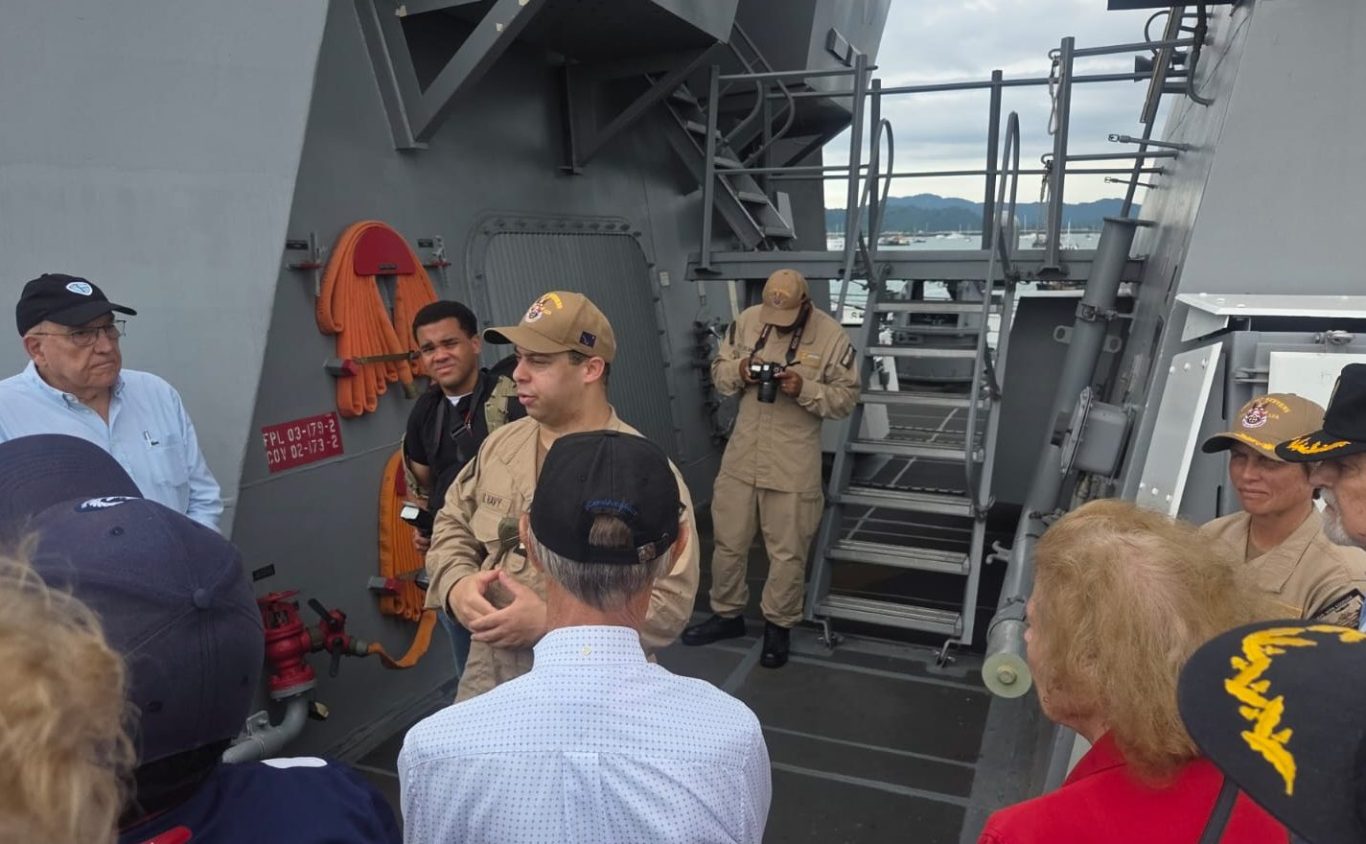
Perhaps the most appreciated aspect of the visit was the personal attention afforded to the Navy League delegation by the ship’s commanding officer, Captain Mary Hays, US Navy.
Rather than simply assigning the tour to junior members of her crew, Captain Hays personally accompanied our party, introduced the ship and explained many of her capabilities and operational features.
Throughout the visit, she generously answered our questions, discussing the vessel and her equipment with both enthusiasm and obvious professional pride.
For a commanding officer responsible for one of the US Navy’s newest destroyers, particularly during a busy operational port call, such personal attention represented a considerable commitment of time.
It was a gesture that was sincerely appreciated by everyone attending.
The opportunity for former American, Canadian and British naval officers to exchange views directly with the commanding officer of a modern US Navy warship made the occasion all the more memorable.
Captain Hays was supported by members of her ship’s company, whose knowledge and willingness to explain their respective areas of responsibility contributed greatly to the experience.
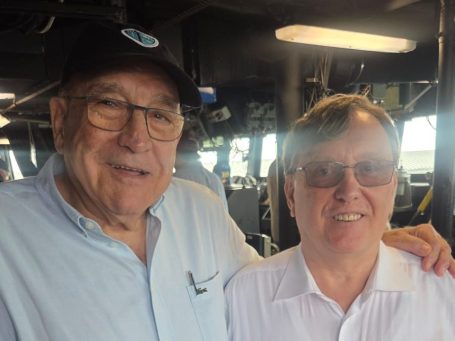
Exploring the Forecastle, Weapons and Damage Control, the bridge, and secondary weapons
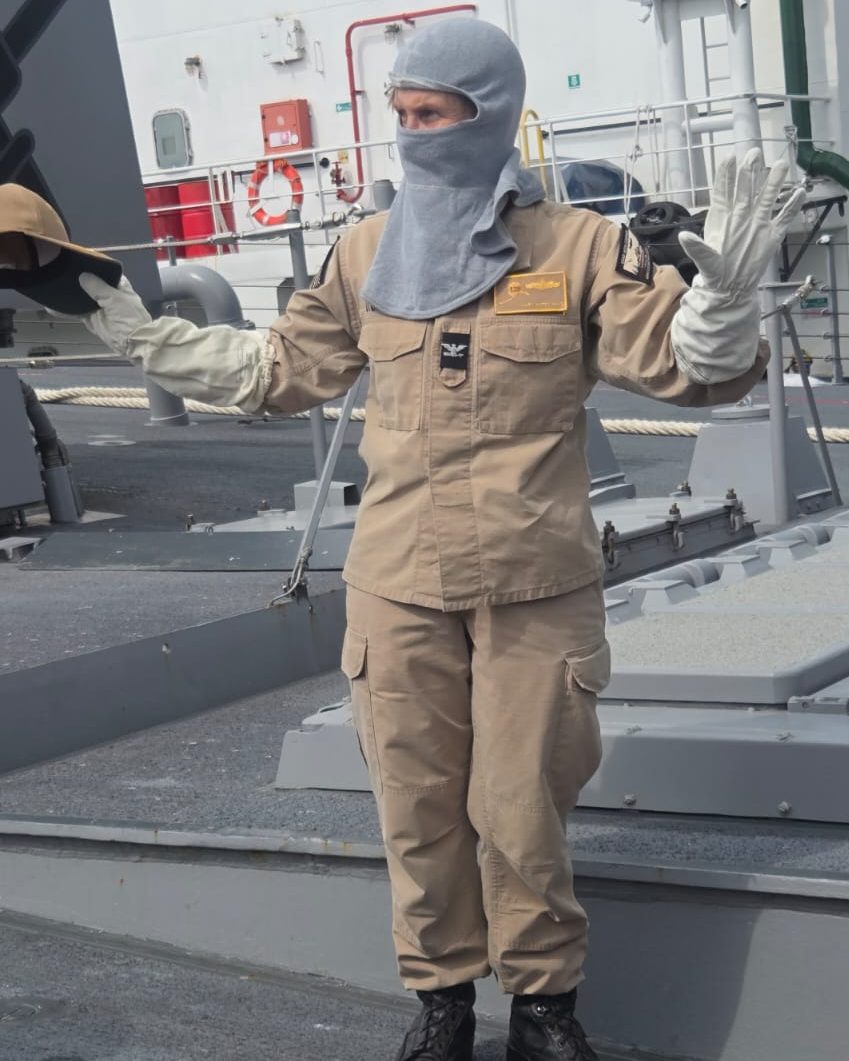
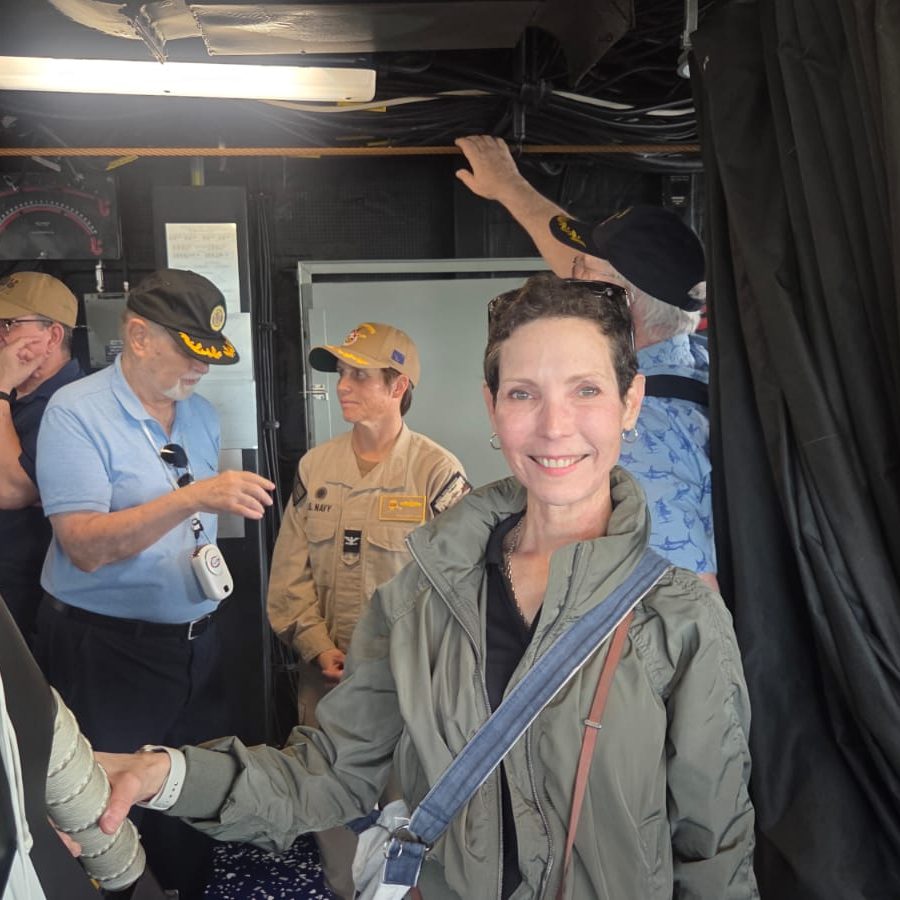
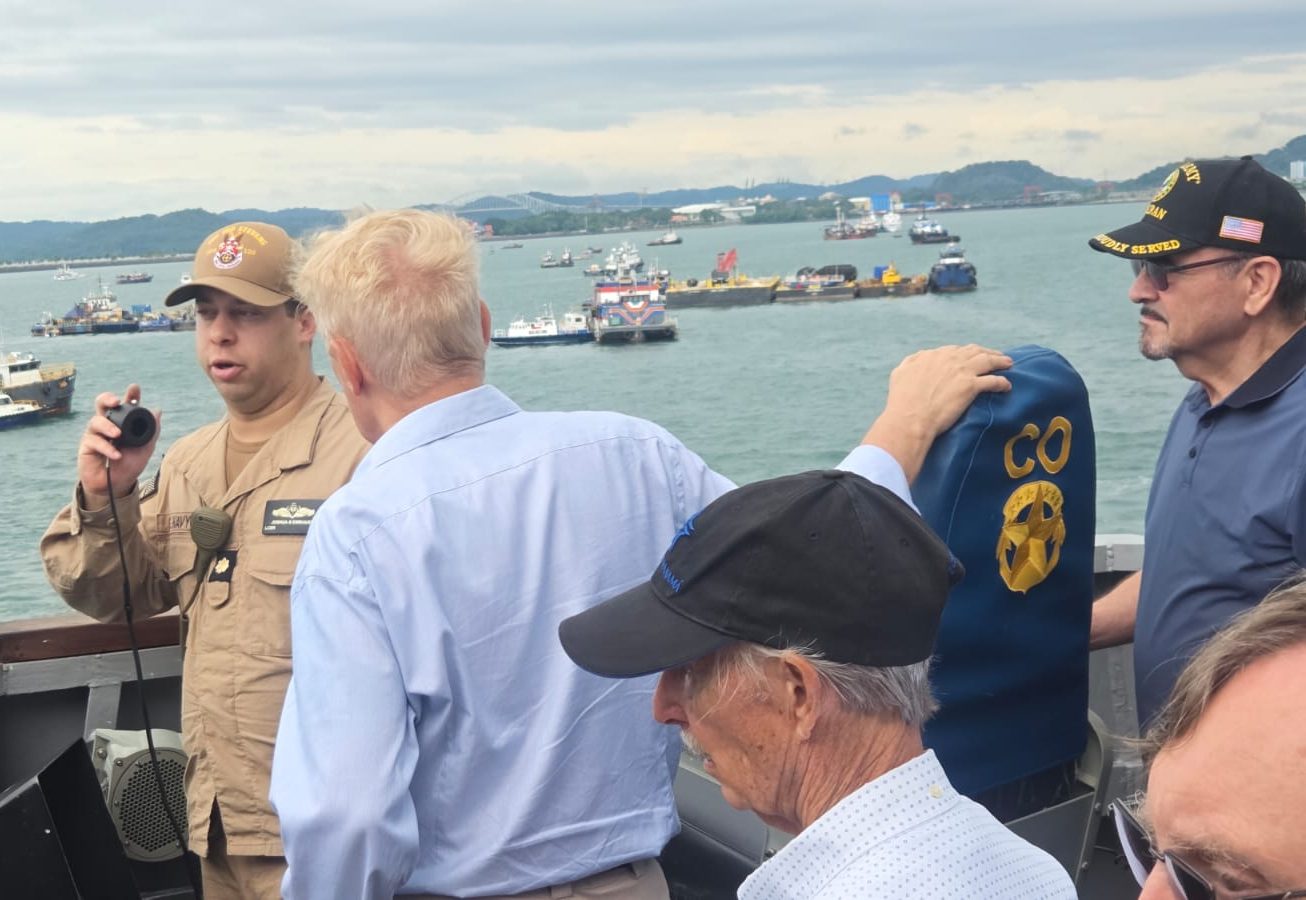
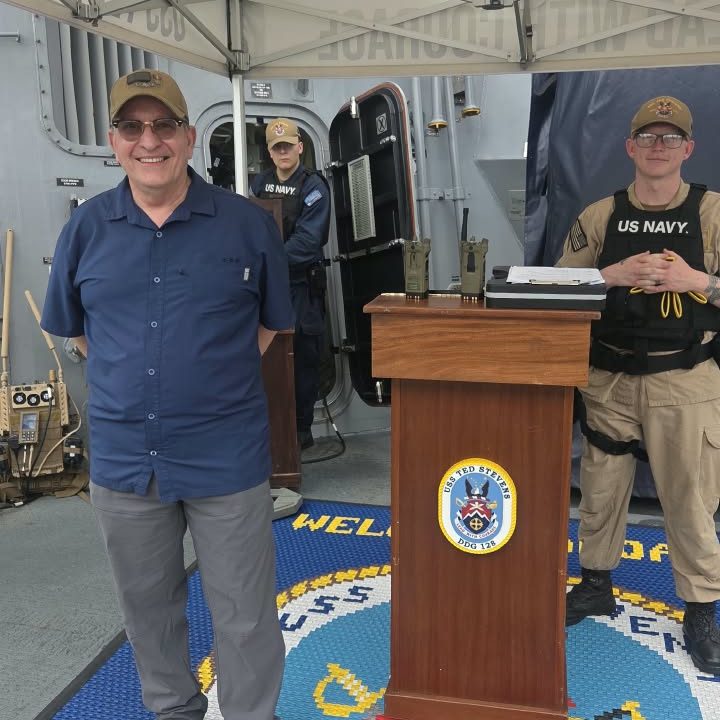
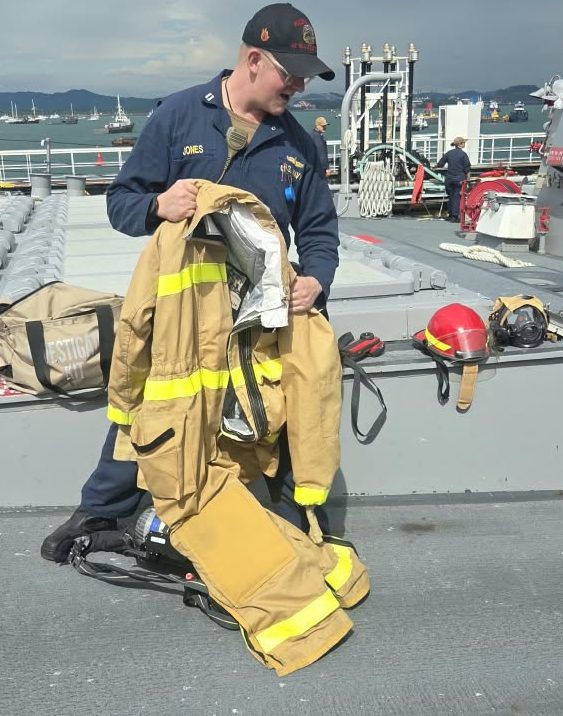
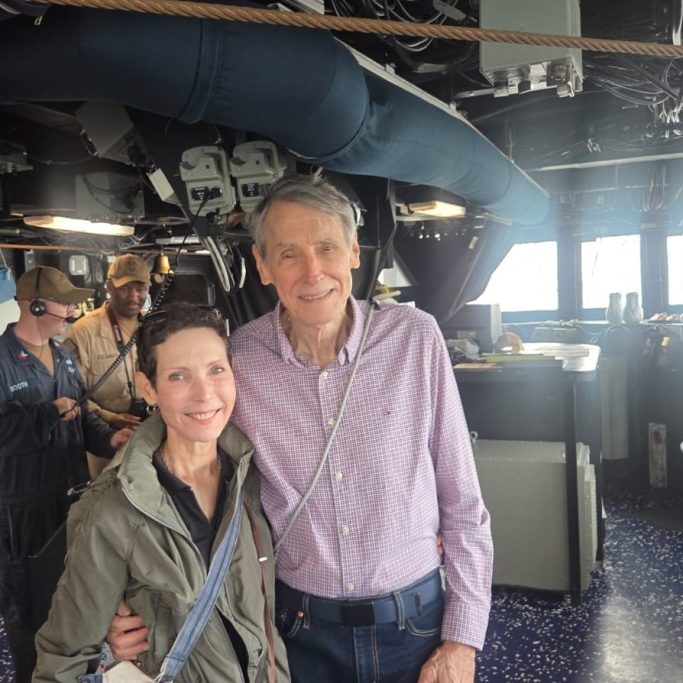
One of the highlights of the tour was our visit to the forecastle, where the crew provided a demonstration of the ship’s firefighting and damage-control equipment.
Although advanced weapons and electronics understandably attract considerable attention aboard a modern destroyer, experienced naval personnel appreciate that damage control is amongst the most essential skills of any warship’s company.
A ship's ability to survive battle damage, contain flooding, extinguish fires and maintain operational effectiveness can ultimately determine whether she survives an engagement.
The crew demonstrated equipment used in firefighting and smoke removal, explaining how sailors are trained to respond rapidly to emergencies in the confined and potentially hazardous environment of a warship.
The presentation provided a reminder that, regardless of technological advances, the safety and survivability of a naval vessel ultimately depend upon the training, teamwork and determination of her people.
Official US Southern Command photographs identify Lieutenant Andrew Jones, the ship's Damage Control Assistant, as participating alongside Captain Hays in this demonstration.
The Main Gun and Vertical Launch Missile Systems
The forecastle also offered an opportunity to examine two of the destroyer’s principal weapons systems.
Dominating the forward deck is the ship’s 5-inch (127 mm) Mk 45 naval gun, a versatile weapon capable of engaging surface targets and providing naval gunfire support to forces operating ashore.
Behind the gun are the forward cells of the Mk 41 Vertical Launching System (VLS), a defining feature of the Arleigh Burke class.
The ship’s vertical launch system can accommodate different types of missiles, according to her operational requirements, including weapons designed for air defence, ballistic-missile defence, anti-submarine warfare and land attack.
Unlike traditional missile launchers that must be mechanically trained towards a target, the vertical launch system enables missiles to be launched directly from their individual cells, providing considerable tactical flexibility.
Seeing these systems at close quarters was a reminder of just how much offensive and defensive capability is concentrated within a modern guided-missile destroyer.
On the Bridge: The Conning Position of a Modern Destroyer
Another particularly interesting part of our visit was the opportunity to see the ship’s bridge, including the conning position and bridge wings.
From here, the commanding officer and bridge team direct the ship’s navigation and manoeuvring, supported by modern electronic navigation, communications and ship-control systems.
For those of us whose naval service took place aboard earlier generations of warships, the sophistication of a modern destroyer’s bridge provided an interesting comparison with the equipment and procedures of previous decades.
Nevertheless, the fundamentals of seamanship remain remarkably consistent.
Safe navigation, effective bridge teamwork, accurate situational awareness and clear command decisions are just as essential aboard USS Ted Stevens as they were aboard warships of previous generations.
The bridge wings also provided an excellent vantage point from which to appreciate the size, layout and configuration of the vessel, as well as the shipboard arrangements associated with manoeuvring alongside.
Secondary Armament: The 25 mm Bushmaster Cannon
Our tour also included an introduction to the ship’s secondary weapons, notably the 25 mm Bushmaster cannon.
These smaller-calibre weapons perform an important role in the ship’s layered defence arrangements, particularly against smaller and potentially fast-moving surface threats operating at relatively close range.
While the main gun and missile systems attract most of the public attention, secondary weapons such as the Bushmaster remain valuable for close-range defence and maritime security operations.
The opportunity to examine this equipment provided another insight into the varied threats for which modern warships must be prepared.
A Personal Reflection
On behalf of the Navy League of the United States – Panama Council, we extend our sincere thanks to Captain Mary Hays, US Navy, and the entire ship’s company of USS Ted Stevens for their exceptional hospitality and generosity.
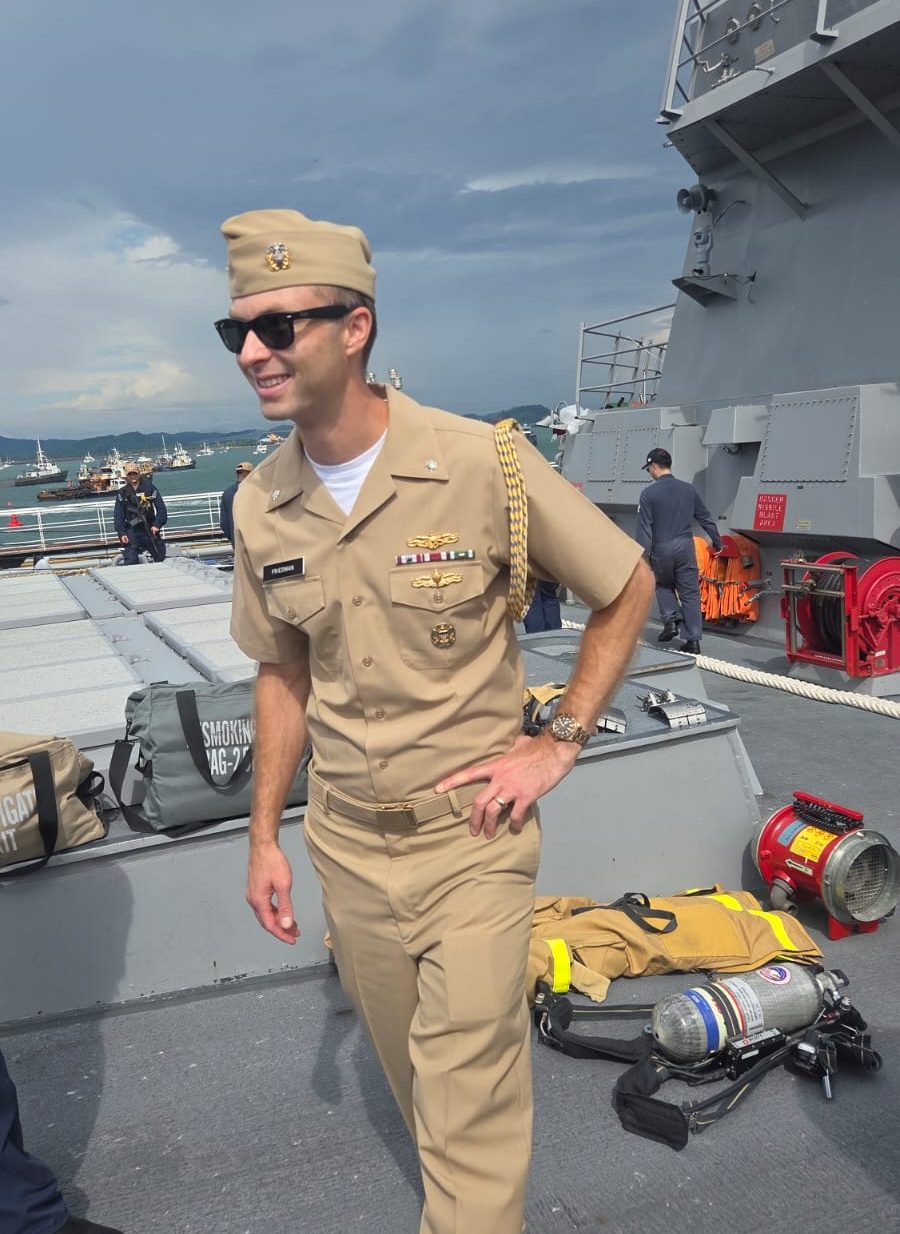
We would also like to express our special appreciation to Commander Dan Friedman, US Navy, Naval Attaché at the United States Embassy in Panama, whose efforts and assistance made this memorable visit possible. Commander Friedman was instrumental in arranging our invitation and facilitating our access aboard the ship. We are extremely grateful for his continued support of the Navy League Panama Council and for providing our members with such a unique opportunity to experience one of the US Navy’s newest warships firsthand.
We fully recognise the demands placed upon a commanding officer and crew during an operational port call, particularly when a ship is engaged in refuelling and maintaining readiness for her next duties.
The time taken by Captain Hays to personally welcome and escort our members, conduct the tour, explain the ship’s capabilities and answer our many questions was therefore especially appreciated. Her warmth, professionalism and willingness to share her knowledge made a lasting impression on everyone attending.
For those present, including former officers of the United States Navy, Royal Canadian Navy and British Royal Navy, the occasion was both an opportunity to renew our connection with naval life and a fascinating glimpse into the capabilities of a new generation of American warships.
USS Ted Stevens may represent the cutting edge of modern maritime technology, but our visit reinforced a much older naval truth: a ship’s greatest asset remains her crew.
Our sincere thanks once again to Commander Friedman for making this visit possible, and to Captain Hays and her ship’s company for making us feel so welcome aboard.
We wish Captain Hays and everyone serving aboard USS Ted Stevens fair winds, following seas and every success in their future deployments.
Lead with Courage.
Navy League of the United States – Panama Council
Watch the official US Southern Command video of the Panama visit
The USS Ted Stevens (DDG 128) host tours for the Navy League Panama and Universidad Marítima Internacional de Panamá