The Submarine Aircraft Carriers That Targeted the Panama Canal
At the end of World War II, Japan built the largest submarines of their time—floating aircraft carriers designed to launch bombers against distant targets. Their most audacious mission was to cripple the Panama Canal, a plan that came closer to reality than many realize.
Japanese plan to destroy the Panama Canal
In 1944–45 the Imperial Japanese Navy (IJN) completed the most ambitious submarines of the Second World War—the I-400–class (Sentoku or “special submarines”). Conceived to project airpower stealthily across oceans, each boat could carry, assemble, and catapult-launch three Aichi M6A1 Seiran attack floatplanes. Their primary strategic mission was audacious: cripple the Panama Canal by bombing the Gatun Locks, severing the shortest route between the U.S. Atlantic and Pacific fleets. The attack never occurred. In June 1945 Tokyo canceled the Panama plan amid deteriorating war conditions and re-tasked the force against Ulithi Atoll; Japan’s surrender in August stopped even that sortie. The I-400s remain a case study in inventive naval engineering constrained by logistics, shifting strategy, and the pace of Allied operations.
Why the Panama Canal mattered
From early 1942, IJN planners understood that breaching the Panama Canal would delay U.S. reinforcement cycles and complicate convoy routes. A conventional surface or long-range land-based air strike was implausible by mid-war. A covert submarine-launched air attack—surfacing to fire off bombers and submerging again—offered surprise and deniability. The Sentoku program grew from a Yamamoto-era idea to hit U.S. coasts and later narrowed to attacking the Gatun Locks from the Atlantic side.
The I-400 Submarine
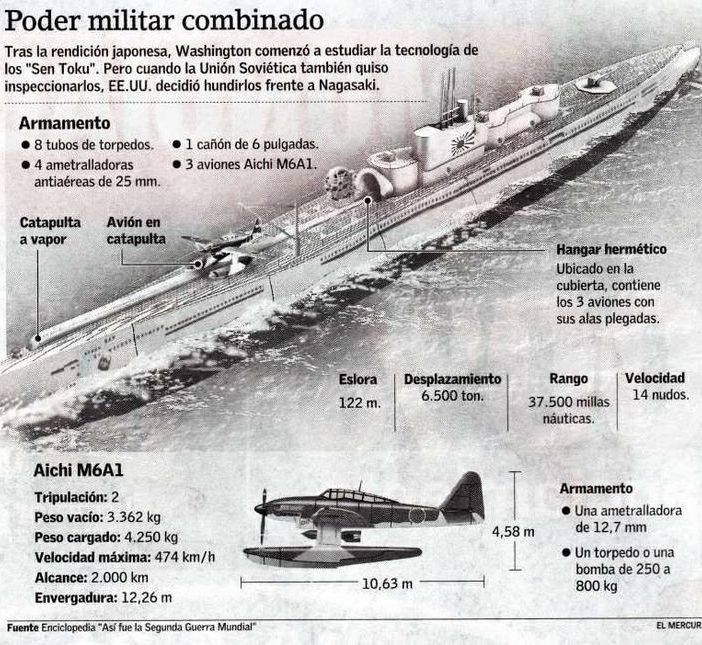
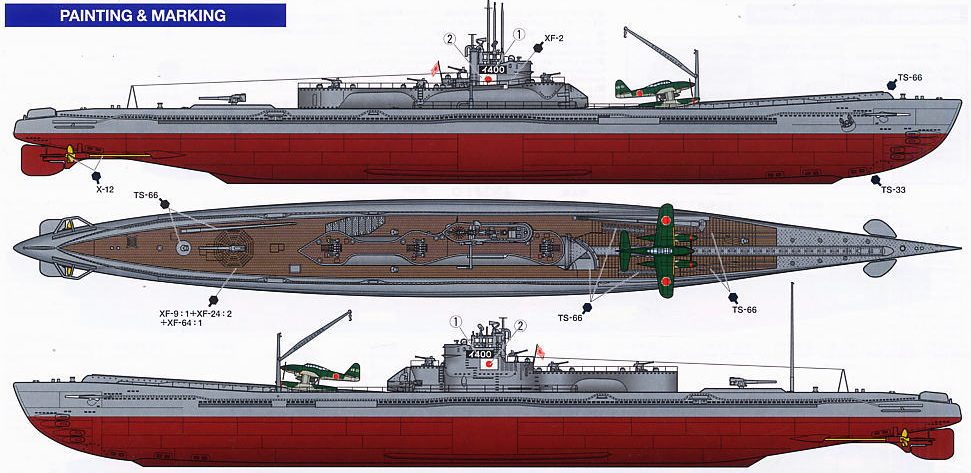
At ~122 m in length, the I-400s were the largest submarines of WWII and remained unsurpassed until nuclear ballistic-missile submarines of the 1960s. With four 1,680 kW diesels and vast fuel tanks, they could sail ~37,500 nautical miles at 14 knots—enough to circle the globe one-and-a-half times.
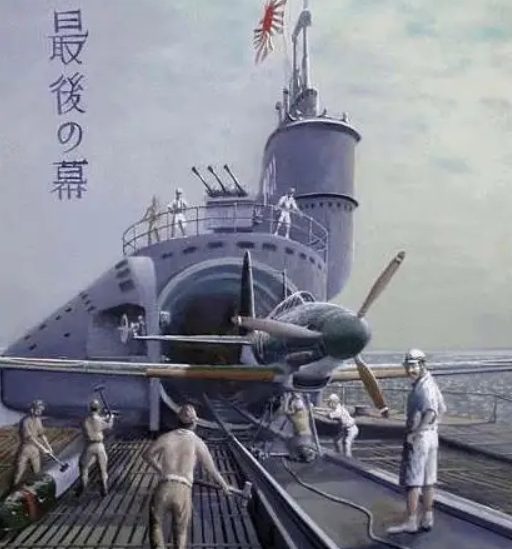
A 31 m x 3.5 m cylindrical, watertight hangar sat amidships on the centerline; the conning tower was offset to port to make room. Forward was a ~26 m (≈120 ft) compressed-air catapult; a folding crane recovered aircraft after water landings. The pressure hull’s figure-of-eight cross-section stiffened the structure to carry the hangar’s weight.
Armament & sensors. Beyond their air wing, I-400s carried 8× 533 mm bow tubes with ~20 Type 95 oxygen torpedoes (fast, long-range), a 140 mm deck gun, and multiple Type 96 25 mm AA mounts. Electronics included air search and air/surface radars plus a radar-warning receiver; the hull had an anechoic coating to reduce sonar return.
The huge superstructure and offset sail made the boats wind-vain and sluggish on the surface and awkward to handle submerged (notably a starboard helm bias at low speed). Dive time (~56 s) was almost double that of contemporary U.S. fleet submarines—risky if caught by aircraft.
The Aichi M6A1 Seiran: the canal bomber
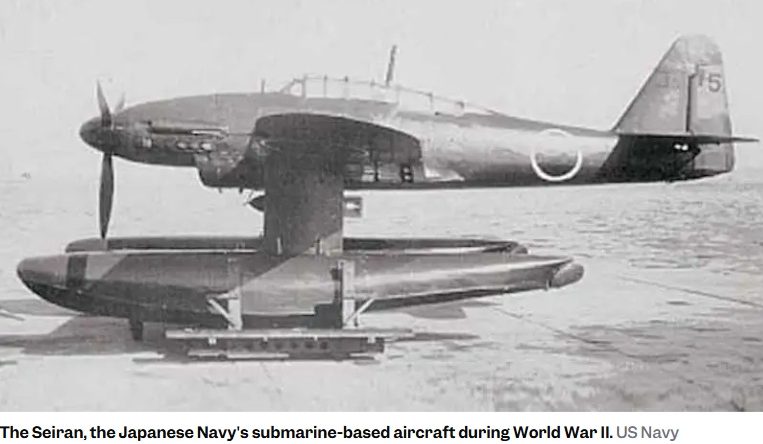
Purpose-built for the Sentoku, the two-seat Seiran could carry an 800 kg bomb (or torpedo) to attack hardened targets at ~475 km/h with a combat radius near 1,000 km. To fit the narrow hangar, wings rotated 90° and folded, the horizontal tailplanes folded, and the top of the fin hinged; floats were stowed separately and attached only if recovery was planned. A trained deck crew of four could roll out, unfold, fuel, arm, and launch all three aircraft in ~30–45 minutes (as little as ~15 minutes if floats were omitted for one-way missions).
A surviving Seiran—the sole example worldwide—is displayed at the Smithsonian National Air and Space Museum’s Udvar-Hazy Center
The Panama Canal plan: concept of operations
By June 1945, Submarine Division 1—I-400 and I-401 (each with three Seirans) plus I-13 and I-14 (smaller aircraft-carrying types)—concentrated at Nanao Bay to train for a night strike on the Gatun Locks. Crews practiced rapid assembly/launch and torpedo-bomb profiles from the east, the aim being to empty Gatun Lake and block the canal for months. Training demonstrated 7 minutes to ready a single aircraft and ~45 minutes per boat to launch all three—credible timelines for a surprise attack.
Defensively, the Canal Zone was not an easy target: by 1942–45 the U.S. had reinforced its coastal artillery, AA regiments, barrage balloons, and anti-submarine nets/patrols on both ocean approaches, increasing the risks of approach and exfiltration.
Panama Canal's Defences
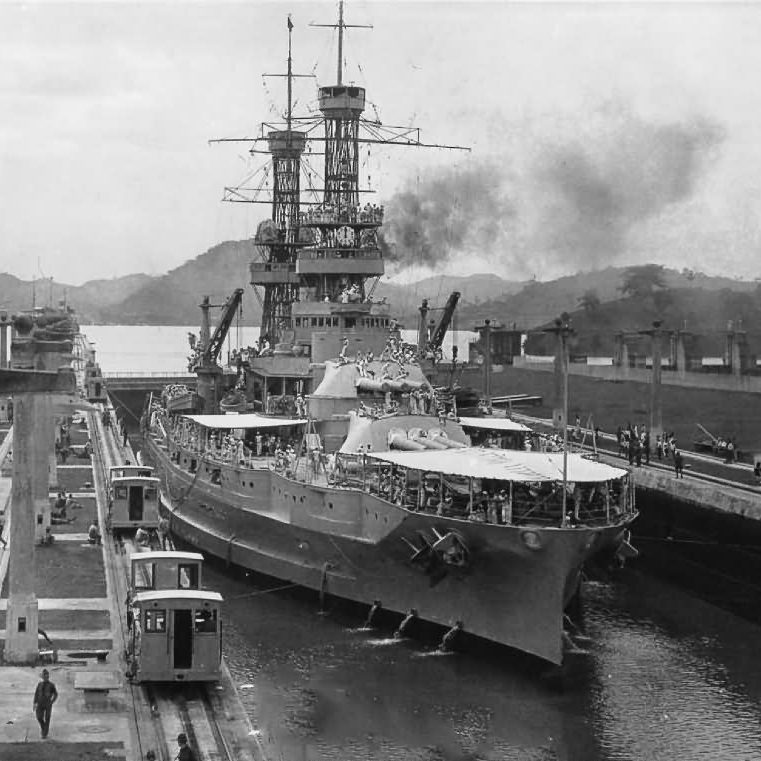
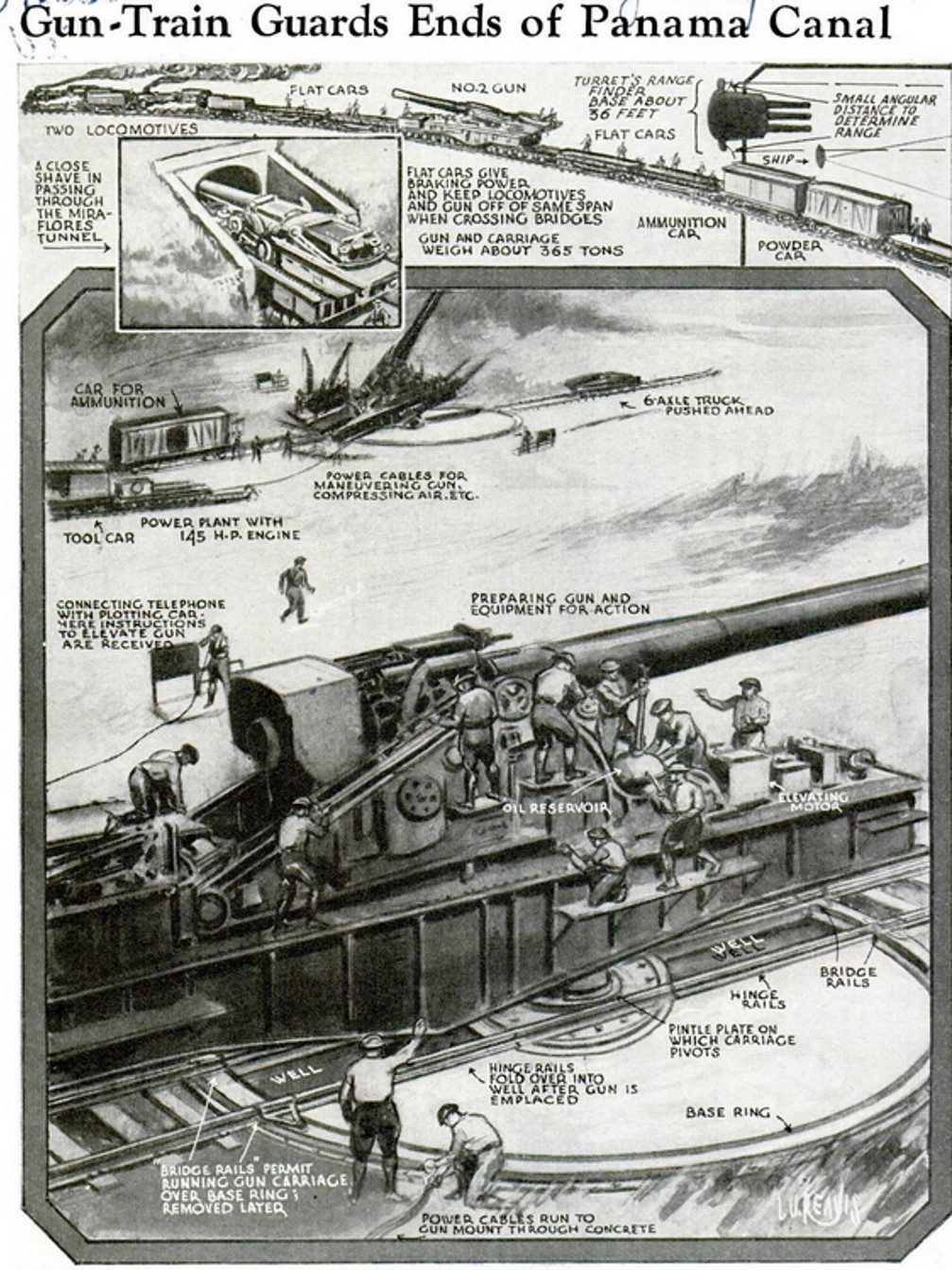
By 1942–45 the Panama Canal’s air defenses formed a layered, integrated system combining guns, sensors, obstacles, and deception. The U.S. Army’s Caribbean Defense Command deployed extensive anti-aircraft artillery and 634 searchlights, tied to an aircraft-warning network and long-range radars on both coasts, to cue fire and illuminate night attackers; defenders also laid chemical smoke screens to obscure lock machinery and approaches. On the surface and subsurface, the entrances were protected by anti-torpedo and anti-submarine nets, indicator loops, and naval mines and also this massive 11 inch "Rail gun" in the diagram, complicating any strike coordination from seaward. Low-altitude attacks were further deterred by a barrage-balloon program (the 301st Coast Artillery Separate Barrage Balloon Battalion arrived in January 1942), while Army Air Corps fighters and patrol aircraft flew regular circuits from Canal Zone airfields. In sum, the Canal was covered by a redundant, multi-domain defense—from early warning to AAA to obscuration—that was explicitly designed to keep the locks operable even if one element was damaged.
Air Defence
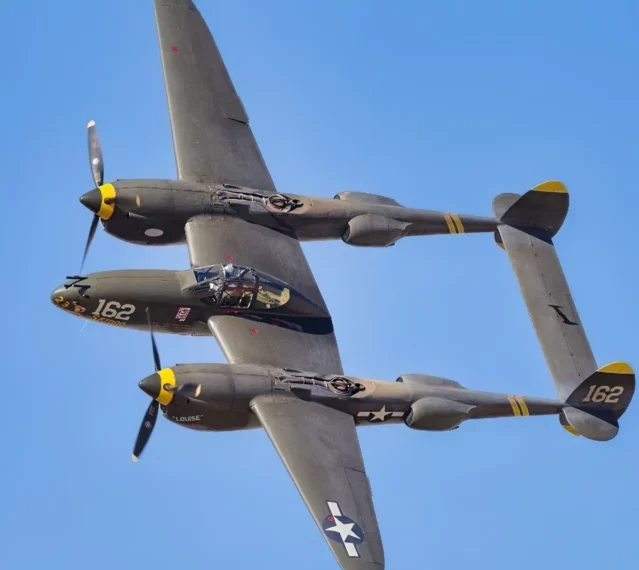
During the canal defense era, the U.S. Army Air Corps / Army Air Forces in Panama operated a mix of fighters, bombers, and maritime patrol aircraft. Fighter units such as the 51st Fighter Squadron flew aircraft including the P-26, P-36, P-40 Warhawk, P-39 Airacobra, and later the P-38 Lightning (pictured right) to intercept potential air raids. For maritime reconnaissance and anti-submarine work, bomber and patrol aircraft like the B-18 Bolo, B-17 Flying Fortress, B-24 Liberator, and PBY Catalina were deployed under the VI Bomber Command. This diversity of aircraft gave the Canal Zone a layered aerial defense capability capable of intercept, patrol, reconnaissance, and deterrence.
Why the attack never occurred
1) Strategic reprioritization (June 1945). As Okinawa fell and Allied carrier raids intensified against the Home Islands, Imperial General Headquarters canceled the Panama mission on 12 June 1945. The Sentoku force was retasked to strike the Ulithi anchorage instead (Operations Arashi/Hikari).
2) Attrition of the force. In July 1945, I-13 was sunk while ferrying reconnaissance aircraft central to the Ulithi plan—evidence of Allied ASW reach and an omen for any trans-Pacific canal approach.
3) Material & logistics friction. Training revealed shortages of aviation gasoline, the danger of U.S. mines and submarines on egress routes, and the many moving parts (multiple boats, six–ten aircraft, night launch, long navigation legs). The plan’s complexity raised failure risks.
4) End of the war. The two Sentoku boats finally sailed in late July for the Ulithi mission. On 16 August 1945—the day after Japan’s surrender—the force received recall orders; their six Seirans were pushed or catapulted into the sea to prevent capture.
Would it have worked?
In purely technical terms, a surprise night launch of 6–10 Seirans carrying 800 kg bombs could have damaged gate leaves or machinery at Gatun. Yet turning damage into a months-long canal closure was improbable. The lock complexes were massive reinforced-concrete structures with redundant chambers, spare miter gates stored on site, cofferdam capability, and round-the-clock U.S. Army Engineer repair units. Hitting the correct gate hinges or culvert valves demanded dive-bomb accuracy from low altitude—precisely where searchlights, radar-directed AA, and night fighters were strongest. Re-attacks would be unlikely: the Seirans launched without floats for range and could not be recovered, and Allied ASW/air patrols on both coasts made a second wave hazardous. Even with successful hits, U.S. forces were prepared to isolate, bypass, or rapidly refit a damaged chamber, reducing disruption to days or weeks rather than months. Strategically, then, the Sentoku plan promised drama more than decisive effect—high risk, fleeting payoff, and little prospect of altering the war’s trajectory.
Aftermath and legacy
Both I-400 and I-401 surrendered and were later scuttled off Hawaii after U.S. inspection; their wrecks were located in the 2000s–2010s. The Seiran squadron never flew in combat, but the concept foreshadowed air-delivered, submarine-borne strategic effects—ideas later realized in different form by ballistic-missile submarines. For Panama, the episode underscores both the Canal’s strategic gravity and the depth of defenses and surveillance the United States maintained in wartime.
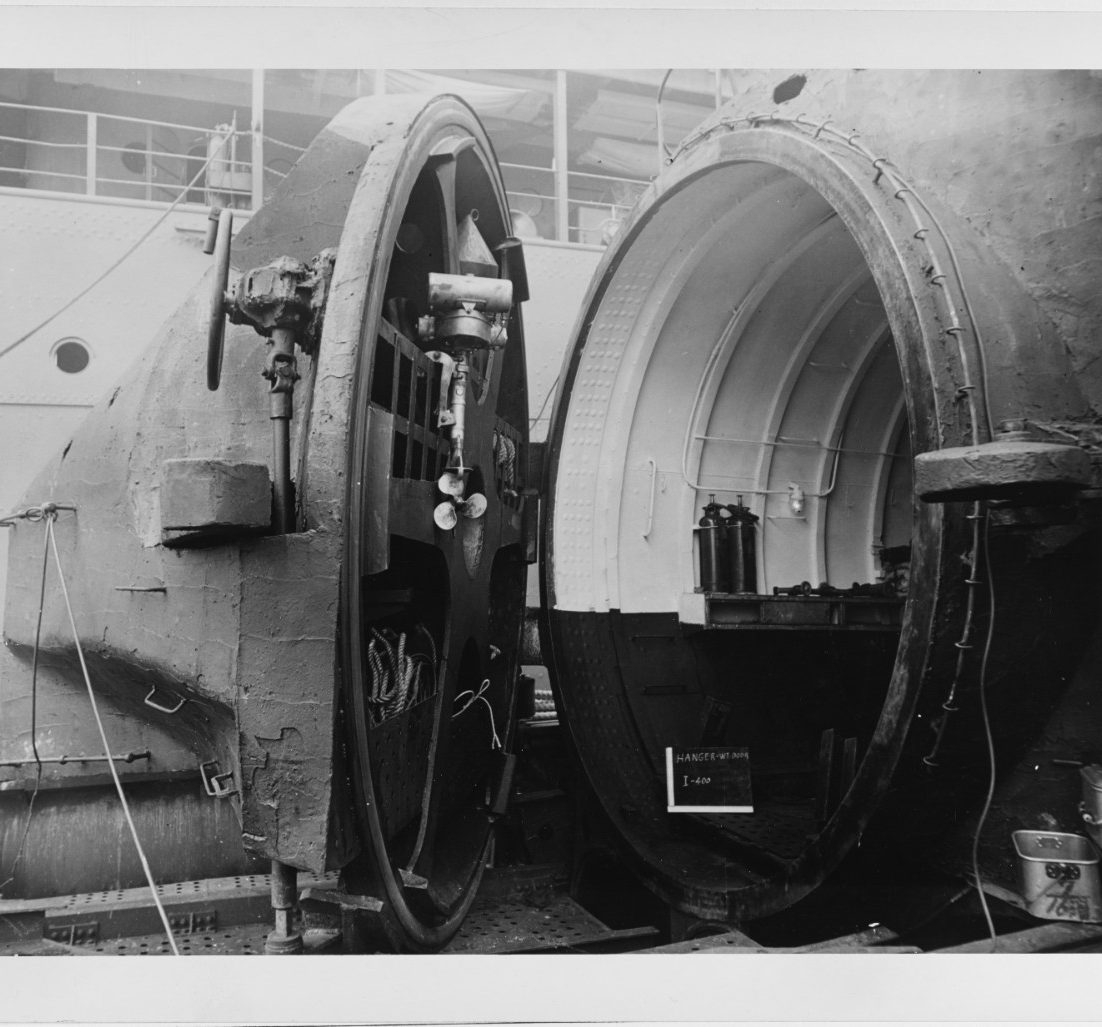
Hangar Door Detail
Close-up of the watertight hangar door of an I-400-class submarine, showing its circular design and mechanical fittings.
Credit: NavSource Online Submarine Photo Archive
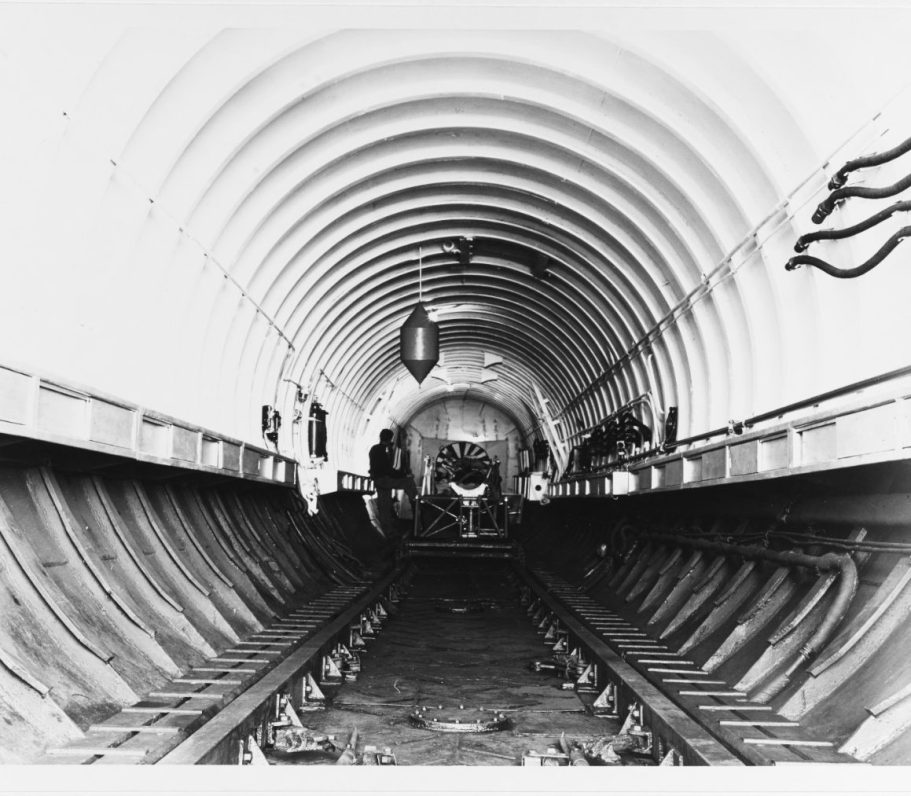
Hangar Interior
Interior view of the cylindrical hangar of the I-400 class, showing tracks and fittings for the Seiran aircraft.
Credit: NavSource Online Submarine Photo Archive
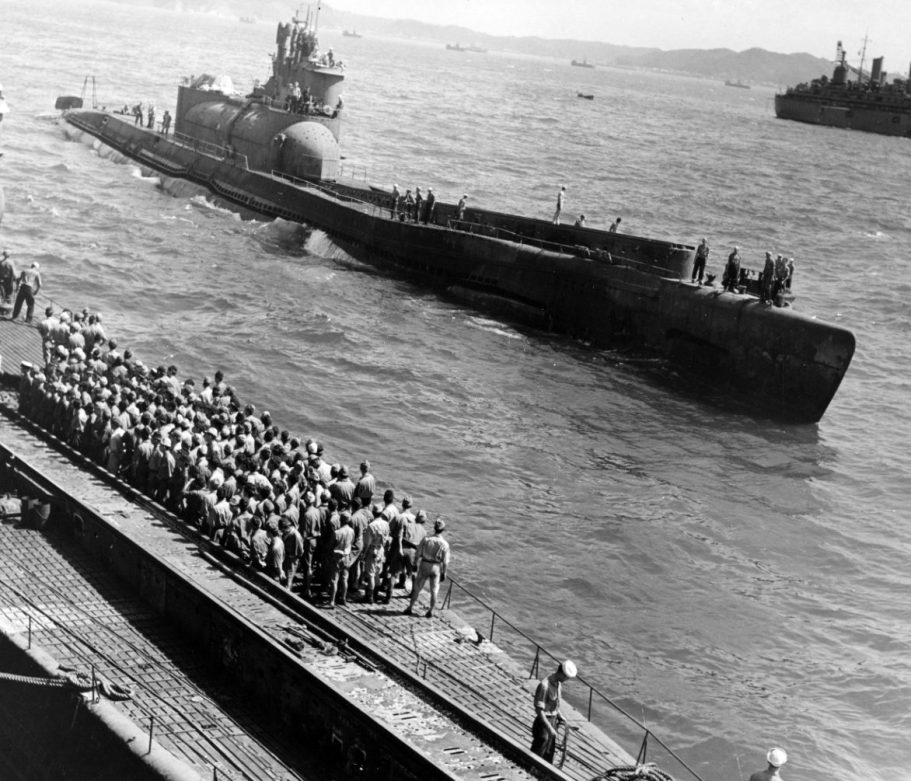
The Submarine: I-400-class
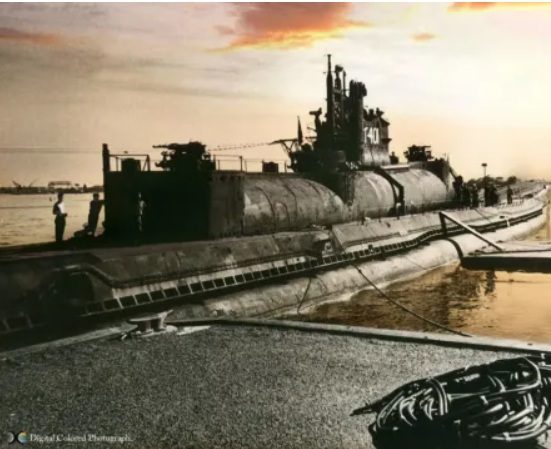
Japanese submarine I-401, one of the I-400-class “submarine aircraft carriers,” photographed after surrender in 1945.
Credit: U.S. Navy Photograph, via Wikimedia Commons
Sources used
51st Fighter Squadron (USAAF) – aircraft operated & Canal Zone service (1941–46). Air Force Histories+1
32nd Fighter Group – fighter types used in Panama (P-26, P-36, P-38, P-39, P-40). Army Air Corps Museum
VI Bomber Command – mission, stationing at Albrook Field, antisubmarine role. Wikipedia+1
3rd Bombardment Squadron – early Canal Zone basing and transition from B-18 to B-17/B-24. Wikipedia+1
US Navy patrol presence – VP squadrons at NAS Coco Solo operating PBY Catalinas. Naval History and Heritage Command+1
Panama Canal Zone air defenses (radar, searchlights, barrage balloons, smoke, nets). raytodd.blog+2raytodd.blog+2
Aircraft in the Canal Zone around Pearl Harbor (fighter modernization from P-26 to P-36/P-40). raytodd.blog
Smithsonian National Air and Space Museum — Aichi M6A1 Seiran collection page (specifications, folding mechanisms, sole surviving airframe). National Air and Space Museum
Smithsonian Air & Space Quarterly — “Aichi Seiran” (design intent, 90° wing-spar rotation, operational concept from submarines). National Air and Space Museum
WWII Database — Submarine I-400 (ship spec card) (range, armament, aircraft complement, speeds). WW2DB
WWII Database — I-400-class Submarine (overview) (diesel plant, snorkel fit, circumnavigation fuel capacity). WW2DB
CombinedFleet.com — I-400 (Imperial Submarines TROM & discovery notes) (crew size, movements, wreck discovery context). Combined Fleet+1
Wikipedia — I-400-class Submarine (hangar dimensions, offset conning tower, catapult, handling limitations, wreck finds). Wikipedia
Wikipedia — Japanese submarine I-400 (Panama Canal strike training details, launch timelines, cancellation, surrender, wreck discovery). Wikipedia
Wikipedia — Japanese submarine I-401 (unit assignment, scuttling, 2005 HURL discovery details). Wikipedia
PBS “Secrets of the Dead: Japanese SuperSub” (documentary background on the Sentoku program and the Panama Canal plan). PBS
U.S. Naval Institute, Naval History Magazine — “Voyage of Rediscovery” (HURL Pisces IV/V expeditions to I-400/I-401 wrecks). U.S. Naval Institute