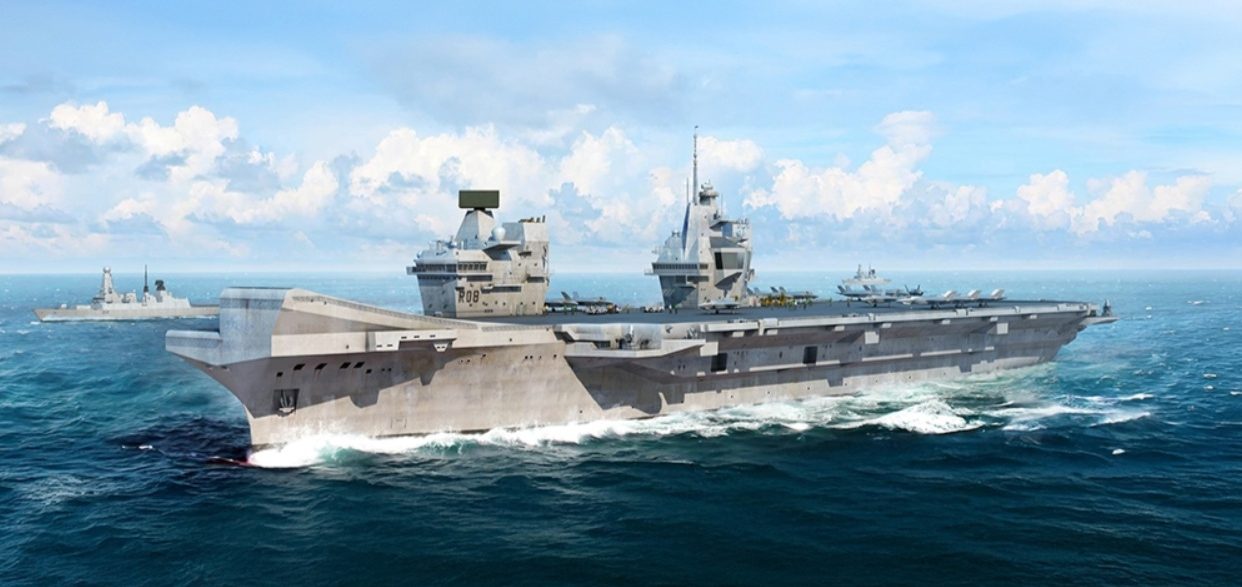
The Architects of the Flight Deck: How British Ingenuity Built the Modern Aircraft Carrier
The aircraft carrier, the undisputed queen of modern naval warfare, owes its existence and most critical technological leaps to the British Royal Navy (RN). From daring first landings to the high-tech innovations that define today's American supercarriers, the evolution of the carrier is a story of British ingenuity that shaped global maritime strategy.
The Dawn of Naval Aviation
The aircraft carrier, the undisputed queen of modern naval warfare, owes its existence and most critical technological leaps to the British Royal Navy (RN). While the United States Navy currently operates the most formidable carrier fleet in history, the "DNA" of every supercarrier afloat today—from the angled deck to the catapult—was forged in the experimental crucibles of British shipyards and the daring minds of Royal Navy aviators.
The evolution of the carrier is not merely a timeline of larger ships, but a story of British ingenuity that fundamentally shaped global maritime strategy. From the first precarious landings on converted cruisers during the Great War to the invention of the "holy trinity" of jet-age technologies, the Royal Navy served as the primary laboratory for naval aviation. This article traces that century-long journey of innovation, exploring how British pioneers solved the "impossible" physics of launching and recovering aircraft at sea, creating a blueprint for power projection that remains the gold standard for naval supremacy in the 21st century.
Post-War Inventions: The Jet Age
The transition to the Jet Age presented a crisis for naval aviation: new aircraft were too heavy for existing catapults and too fast for traditional straight decks. The Royal Navy solved these "impossible" physics problems with a series of radical, British-born inventions:
- The First Jet Landing: On December 3, 1945, legendary test pilot Captain Eric "Winkle" Brown proved that jets and carriers were compatible. Flying a de Havilland Sea Vampire onto HMS Ocean, he conducted the first-ever carrier landing by a pure-jet aircraft—a feat many contemporary engineers thought was too dangerous to attempt.
- The "Holy Trinity" of Modern Aviation: Between 1945 and 1955, the RN developed three intertwined technologies that saved the aircraft carrier from obsolescence:
- The Steam Catapult: Invented by Commander C.C. Mitchell, this replaced weak hydraulic systems with high-pressure steam from the ship’s boilers, providing the massive "kick" needed to launch heavy, fuel-laden jets.
- The Angled Flight Deck: Conceived by Captain D.R.F. Campbell, this simple but brilliant redesign canted the landing area by several degrees. This allowed a pilot who missed the arresting wires (a "bolter") to safely accelerate and take off again rather than crashing into the parked aircraft and deck crew at the front of the ship.
- The Mirror Landing Sight: Invented by Commander H.C.N. Goodhart, this replaced the human Landing Safety Officer (LSO)—who signaled pilots with hand-held paddles—with a gyroscopically stabilized mirror system. This projected a beam of light (the "meatball") that gave pilots an instantaneous, objective visual of their glide path, making high-speed jet landings significantly safer.
These three inventions were so effective that the U.S. Navy immediately adopted them, and they remain the fundamental architecture of every American supercarrier today.
VTOL and the Ski Jump
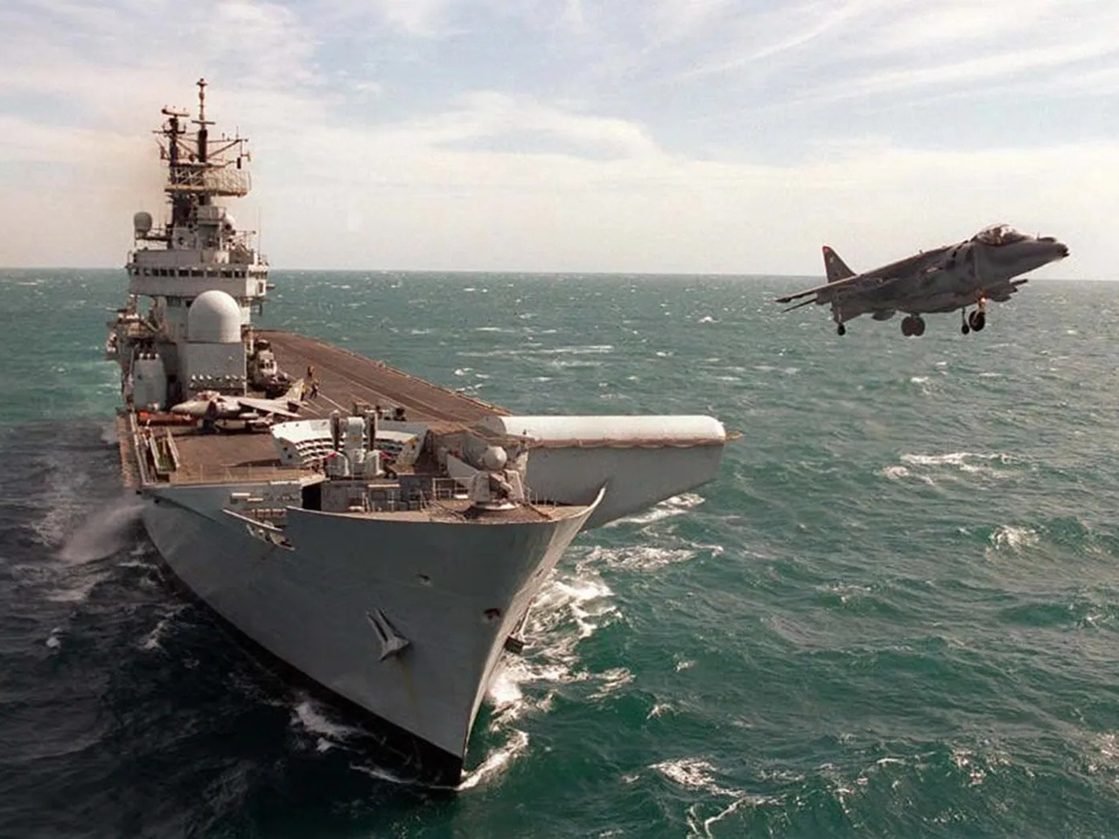
In the 1970s, the British revolutionized naval aviation once again with the development of the Harrier "Jump Jet," the world’s first successful Vertical/Short Take-Off and Landing (V/STOL) fighter. To maximize the Harrier’s potential, Lieutenant Commander Douglas Taylor invented the Ski Jump—a curved ramp at the bow of the ship.
By physically "throwing" the aircraft upward at the end of its takeoff roll, the Ski Jump converted forward momentum into upward lift. This ingenious low-tech solution allowed Harriers to take off with significantly heavier fuel and weapon loads from the smaller Invincible-class "through-deck cruisers" than would ever have been possible from a flat deck. This combination proved its lethality during the Falklands War and remains the gold standard for carrier aviation outside of the U.S. supercarrier fleet, utilized today by the UK, Italy, Spain, India, and the U.S. Marine Corps on their amphibious assault ships.
The Legacy Today
Today, every U.S. Navy supercarrier utilizes the angled flight deck, catapults, and optical landing systems pioneered by the Royal Navy. Furthermore, the U.S. Marine Corps' F-35B continues the legacy of British VTOL and ski jump technology, ensuring these 20th-century British inventions remain at the heart of 21st-century sea power.
The Dawn of Naval Aviation
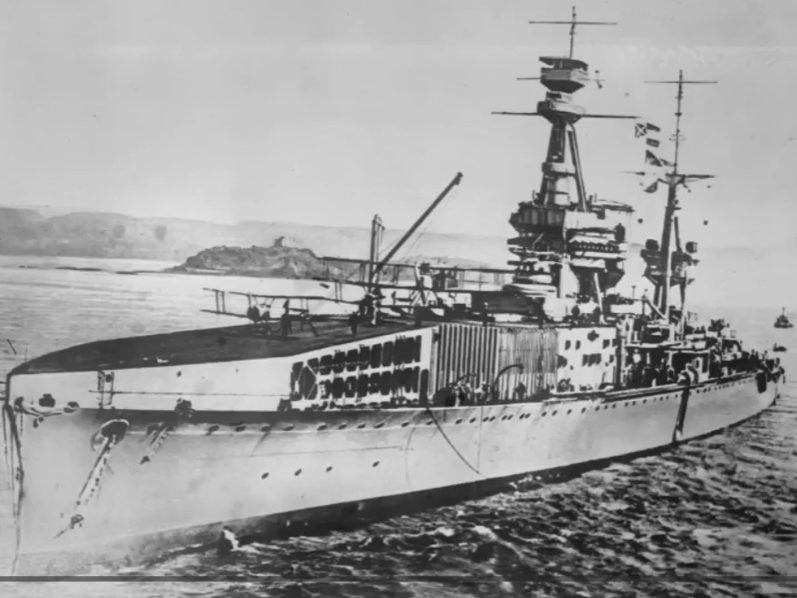
The Dawn of Naval Aviation: HMS Furious and Argus
The journey began in 1917 with HMS Furious. Originally a cruiser carrying massive 18-inch guns, her forward gun was replaced with a 160-foot flying-off deck.
The journey began in 1917 with HMS Furious. Originally a cruiser carrying massive 18-inch guns, her forward gun was replaced with a 160-foot flying-off deck.
First Steps
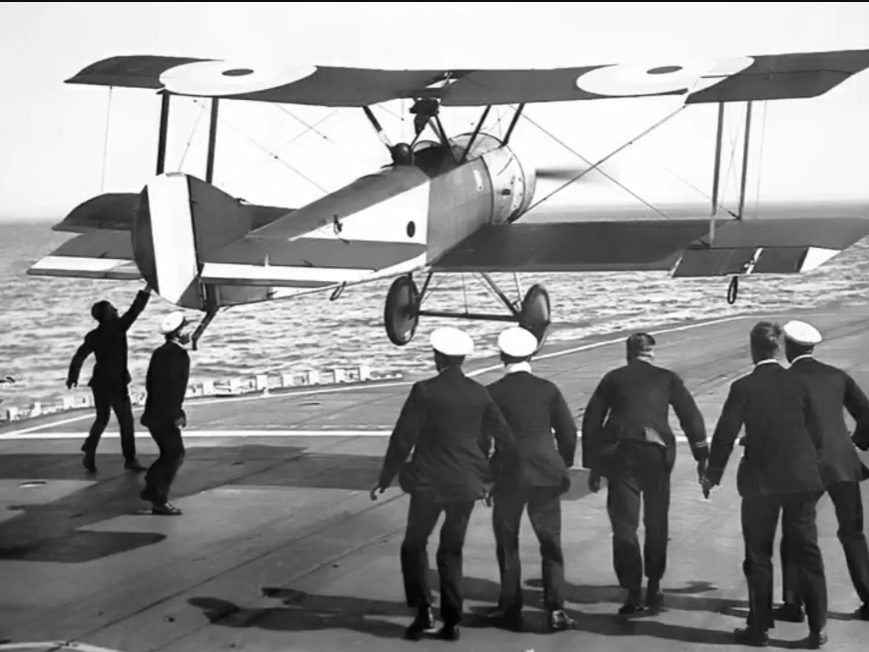
- First Landing (1917): On August 2, 1917, Squadron Commander Edwin Dunning made history by landing a Sopwith Pup on the moving deck of the Furious—the first time this was ever achieved.
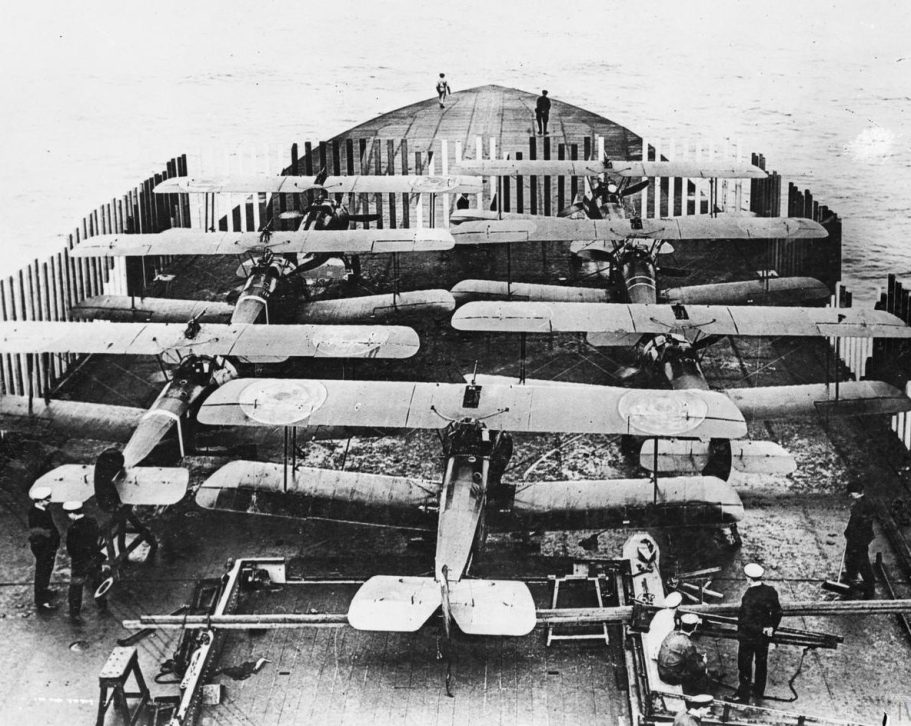
- The Tondern Raid (1918): In July 1918, seven Sopwith Camels launched from Furious to attack German Zeppelin sheds. While the raid was a success, the technology was still one-way; the aircraft could not land back on the ship. The pilots were forced to either ditch in the sea or land in neutral Denmark.
- HMS Argus (1918): In September 1918, Argus became the world's first carrier with a full-length, unobstructed flight deck, allowing aircraft to take off and land without maneuvering around a superstructure.
First Landing: 1917
Tondern Raid, 1918
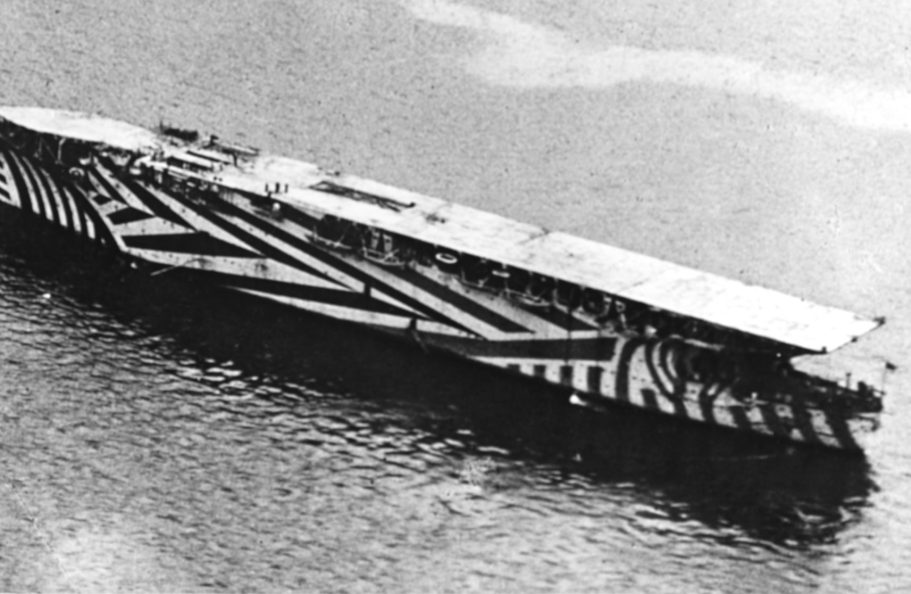
First REAL Carrier: HMS Argus 1918
Purpose-Built: HMS Hermes
While early carriers were conversions, HMS Hermes (laid down in January 1918) was the first ship in the world designed and built from the keel up specifically as an aircraft carrier. Though Japan’s Hōshō was commissioned slightly earlier in 1922, Hermes was the true pioneer of integrated carrier design, introducing the island superstructure that remains the standard silhouette for carriers today. For comparison, the first U.S. carrier, the USS Langley, did not join the fleet until March 1922.
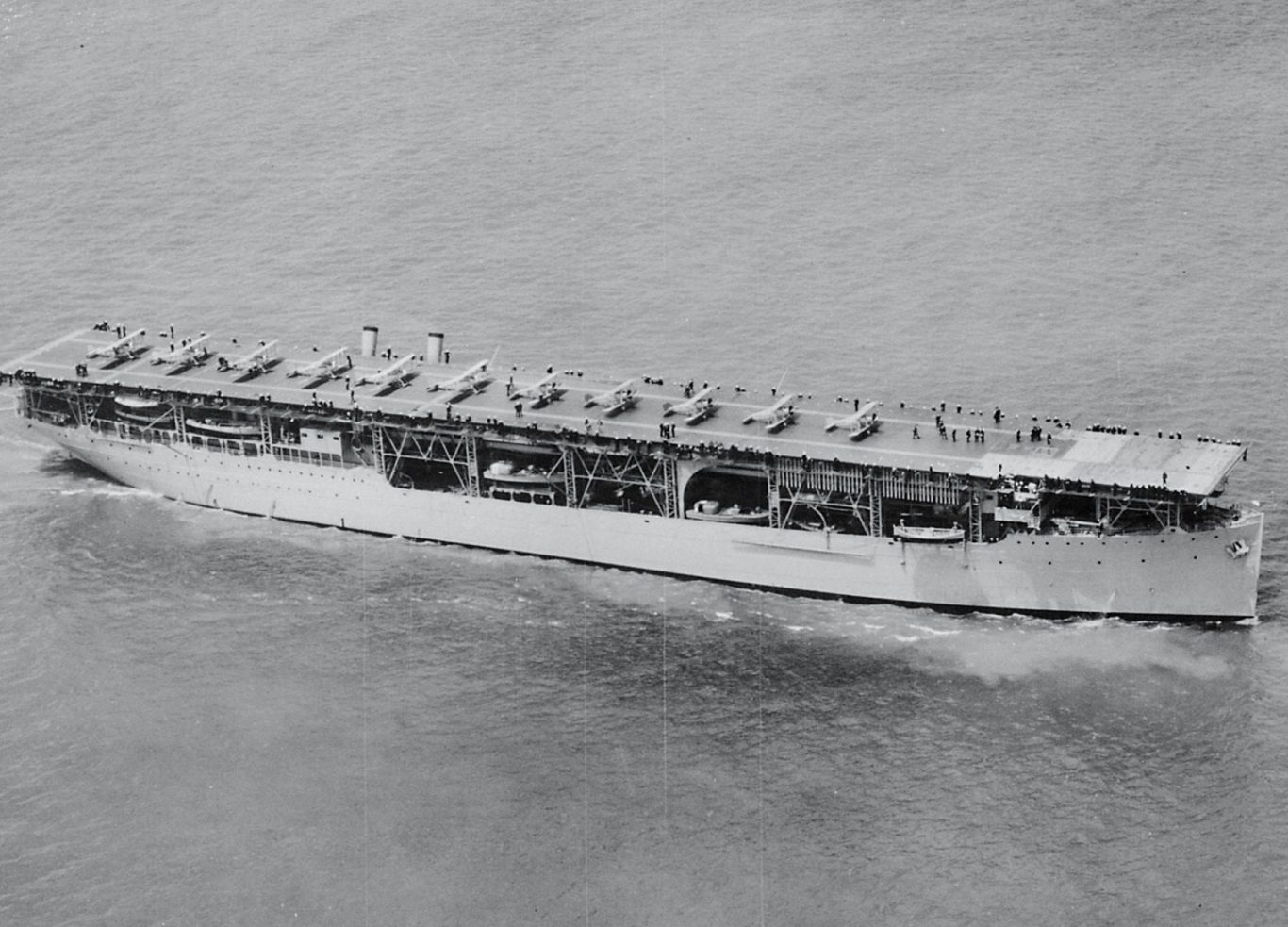
USS Langley (CV-1/AV-3) was the United States's first aircraft carrier, converted in 1920 from the collier USS Jupiter (Navy Fleet Collier No. 3), and also the US Navy's first turbo-electric-powered ship. Langley was named after Samuel Langley, an American aviation pioneer. She was the sole member of her class to be rebuilt as a carrier.
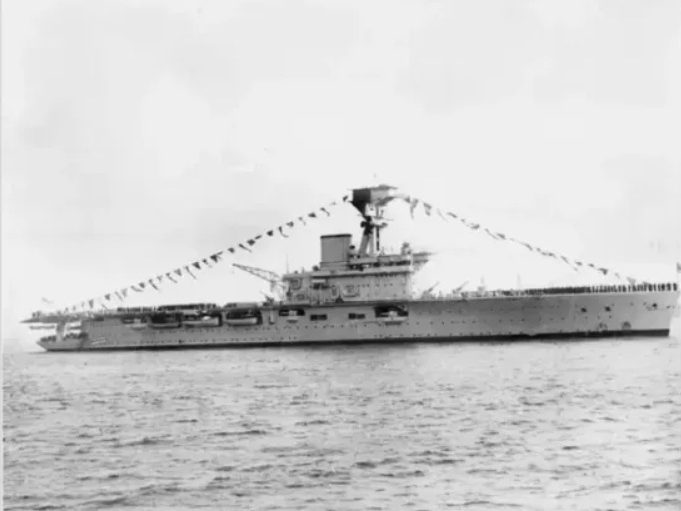
The Armoured Carriers: "Sweepers, Man Your Brooms"
As World War II loomed, the RN pioneered armoured flight decks on the Illustrious class to survive land-based bombers. This resilience became legendary in 1945 during the British Pacific Fleet’s operations. When Kamikazes struck wooden-decked U.S. carriers, they required months of repair. When they hit "Limey" carriers, a U.S. liaison officer famously remarked:
"It’s just a case of 'Sweepers, man your brooms.'"
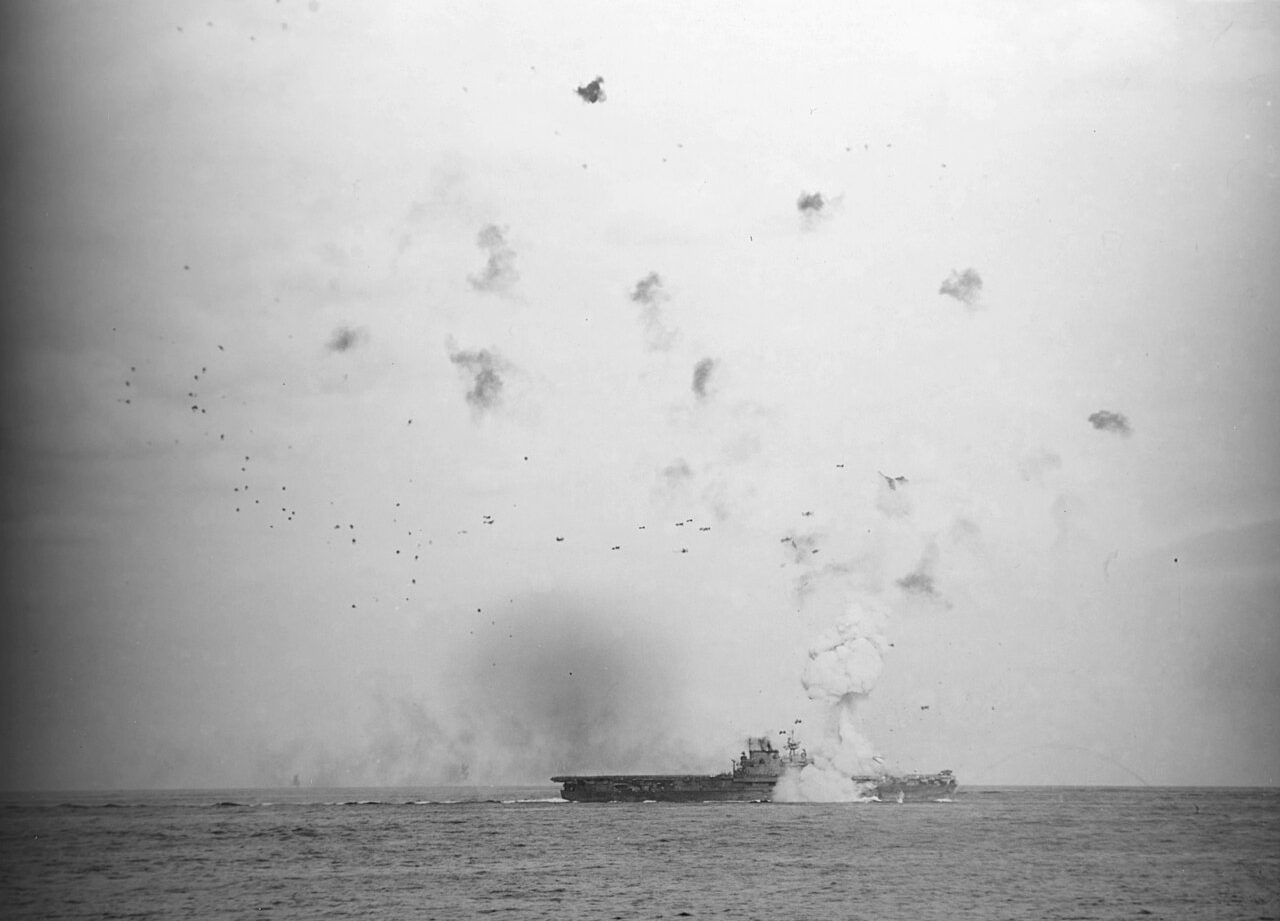
- USS Enterprise (CV-6): On May 14, 1945, a kamikaze flipped into an inverted dive and struck the forward elevator. The explosion was so powerful it blew the 15-ton elevator 400 feet into the air. This attack effectively ended the "Big E's" legendary combat career, as she was still being repaired when the war ended.
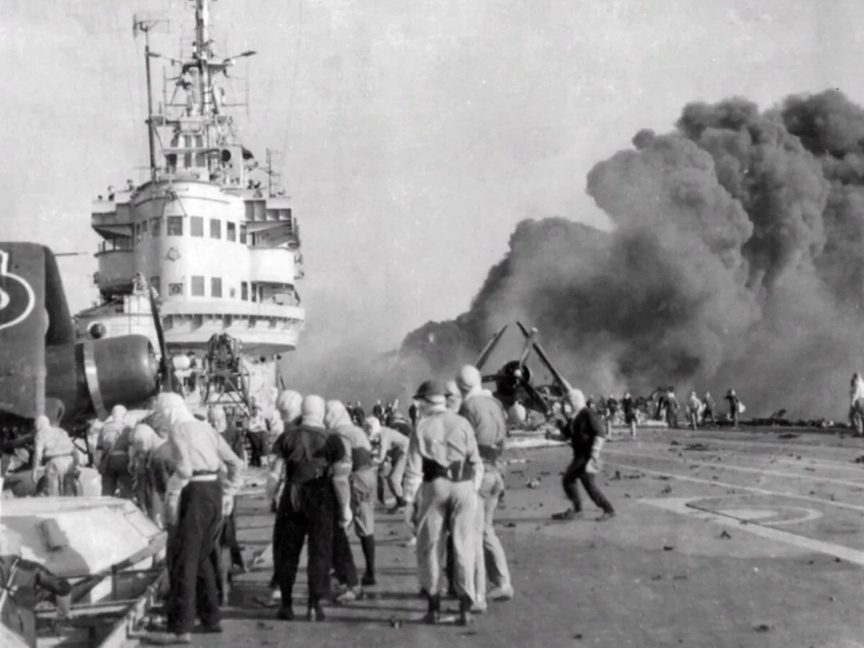
May 4, 1945 British aircraft carrier Indomitable, operating as part of the British squadron off the coast of Okinawa, was attacked by kamikaze aircraft. The flight deck was cleared and fires were extinguished in less than an hour.
Post-War Inventions: The Jet Age
The transition to the Jet Age presented a crisis for naval aviation: new aircraft were too heavy for existing catapults and too fast for traditional straight decks. The Royal Navy solved these "impossible" physics problems with a series of radical, British-born inventions:
- The First Jet Landing: On December 3, 1945, legendary test pilot Captain Eric "Winkle" Brown proved that jets and carriers were compatible. Flying a de Havilland Sea Vampire onto HMS Ocean, he conducted the first-ever carrier landing by a pure-jet aircraft—a feat many contemporary engineers thought was too dangerous to attempt.
- The "Holy Trinity" of Modern Aviation: Between 1945 and 1955, the RN developed three intertwined technologies that saved the aircraft carrier from obsolescence:
- The Steam Catapult: Invented by Commander C.C. Mitchell, this replaced weak hydraulic systems with high-pressure steam from the ship’s boilers, providing the massive "kick" needed to launch heavy, fuel-laden jets.
- The Angled Flight Deck: Conceived by Captain D.R.F. Campbell, this simple but brilliant redesign canted the landing area by several degrees. This allowed a pilot who missed the arresting wires (a "bolter") to safely accelerate and take off again rather than crashing into the parked aircraft and deck crew at the front of the ship.
- The Mirror Landing Sight: Invented by Commander H.C.N. Goodhart, this replaced the human Landing Safety Officer (LSO)—who signaled pilots with hand-held paddles—with a gyroscopically stabilized mirror system. This projected a beam of light (the "meatball") that gave pilots an instantaneous, objective visual of their glide path, making high-speed jet landings significantly safer.
These three inventions were so effective that the U.S. Navy immediately adopted them, and they remain the fundamental architecture of every American supercarrier today.
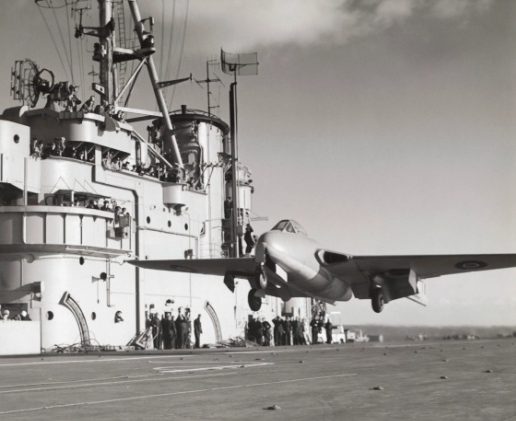
The First Jet Landing: On December 3, 1945
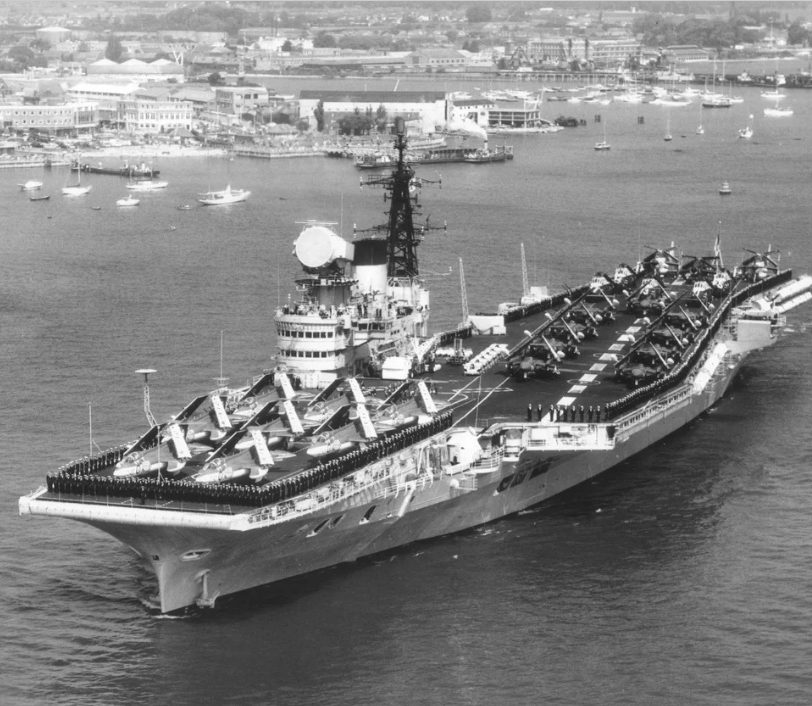
Angled Flight Deck: HMS Victorious
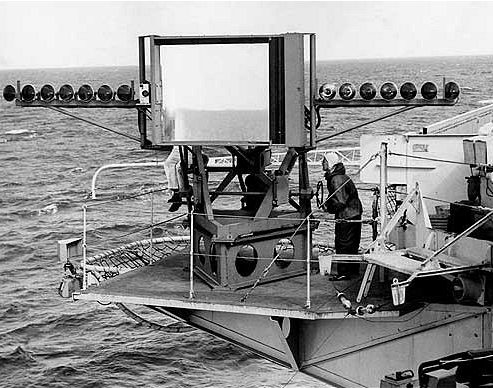
Mirror Landing Sight aboard HMS Albion
VTOL and the Ski Jump
In the 1970s, the British revolutionized naval aviation once again with the development of the Harrier "Jump Jet," the world’s first successful Vertical/Short Take-Off and Landing (V/STOL) fighter. To maximize the Harrier’s potential, Lieutenant Commander Douglas Taylor invented the Ski Jump—a curved ramp at the bow of the ship.
By physically "throwing" the aircraft upward at the end of its takeoff roll, the Ski Jump converted forward momentum into upward lift. This ingenious low-tech solution allowed Harriers to take off with significantly heavier fuel and weapon loads from the smaller Invincible-class "through-deck cruisers" than would ever have been possible from a flat deck. This combination proved its lethality during the Falklands War and remains the gold standard for carrier aviation outside of the U.S. supercarrier fleet, utilized today by the UK, Italy, Spain, India, and the U.S. Marine Corps on their amphibious assault ships.
The Legacy Today: A British Blueprint for American Power
Today, the spirit of British innovation is visible on every square inch of the United States Navy’s flight decks. While the scale of American supercarriers is unparalleled, their operational "DNA" remains fundamentally British.
- The Foundation of the Supercarrier: Every ship in the Nimitz class and the new Gerald R. Ford class relies on the angled flight deck, catapults, and optical landing systems pioneered by the Royal Navy. The latest USS Gerald R. Ford (CVN 78) has even evolved these concepts into the 21st century by replacing traditional steam with the Electromagnetic Aircraft Launch System (EMALS)—a high-tech descendant of the original British steam catapult.
- The STOVL Revolution: The legacy of the British Harrier lives on through the F-35B Lightning II. As the world’s only supersonic stealth fighter with Short Take-Off and Vertical Landing (STOVL) capabilities, the F-35B allows the U.S. Marine Corps to project power from Amphibious Assault Ships like the America and Wasp classes.
- The Power of the Ski Jump: While U.S. ships traditionally use flat decks to maintain flexibility for helicopter operations, the ski jump—another British invention—remains the gold standard for maximizing aircraft performance on smaller decks. By "throwing" the jet into the air, the ski jump allows the F-35B to take off with significantly heavier fuel and weapon loads than a vertical lift-off would permit. This technology is so effective that it remains a defining feature of the Royal Navy's own HMS Queen Elizabeth class, serving as a constant reminder of the ingenuity that first sent a Sopwith Pup into the sky from the deck of the Furious.
In every "meatball" tracked by a pilot and every high-speed launch, the Royal Navy’s century-old legacy of innovation continues to secure the seas.
Quora +8
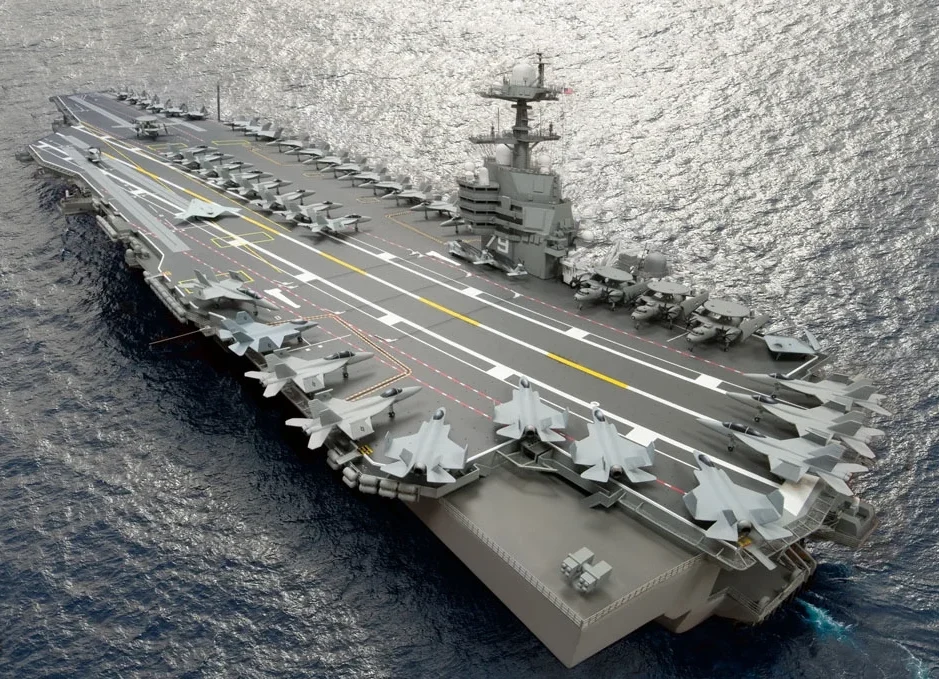
A composite photo illustration representing the Ford-class aircraft carrier, USS John F. Kennedy (CVN-79). US Navy Photo