China’s Aircraft Carriers and Naval Aviation: Power Projection or Overstated Threat?
An in-depth assessment of the Fujian carrier and China’s carrier-based aircraft compared to U.S. Navy capabilities—highlighting the technical, operational, and strategic gaps that still limit Beijing’s ability to compete at sea
China’s New Aircraft Carrier: Capability, Limitations, and Strategic Reality
By Stephen Harrison Thomas
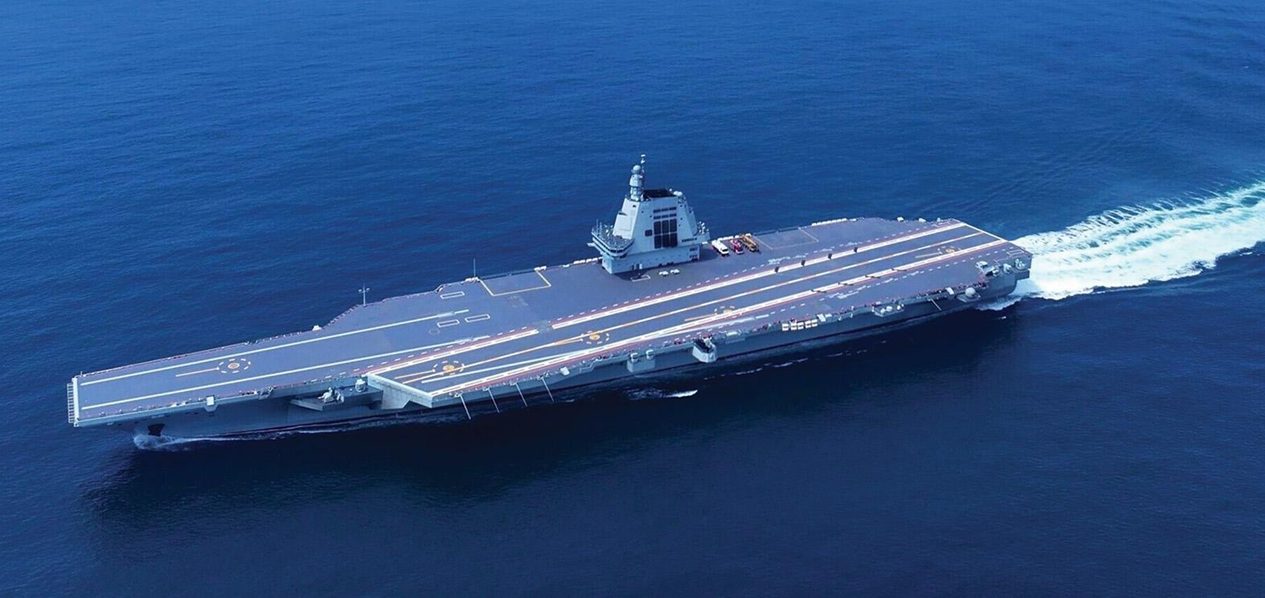
In recent years, the rapid expansion of the People’s Liberation Army Navy (PLAN) has drawn global attention, particularly with the launch of China’s newest aircraft carrier, Fujian (Type 003). Often portrayed as a direct challenger to U.S. naval dominance, the vessel represents an important milestone for China’s military modernization.
However, a closer examination reveals a more nuanced reality. While the Fujian is undoubtedly a significant achievement for China, it does not yet represent a peer-level threat to established carrier powers. Its limitations—technical, operational, and strategic—suggest that China’s carrier force remains in a developmental phase rather than a decisive global force.
1. A Young Carrier Program vs. a Century of Experience
The most fundamental issue is not hardware—it is experience.
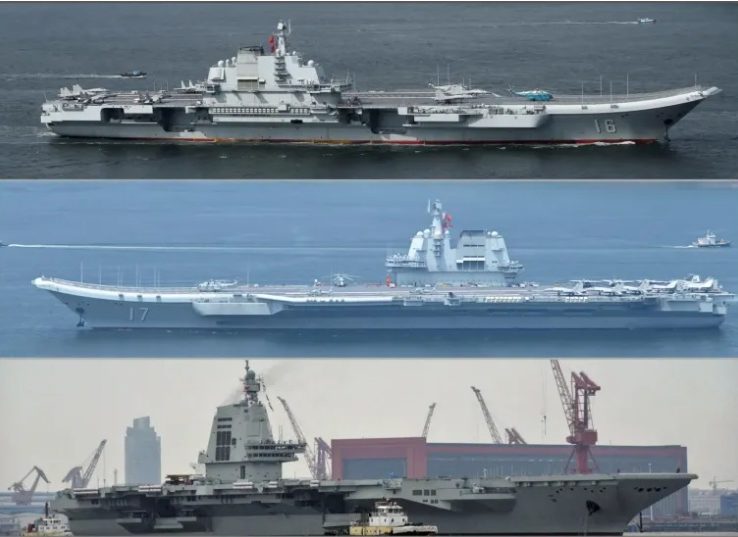
China’s carrier aviation program effectively began in 2012 with the commissioning of the Liaoning, a refurbished Soviet hull. Its first domestically built carrier, Shandong, entered service only in 2019. In contrast, the United States has operated aircraft carriers continuously since the 1920s.
Carrier warfare is among the most complex military operations in existence. It requires:
- High-tempo flight deck operations
- Integrated air wings
- Combat-tested doctrine
- Decades of institutional knowledge
As one analysis notes, China is still learning to conduct sustained, high-intensity flight operations—something U.S. forces have refined since World War II .
This gap cannot be closed quickly. It is measured not in years, but in generations.
2. Limited Air Wing and Operational Output
Aircraft carriers derive their combat power from their air wings, not the ship itself.
- U.S. Ford-class carriers: ~75–90 aircraft
- Fujian estimates: ~40–60 aircraft
This difference is not just numerical—it directly affects:
- Strike capacity
- Air superiority
- Sustained operations
Even more important is sortie generation rate—how many missions a carrier can launch daily. U.S. carriers can generate over 120 sorties per day, and far more in surge operations. Due to design and operational constraints, the Fujian may achieve only a fraction of that output .
In naval aviation, tempo equals power. On that metric, China still lags significantly.
3. Flight Deck Design Constraints
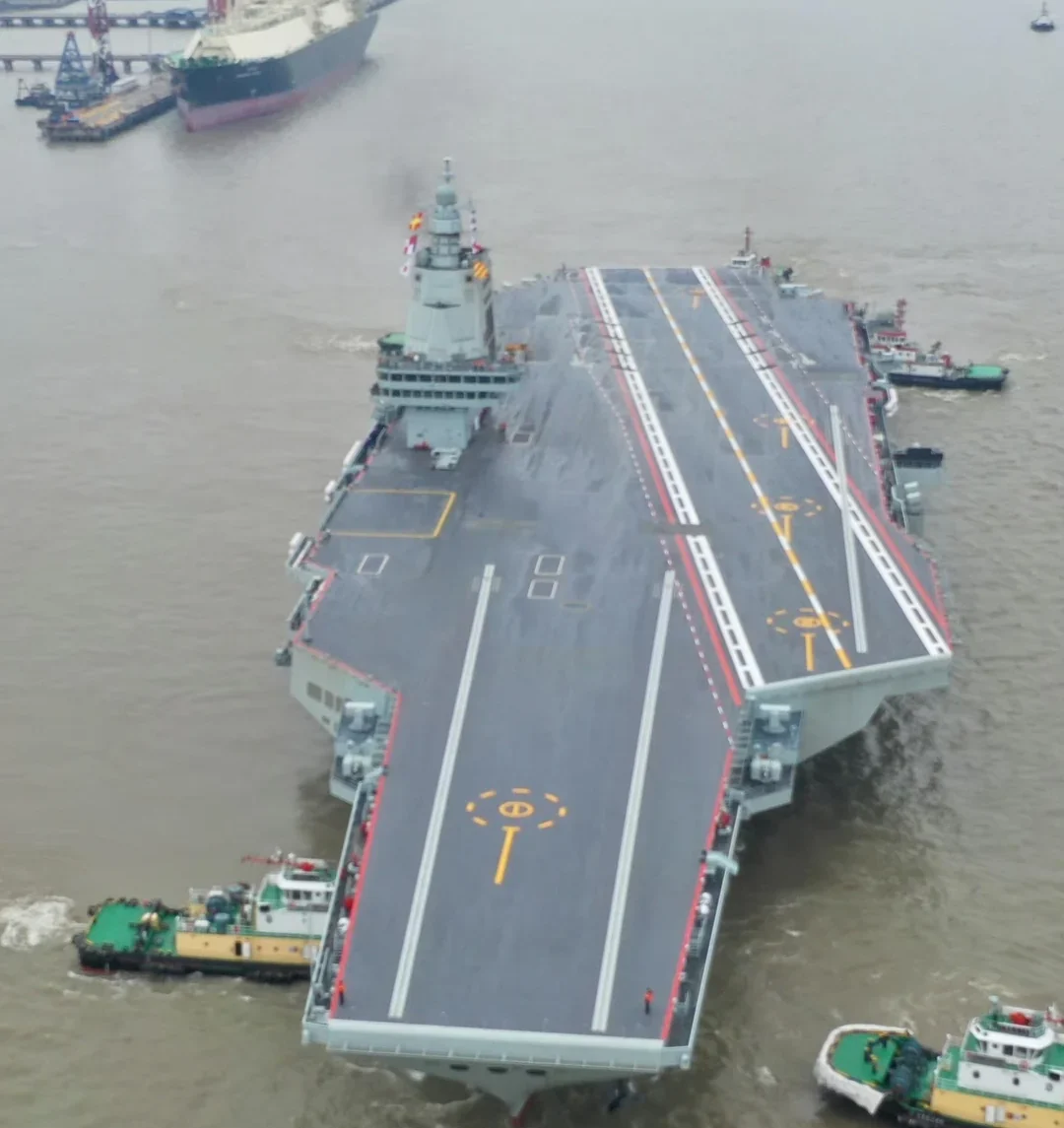
One of the most critical—and often overlooked—limitations of the Fujian lies in its flight deck layout.
Analysis of publicly available footage suggests that:
- Catapult positions overlap with landing areas
- Aircraft landing paths interfere with launch operations
- Simultaneous launch and recovery operations are restricted
This creates a bottleneck. During landing operations, multiple launch catapults may be unusable, slowing the overall pace of flight operations.
The consequence is profound:
Reduced efficiency in combat scenarios where speed and volume of air operations are decisive.
4. Conventional Propulsion: A Strategic Limitation
Unlike U.S. carriers, which are nuclear-powered, the Fujian uses conventional propulsion.
This has several implications:
- Limited operational range
- Frequent refueling requirements
- Reduced endurance at sea
Nuclear carriers can operate for decades without refueling, enabling global reach. In contrast, conventionally powered carriers must rely heavily on logistical support.
As a result, Chinese carriers are largely constrained to regional operations, particularly within the “first island chain” in the Western Pacific .
5. Logistics and Global Reach
Modern naval power depends not just on ships, but on support networks.
The United States operates:
- A global network of bases
- Extensive replenishment fleets
- Allied logistical infrastructure
China, by comparison, has:
- Limited overseas bases
- A smaller replenishment fleet
- Restricted access to foreign ports
This means that even if the Fujian performs well tactically, it lacks the strategic sustainment required for prolonged global operations .
6. Technology: Progress with Gaps
The Fujian introduces advanced features, including electromagnetic catapults (EMALS)—a major step forward for China.
However, key differences remain:
- U.S. systems are combat-tested and mature
- Chinese systems are new and still undergoing refinement
- Integration across sensors, aircraft, and command systems is less developed
Additionally, limitations in areas such as radar integration, aircraft handling systems, and deck operations reduce overall effectiveness .
7. Lack of Combat Experience
Perhaps the most decisive factor is combat experience.
U.S. carriers have participated in:
- Major conflicts (e.g., Desert Storm)
- Continuous global deployments
- Real-world high-tempo operations
Chinese carriers, by contrast, have:
- Minimal operational history
- No combat experience
- Limited exposure to complex, high-risk scenarios
Carrier operations are often described as “written in blood”—a reflection of the hard-earned lessons required to master them .
8. So—Are Chinese Carriers “Not a Threat”?
It would be inaccurate—and strategically unwise—to dismiss China’s carrier program entirely.
The reality is more balanced:
What the Fujian is:
- A major technological milestone for China
- A capable regional power projection platform
- A stepping stone toward more advanced carriers
What it is not (yet):
- A peer competitor to U.S. carrier strike groups
- A globally deployable power projection system
- A decisive threat in high-end naval warfare
Conclusion: A Growing Force, Not a Dominant One
China’s Fujian aircraft carrier reflects a nation in transition—from a coastal defense navy to a blue-water force.
But progress should not be confused with parity.
Significant gaps remain in:
- Operational experience
- Carrier doctrine
- Logistics and sustainment
- Flight deck efficiency
- Global reach
For maritime professionals and policymakers, the key takeaway is clear:
China’s aircraft carriers are important - but not yet decisive.
They represent future potential, not present dominance.
China's First Supercarrier
On 5 November 2025, China’s People’s Liberation Army Navy (PLAN) commissioned its newest and most powerful aircraft carrier, the Type 003 Fujian. Built at Jiangnan Shipyard in Shanghai, the 80,000-ton conventionally powered warship was laid down in 2016 and launched in June 2022.
Measuring 1,037 feet long with a 249-foot beam, the Fujian is considered the world’s largest nonnuclear-powered warship. Numbered CV-18, she conducted sea trials during 2024–25 and is the third PLAN aircraft carrier in service. The Fujian was designed domestically and incorporates catapults as part of an electro-magnetic launch system (EMALS). Two older carriers, the Type 001 Liaoning and Type 002 Shandong, joined the Chinese fleet in 2012 and 2019, respectively, but were based on a Soviet design and feature only a “ski jump” flight deck to enhance short takeoffs.
Carrier Air Power Comparison
U.S. Naval Aviation vs. China’s Emerging Fleet
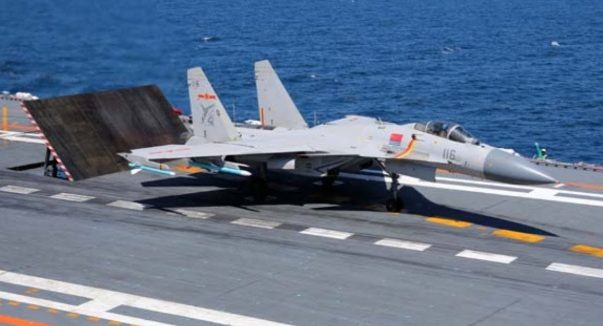
Picture: J-15 Flying Shark- The "Iron Fist" of the Chinese Navy
While much attention is given to aircraft carriers themselves, the true measure of naval aviation power lies in the aircraft they deploy. In this respect, the gap between the United States Navy and China’s carrier aviation remains significant.
Proven Platforms vs. Developing Systems
The U.S. Navy’s carrier air wings are built around two cornerstone platforms:
- F/A-18E/F Super Hornet – a highly reliable multirole fighter with decades of operational experience
- F-35C Lightning II – a fifth-generation stealth aircraft with advanced sensors, data fusion, and networked warfare capabilities
These aircraft are not only technologically advanced but combat-tested, having been refined through continuous real-world operations.
China’s carrier-based aviation, by contrast, relies primarily on:
- J-15 “Flying Shark” – a large, heavy fighter derived from a Soviet-era design
- J-35 (in development) – a prospective stealth fighter still undergoing testing and integration
While these platforms represent progress, they face notable limitations.
Key Capability Gaps
1. Weight and Efficiency Issues
The J-15 is significantly heavier than its Western counterparts, which creates operational drawbacks:
- Reduced fuel efficiency
- Lower payload flexibility under certain launch conditions
- Higher stress on carrier operations
Earlier Chinese carriers using ski-jump launches further limited the aircraft’s range and weapons load, although the Fujian’s catapult system aims to mitigate this.
2. Stealth and Sensor Integration
The F-35C represents a major leap in modern warfare:
- Advanced stealth shaping and materials
- Sensor fusion that integrates radar, infrared, and electronic warfare data
- Real-time data sharing across platforms
China’s J-35 is intended to compete in this space, but remains:
- Unproven in operational conditions
- Limited in demonstrated sensor integration
- Still undergoing development and refinement
In modern naval combat, information dominance is often more decisive than raw performance—and this is an area where the U.S. retains a clear edge.
3. Engine and Reliability Concerns
U.S. naval aircraft benefit from decades of engine development and reliability improvements, enabling:
- Higher sortie rates
- Lower maintenance downtime
- Greater mission readiness
Chinese aircraft engines have historically lagged behind Western standards in:
- Durability
- efficiency
- maintenance cycles
This directly impacts sustained carrier operations, where reliability is critical.
4. Carrier Integration and Operational Experience
U.S. aircraft are part of a fully integrated system that includes:
- Airborne early warning (E-2D Hawkeye)
- Electronic warfare (EA-18G Growler)
- Mature pilot training pipelines
China is still building this ecosystem. While aircraft like the KJ-600 early warning plane are in development, they are not yet fully integrated into a combat-ready carrier air wing.
As one assessment notes, China’s carrier aviation still faces a steep learning curve in coordinating complex, multi-aircraft operations at sea .
Conclusion: Progress Without Parity
China’s naval aviation is advancing rapidly, and its newer aircraft reflect serious ambition. However, key gaps remain in:
- Aircraft maturity
- systems integration
- reliability
- operational experience
The result is a force that is growing in capability but not yet comparable to the highly refined and combat-proven aviation arm of the U.S. Navy.
In short, while China is building the foundations of carrier air power, the United States continues to operate the most capable and integrated naval aviation force in the world.