A Return to ‘Gunboat Diplomacy’?
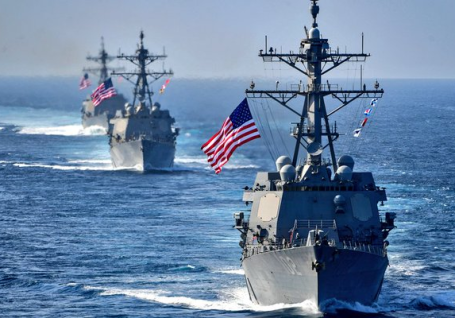
The United States Navy has amassed a substantial force off the coast of Venezuela in recent weeks, raising tensions with President Nicolás Maduro’s regime. Under the banner of a counter-narcotics operation, the U.S. deployment includes warships, aircraft, and thousands of personnel – a display of military might that many observers liken to a modern revival of gunboat diplomacy. This show of force is pressuring Caracas to ramp up its own defenses, potentially worsening Venezuela’s economic woes and even sowing the seeds of political change at home.
Show of Force in the Caribbean
In late August 2025, the U.S. began rapidly bolstering its military presence in the Southern Caribbean near Venezuela. According to news reports, at least eight U.S. Navy warships and a nuclear-powered submarine have been deployed to the region, along with roughly four thousand sailors and Marinescfr.org. This contingent is officially tasked with “counter-narcotics and counter-terror” operations against drug cartels that Washington has designated as terrorist organizations. President Donald Trump’s administration alleges that Venezuelan leader Nicolás Maduro is deeply involved with narcotrafficking cartels, and U.S. officials have vowed to “eliminate the ability” of those cartels to operatefoxnews.com. As part of this campaign, U.S. forces even carried out an airstrike in early September that destroyed a suspected drug-smuggling speedboat, killing 11 people aboard.
The American naval flotilla off Venezuela is impressive. Newsweek provided a full list of the U.S. Navy vessels involved
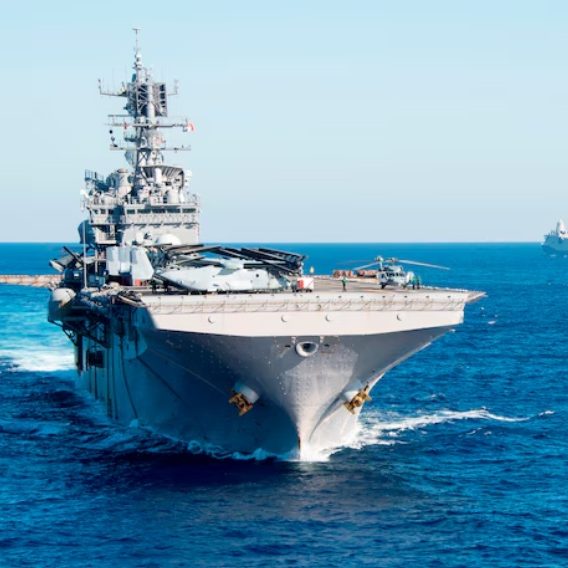
Amphibious Ready Group: USS Iwo Jima (a 40,000-ton Wasp-class amphibious assault ship) accompanied by two San Antonio-class amphibious transport docks, USS San Antonio and USS Fort Lauderdale. The Iwo Jima ARG is carrying the 22nd Marine Expeditionary Unit – about 2,200 Marines – plus naval air assets like Harrier jump-jets, Cobra attack helicopters, and MV-22 Ospreys. In total, around 4,500 U.S. sailors and Marines are embarked in this group
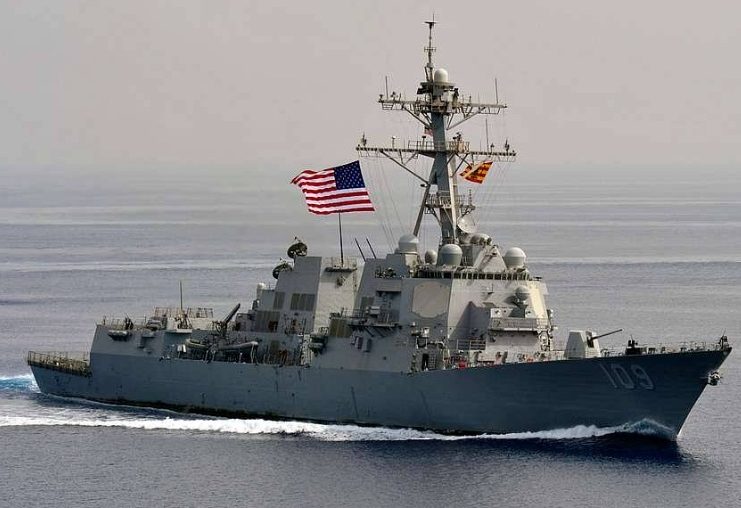
Guided-Missile Destroyers: USS Gravely, USS Jason Dunham, and USS Sampson (all Arleigh Burke-class destroyers). These Aegis-equipped warships carry Tomahawk cruise missiles and advanced air-defense systems.
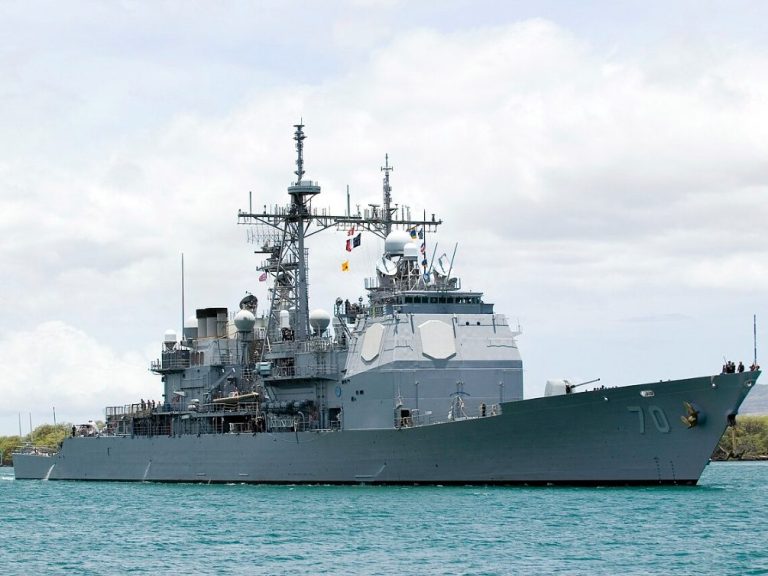
Guided-Missile Cruiser: USS Lake Erie (a Ticonderoga-class cruiser), loaded with dozens of missiles and capable of air defense, strike, and anti-ship missions.
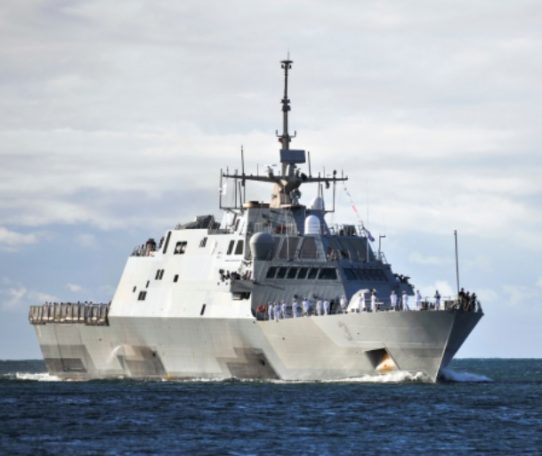
Littoral Combat Ship: USS Minneapolis–Saint Paul (a Freedom-class littoral combat ship), a fast and agile warship useful for coastal patrol and interdiction.
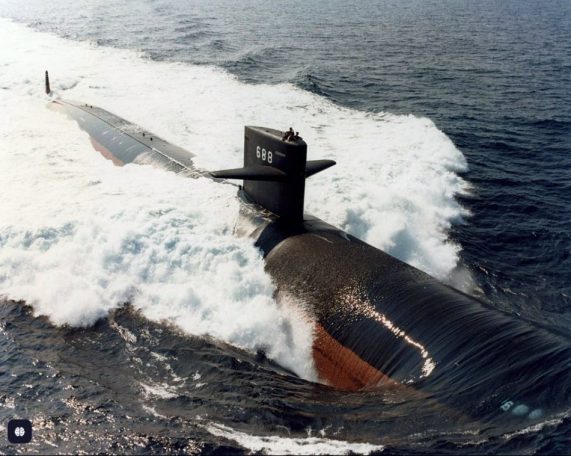
Attack Submarine: USS Newport News (a Los Angeles-class nuclear-powered fast-attack submarine), which is reportedly en route to join the others. Its presence adds a stealthy undersea threat to the mix.
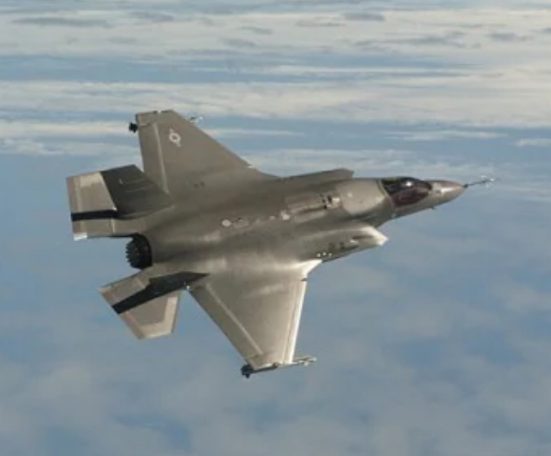
In addition to the naval units, the U.S. has deployed P-8 Poseidon maritime patrol aircraft to surveil the area. The Pentagon also moved 10 F-35 stealth fighter jets to Puerto Rico as a forward presence, ready to respond if Venezuelan forces pose a threat. All these assets make the deployment one of the largest U.S. military postures in the Caribbean in decades. A Pentagon spokesperson described the mission as a “whole-of-government effort” to dismantle the cartels’ networks. However, the implicit message is unmistakable: a powerful U.S. force is hovering at Maduro’s doorstep.
Echoes of Gunboat Diplomacy
Indeed, many view this as classic coercive diplomacy. The mere presence of U.S. warships just offshore sends a warning to Caracas. “The cartel running Venezuela is strongly advised not to interfere,” the U.S. Department of Defense warned, after Venezuelan fighter jets twice flew provocatively close to an American destroyer in international waters. (The New York Times reported that two Venezuelan F-16s roared over the USS Jason Dunham during one encounter.) President Trump later stated bluntly that if Venezuelan aircraft put U.S. ships in danger, “they’ll be shot down.”
The strategy unfolding off Venezuela’s coast strongly recalls the “gunboat diplomacy” of an earlier era. Gunboat diplomacy refers to the practice of pursuing foreign policy objectives through conspicuous displays of naval power – essentially using warships as floating ambassadors of intimidation. In the 19th and early 20th centuries, major powers (including the U.S.) regularly sent gunboats and cruisers to foreign harbors to imply a threat of warfare and coerce weaker nations into compliance. Often, the very sight of a battleship or cruiser looming off one’s coastline was enough to sway negotiations without firing a shot.
The United States has a long history of such naval posturing in Latin America. Under the Monroe Doctrine and President Theodore Roosevelt’s “Big Stick” policy, the U.S. repeatedly intervened in Caribbean and Central American affairs with warships and Marines. In fact, Panama’s own independence in 1903 was secured in no small part by U.S. gunboat intervention. President Roosevelt dispatched the gunboat USS Nashville to Panamanian waters to block Colombian troops, effectively ensuring Panama’s secession so the Panama Canal could be built. This episode is often cited as a classic example of U.S. gunboat diplomacy in Latin America, perfectly illustrating Roosevelt’s famous adage, “speak softly and carry a big stick.” The newly-independent Panama even became a de facto U.S. protectorate for decades.
Other historical instances abound – from U.S. naval squadrons pressuring indebted Caribbean nations in the early 1900s, to blockades and interventions in places like Haiti, Nicaragua, and Cuba. Throughout these actions, the pattern was the same: use superior naval power to silently compel a change in behavior or leadership in the target country, without necessarily declaring war. Today’s deployment off Venezuela, while couched in the language of a drug interdiction mission, fits this mold. It is a 21st-century reprise of gunboat diplomacy, with guided-missile destroyers and amphibious assault ships now playing the role that gunboats and battleships did a century ago.
Maduro’s Response: Defense Buildup vs. Economic Strain
Venezuelan Air Force Sukhoi Su-30MKV fighters are among the assets Maduro has scrambled in response to the U.S. naval presence.
Faced with the unprecedented U.S. naval buildup, President Maduro has reacted with bellicose defiance – and a domestic military mobilization that is stretching Venezuela’s fragile economy. Maduro blasted the U.S. deployment as “the greatest threat that has been seen on our continent in the last 100 years”, accusing Washington of seeking “regime change through military threat.” He insists Venezuela “won’t bow to threats” and claims his armed forces are “super-prepared” to resist. To show he means business, Maduro’s government has taken a number of costly defensive measures in recent weeks:
Air and Naval Patrols: Venezuelan forces have started patrolling the skies and seas near their coast. Fighter jets and maritime patrol aircraft have been flying sorties to keep an eye on U.S. ships. In one incident, as noted, Venezuelan Su-30 and F-16 warplanes aggressively buzzed a U.S. Navy destroyer, prompting stern warnings from the Pentagon. Caracas has also put its few operational warships and coastal defenses on higher alert. These activities consume fuel and resources the cash-strapped nation can barely afford, yet Maduro is eager to project strength.
Troop Deployments: The Venezuelan military has deployed thousands of troops to strategic areas. Maduro ordered some 25,000 personnel to coastal regions and the Colombian border, ostensibly for anti-drug operations and national defense. He also activated Venezuela’s civilian National Militia, calling up volunteers across the country to join local defense units. State media showed images of militia musters and exercises. All of this represents a significant uptick in defense spending – from fueling vehicles and feeding troops to logistics for moving units around.
Military Drills and Arms Readiness: Venezuelan forces have conducted exercises to simulate repelling an invasion. Ships and anti-aircraft units have been drilled, and missiles readied. Maduro has been seeking military aid from allies like Russia and Iran in the form of equipment or maintenance support, according to regional rumor, hoping to bolster his capabilities. While details are sparse, it’s clear the regime is diverting whatever resources it can to military preparedness in response to the U.S. pressure.
These moves come at a time when Venezuela’s economy is already in dire crisis. Years of hyperinflation, mismanagement, and sanctions have left the country impoverished and its people suffering shortages of food, medicine, and basics. Nearly 8 million Venezuelans have fled the country since 2014 amid economic and humanitarian collapse – a stunning exodus. In this context, every additional bolívar Maduro spends on fighter jet fuel or troop deployments is money not spent on shoring up the economy or helping citizens. By forcing Caracas to pour scarce funds into defense, the U.S. naval buildup is worsening the economic squeeze on Maduro’s government. Venezuela’s cash flow and foreign reserves are extremely limited; unplanned military expenses (like extended mobilizations or high alert operations) only accelerate the drain. Economic analysts note that even a few weeks of heightened readiness – flying combat air patrols, moving army units, etc. – can rack up millions of dollars in costs that Venezuela can ill afford.
Maduro is essentially being pushed into an arms race he cannot win. The longer U.S. warships linger off his coast, the longer he feels compelled to keep his powder dry and forces at the ready. This “guns over butter” dilemma further undermines Venezuela’s domestic stability. Ordinary Venezuelans, already beset by inflation and scarcity, gain nothing from their government’s military posturing – if anything, it diverts attention and funds away from their urgent needs. Over time, this could erode what remains of Maduro’s popular support. It’s a calculated pressure: the U.S. knows that stretching Venezuela’s meager resources thin with security costs will deepen public discontent and possibly fissures within the regime.
Can Pressure Spur Political Change?
For the Trump administration, the naval buildup may have an unstated goal beyond disrupting drug flows: undermining Maduro’s hold on power. Washington has long viewed Maduro as an illegitimate dictator – in Trump’s first term, the U.S. openly backed an alternative president-in-exile and imposed harsh sanctions in a “maximum pressure” campaign. Now, rather than explicitly calling for regime change, the U.S. is turning up the heat militarily and economically, perhaps hoping the situation will come to a boil from within. The logic is that if Venezuela’s ruling circle and populace feel sufficiently threatened and impoverished by the standoff, they might move to oust Maduro themselves to avert disaster.
There are signs this pressure is biting. Maduro’s own rhetoric shows concern – he has loudly warned that the U.S. is “seeking a regime change through military threat” and even said that if attacked, he would “mobilise the country” and declare “a republic in arms” to resist. Such bombast aside, he also struck a slightly conciliatory note by suggesting no political differences “justify a high-impact military conflict in South America.” This hints that Maduro knows a direct conflict with the U.S. would be ruinous and that his position is precarious. Meanwhile, behind the scenes, whispers circulate of unrest within Venezuela’s military ranks – younger officers frustrated with deteriorating conditions, or power-brokers wondering how long to stick with Maduro as international isolation deepens.
It is not lost on Venezuela’s elites that neighboring regimes toppled under U.S. pressure in the past. Latin American history offers cautionary tales: for example, Panama’s strongman Manuel Noriega fell in 1989 after U.S. economic sanctions and a military buildup (and ultimately an invasion) made his position untenable. In 1994, Haiti’s coup leaders yielded when U.S. warships appeared offshore to enforce a UN mandate. Maduro may face a similar fate if key supporters decide that continuing to prop him up will lead to national ruin or foreign intervention. Already the U.S. bounty on Maduro (now $50 million for information leading to his arrest) and narco-trafficking indictments hang over him, signaling that Washington will never accept his rule as legitimate. This kind of relentless pressure can chip away at the loyalty of even his inner circle.
On the other hand, analysts caution that external threats can sometimes rally nationalist sentiment around an embattled leader – at least temporarily. Maduro has attempted to leverage the U.S. naval presence as a political tool, calling on Venezuelans to unite against imperialist aggression. For a segment of the population and the military, the sight of U.S. warships off their coast could actually harden resolve to stand by the regime out of patriotic fervor. If Maduro convinces enough Venezuelans that the economic pain is solely due to U.S. “sabotage” and aggression, he might manage to hang on, blaming the Yankees for the country’s ills. Thus far, though, the depth of Venezuela’s crisis makes sustained “rally ’round the flag” enthusiasm unlikely – empty stomachs and collapsing utilities tend to outweigh anti-U.S. sloganeering over time.
Most likely, if the U.S. maintains its gunboat-style pressure, Maduro’s position will continue to deteriorate. Each passing week brings more strain on Venezuela’s economy and armed forces. Internal fractures could widen – whether mass protests by suffering citizens or whispered plotting in the barracks. Washington’s show of force is essentially shining a spotlight on the Maduro regime’s failures and pushing them to a breaking point. Marco Rubio, now U.S. Secretary of State, openly hinted that the administration’s hard line might encourage Venezuela’s own people and institutions to act. “President Trump has been very clear – he wants a peaceful transfer of power,” Rubio said (referring to Maduro’s exit), reiterating that the U.S. seeks a change in Venezuela’s leadership without a direct invasion. The naval deployment may be the heavy stick that forces that outcome.
High-Stakes Gamble in Caracas
In reviving a gunboat diplomacy approach, the United States is taking a calculated gamble in Venezuela. The show of naval force has successfully put Maduro on the defensive – militarily and economically. Venezuela is being pressured into an arms buildup it can’t afford, one that worsens living conditions and potentially fuels greater domestic opposition to Maduro’s rule. This is precisely the strategic squeeze Washington appears to want: either Maduro cracks under the weight and negotiations for his exit begin, or those around him (and suffering Venezuelans at large) decide enough is enough and find a way to remove him.
At the same time, the situation is fraught with risks. A miscalculation – a Venezuelan jet pilot getting too bold, or a nervous U.S. destroyer captain – could spark a live fire incident that spirals quickly. Maduro’s government, feeling cornered, might also lash out or provoke a crisis to rally support. And if regime change does occur, the aftermath could be chaotic. The Navy League members in Panama, many of them seasoned former service members, will recall how past U.S. interventions in Latin America sometimes led to unintended consequences. Gunboat diplomacy can be a blunt instrument: it may achieve the immediate aim of coercion, but it doesn’t guarantee a stable or democratic outcome the day after.
For now, the standoff off Venezuela’s coast continues, carrying echoes of history into present-day geopolitics. The U.S. Navy’s gray hulls on the horizon send a clear message to Maduro – one written not in diplomats’ words but in the time-tested language of warships. Whether that message ultimately forces a change of course in Caracas, or ends in a dangerous confrontation, will be watched closely in the coming weeks. As one observer noted, this is “gunboat diplomacy” back in action, and its effects are already being felt from the waters of the Caribbean to the halls of power in Venezuela
SOURCES
- The New York Times — “Trump Deploys Navy Ships to Pressure Maduro and Venezuelan Cartels” — September 5, 2025
- Newsweek — “List of U.S. Navy Ships Deployed Near Venezuela as Trump Escalates Standoff” — September 6, 2025
- Newsweek — “USS Lake Erie Crosses Panama Canal as Trump’s Caribbean Buildup Intensifies” — August 30, 2025
- Newsweek — “Satellite Photos Capture U.S. Navy Fleet Approaching Venezuela” — early September 2025
- U.S. Department of Defense — Public statements/briefings on the Venezuela counter-narcotics mission — September 5–9, 2025
- U.S. Marine Corps / II MEF (22nd MEU) — Release on amphibious and field training in Puerto Rico — August 31–September 3, 2025
- Reuters — “Trump plays down possible regime change in Venezuela; U.S. deploys stealth fighter jets” — September 5–6, 2025
- Reuters — “Eight days later, questions linger about Venezuela boat strike” — September 10, 2025
- The Wall Street Journal — “Suspected Venezuela Drug Boat Had Turned Around Before U.S. Strike” — September 10, 2025
- Al Jazeera — “Pentagon warns Venezuela as 2 military aircraft fly near U.S. Navy ship” — September 5, 2025
- Al Jazeera — “U.S. deployment in Caribbean ‘not training,’ says defense chief Hegseth” — September 9, 2025
- Zona Militar (English) — Note on F-35 deployment to Puerto Rico and Venezuelan F-16 flyby — September 7, 2025
- The War Zone (The Drive) — “U.S. Amphibious Landing Exercise Underway in Puerto Rico as Tensions With Venezuela Mount” — September 2, 2025
- USNI News — “U.S. Military Strikes Suspected Drug Vessel as Warships Gather in the Caribbean” — September 2, 2025
- VPM News (NPR member station) — Coverage of Iwo Jima ARG/22nd MEU training in Puerto Rico — September 8, 2025
- Reuters — “Venezuela to boost troops to tackle drug trafficking as U.S. strengthens military in Caribbean” — September 8, 2025
- CBS/AFP — “Maduro sends 25,000 troops to borders amid U.S. buildup” — September 9, 2025
- UNHCR — Venezuela Situation (Operational Data Portal/overview) — 2024–2025 updates
- U.S. Office of the Historian — “Roosevelt Corollary to the Monroe Doctrine (1904)”
- Miller Center, University of Virginia — “Message Regarding the Panamanian Revolution” (November 16, 1903)
- Naval History & Heritage Command — “List of U.S. Naval Expeditions, 1901–1929” (entries for Panama, November 1903; USS Nashville)