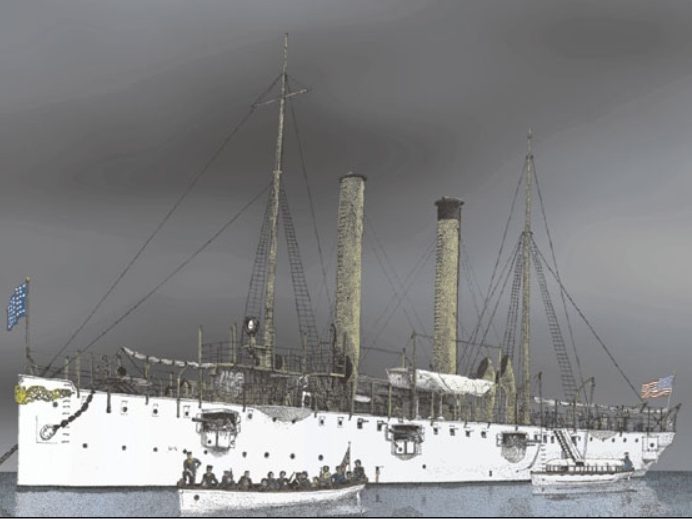
Guardians of Panama’s Independence: U.S. and Colombian Naval Vessels of November 1903
Donec quam felis, ultricies nec, pellentesque eu
In early November 1903, the calm tropical waters off Colón and Panama City bore silent witness to a momentous turning point in history. As Panama sought to break away from Colombia and declare its independence, naval ships from the United States and Colombia converged on the isthmus. In a remarkable display of gunboat diplomacy, these vessels played decisive roles in ensuring Panama’s separation was achieved with minimal bloodshed. This commemorative article honors the key ships – their names, classes, capabilities, armaments, and the pivotal roles they played – in the drama of Panama’s independence. The presence of these warships, through blockades and bold posturing, shaped a peaceful outcome and carved a legacy that the Navy League Panama proudly remembers.
Background: Warships on the Isthmus
By 1903, Panama was a province of Colombia poised on the brink of revolution. A treaty to allow a U.S.-built canal had collapsed in the Colombian Senate, fueling Panamanians’ desire for independence. Sensing both strategic opportunity and potential unrest, U.S. President Theodore Roosevelt ordered American warships to the isthmus as a deterrent force. As Panamanian patriots prepared to declare independence on November 3, 1903, units of the Colombian navy also steamed toward Panama to quell the uprising. What followed was a delicate naval ballet: U.S. vessels arriving to protect the Panamanian revolution and Colombian ships arriving to enforce Bogotá’s authority. Each ship’s capabilities and resolve were tested in a tense standoff that thankfully never erupted into full-scale battle. Instead, the mere presence of powerful ships – and the courage of their crews – proved decisive in securing Panama’s freedom.
USS Nashville – The
Gunboat That Held the Line
USS Nashville (PG-7), a U.S. Navy gunboat, was arguably the most fateful player in Panama’s independence saga. A 1,371-ton vessel about 234 feet long, Nashville was built for agility in coastal waters. She could reach speeds of roughly 16 knots, and her armament packed a punch for her size. Equipped with a main battery of eight 4-inch naval guns supplemented by smaller 6-pounder and 3-pounder guns, USS Nashville was designed to patrol, escort, and, when needed, bombard shore targets.
On November 2, 1903, USS Nashville steamed into Colón Harbor on Panama’s Atlantic coast under Commander John Hubbard. Her arrival was timed perfectly. The very next morning, a Colombian battalion of 500 soldiers landed at Colón, intent on boarding the Panama Railroad to suppress the brewing insurrection in Panama City. With firm orders citing an 1846 treaty obligation to keep transit across the isthmus “neutral,” Nashville’s crew blocked the rail line and physically stood between the Colombian troops and their objective. Commander Hubbard put ashore a detachment of bluejackets and Marines, who secured the rail yard. Nashville’s guns were trained ominously on the Colombian camp – a clear signal that any attempt to force the issue would meet overwhelming firepower. The situation was extraordinarily tense: at one point Colombian forces under Colonel Eliseo Torres threatened to attack Americans in Colón if not allowed passage. In response, USS Nashville swung her broadside of guns to aim point-blank at the Colombian positions, ready to unleash. Faced with this resolve, the Colombians backed down.
USS Nashville’s vigilant action prevented Colombian reinforcements from reaching Panama City, buying precious time for the independence movement. Panama City declared its independence on November 3 while Colón was effectively in a standoff. Thanks to Nashville, that standoff ended peacefully. By November 5, the isolated Colombian troops in Colón agreed to withdraw, marching back to their transport ships without a fight. History often recalls USS Nashville’s intervention as a textbook case of naval diplomacy – a single gunboat deterring an entire battalion and forcing a peaceful solution. In Panama, Nashville is remembered as the steel guardian that helped midwife a nation’s birth.
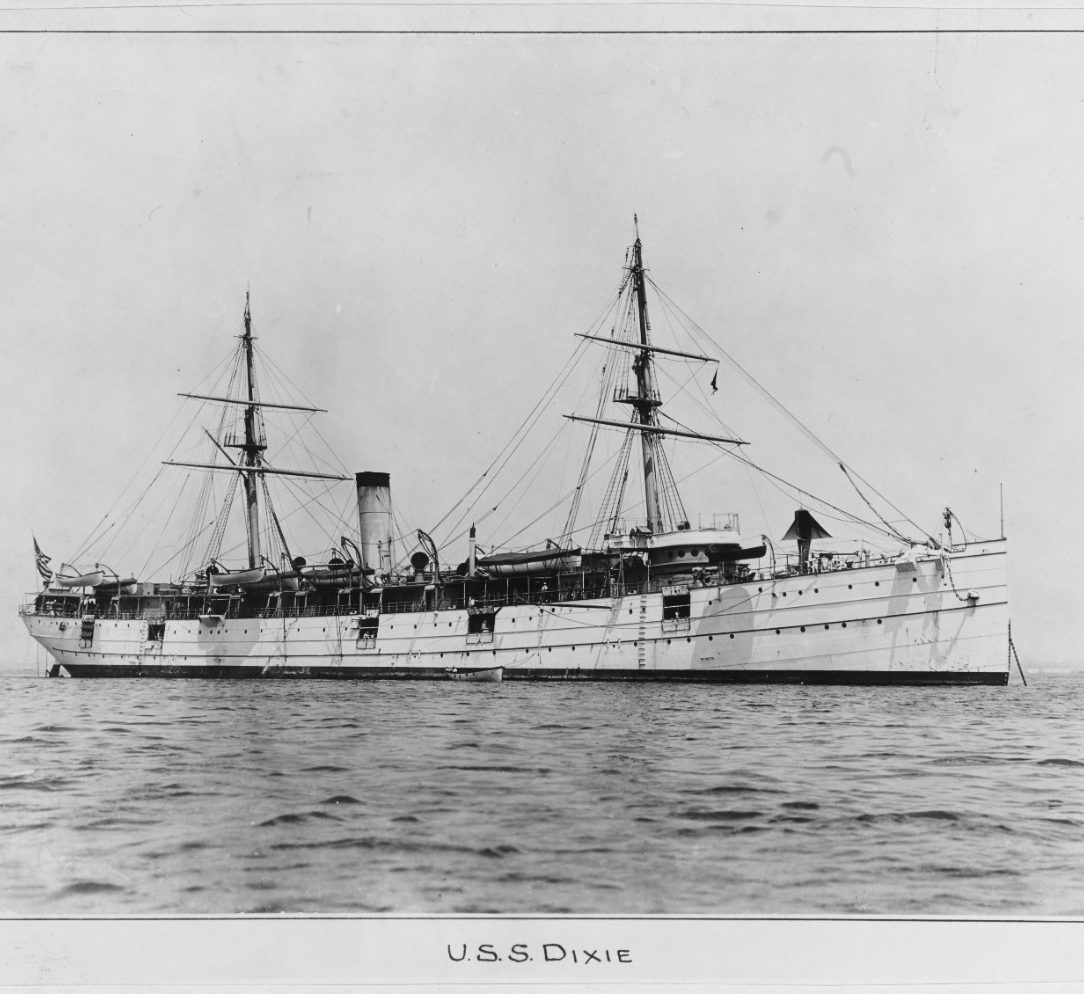
USS Dixie – Delivering Marines and Hope
While Nashville held the line initially, USS Dixie arrived to reinforce the cause of Panamanian independence. USS Dixie (originally commissioned in 1898) was an auxiliary cruiser – a converted steamship of about 6,100 tons that served as a transport and later a destroyer tender. Capable of approximately 14 knots, she wasn’t the fastest warship, but she had substantial cargo capacity and could carry hundreds of troops. Armed with ten 3-inch guns, the Dixie could defend herself and support landing operations. Her primary strength, however, was as a troop carrier and logistics ship.
In late October 1903, as Washington anticipated a showdown on the isthmus, USS Dixie took on board a battalion of U.S. Marines at League Island Navy Yard in Philadelphia. These Marines – several hundred strong under Major John Lejeune – were a floating regiment ready to go ashore if American lives or Panama’s new government needed protection. USS Dixie reached Colón on November 5, 1903, just as the crisis was peaking. She dropped anchor to find that USS Nashville had largely contained the situation but that uncertainty remained. Dixie’s arrival with fresh Marines and additional naval firepower bolstered the American presence immeasurably. The Marines disembarked in Colón to secure key facilities and to reassure the newly declared Panamanian authorities that the U.S. would support them. The very sight of khaki-clad Marines patrolling the rail line and streets of Colón, backstopped by Dixie’s guns, sent an unmistakable message to any remaining Colombian loyalists: the United States was committed to Panama’s autonomy.
Though no direct combat occurred, USS Dixie’s contribution was vital. She served as a stabilizing force, landing a peacekeeping presence that helped deter rioting or reprisals in the tense first days of independence. Additionally, Dixie’s crew assisted in communications and medical support as needed, showing the humane side of naval power. In commemorating USS Dixie, we remember how she delivered not just troops but also hope and security to the nascent Republic of Panama.
USS Mayflower –
Flagship of Diplomacy
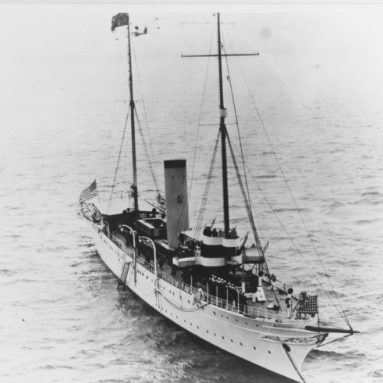
Amid the naval flotilla protecting Panama, the USS Mayflower (PY-1) played a unique diplomatic and symbolic role. Unlike the other gray warships, Mayflower was originally a luxurious steam yacht before being acquired by the U.S. Navy. At 2,650 tons displacement and about 275 feet in length, she had a graceful profile and a top speed of nearly 17 knots – faster than the gunboat Nashville. Mayflower’s armament was modest (around six 6-pounder guns, equivalent to 57 mm cannons), reflecting her yacht origins and intended use as a dispatch and patrol vessel rather than a frontline combatant. In 1903, she served as the flagship of Rear Admiral Joseph Coghlan, commander of the Caribbean Squadron.
During Panama’s independence, USS Mayflower became a floating headquarters and venue for high-level talks. After Panama’s successful secession, Colombia dispatched envoys to try to negotiate a reversal or a face-saving compromise. On November 13, 1903, Admiral Coghlan hosted a meeting aboard USS Mayflower between representatives of the new Panamanian government and Colombian diplomats. The choice of the Mayflower as the meeting site was highly symbolic: a U.S. naval ship in Panamanian waters was effectively neutral ground, yet its presence underscored that the balance of power had shifted on the isthmus. Though the talks aboard Mayflower did not result in Colombia regaining Panama, they did provide a dignified setting to discuss terms. The very act of meeting on a U.S. warship signaled that the United States Navy was now the guarantor of Panama’s security.
In commemorative lore, USS Mayflower is remembered as a vessel of peace and protocol. She represents how naval power can facilitate diplomacy – her quarterdeck saw handshakes and negotiations instead of gunfire. Mayflower’s sleek white profile (as many yachts of that era were painted) would look splendid in a historical photograph or painting. Including an image of USS Mayflower at anchor off Panama in 1903, perhaps flying Admiral Coghlan’s flag, would highlight the diplomatic chapter of the story – a reminder that not all influence is wielded through cannons alone.
Colombian Cruiser
Cartagena (Almirante Lezo) – A Thwarted Mission
From the Colombian side, the principal warship on the scene was the cruiser Cartagena – known to her crew at the time as ARC Almirante Lezo. The Cartagena was a small unprotected cruiser, originally built in 1892 and later acquired by Colombia. She displaced roughly 1,200 tons and measured about 70 meters in length, making her similar in size to the USS Nashville. Despite her compact size, Cartagena was fairly swift at up to 18 knots, thanks to a 2,500 horsepower steam engine. Her armament included two 4.7-inch guns as main battery, supplemented by several quick-firing 1-pounder guns. Unusually for a ship of her size, she was also fitted with torpedo tubes (reportedly four 14-inch tubes), which in theory could threaten larger vessels at close range. Her crew numbered around 150 officers and men.
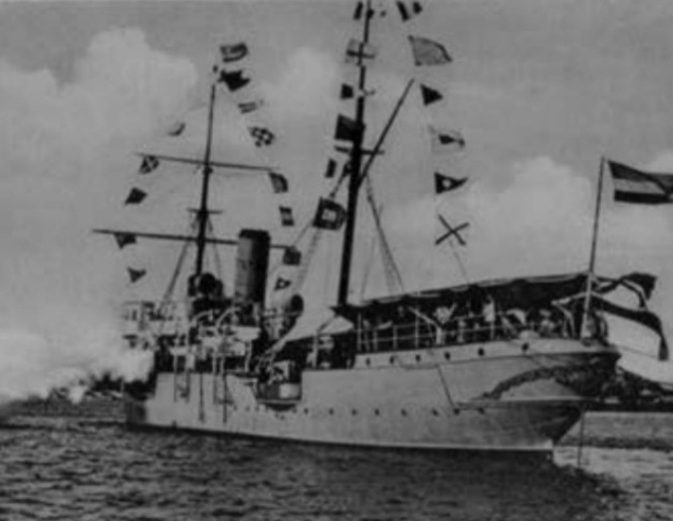
In late October 1903, the Colombian government hurriedly loaded Cartagena with troops and orders to steam for Panama. Generals Juan Tovar and Ramón Amaya led the 500-strong Tiradores Battalion that was split between Cartagena and a leased merchant ship (the Alexander Bixio, discussed below). Arriving off Colón on November 3, Cartagena anchored after an arduous journey – only to find the USS Nashville already in port and flying the Stars and Stripes. The Colombian commanders faced an immediate dilemma: the U.S. gunboat was blocking the railway and clearly intended to impede their mission. Cartagena’s captain, armed with instructions to land troops, had to decide whether to risk a confrontation. Outgunned by Nashville’s rapid-fire battery and mindful of the U.S. Navy’s overwhelming regional superiority (more American ships were en route), the Colombians chose caution. They disembarked their soldiers peacefully at Colón rather than engaging the Americans.
Over the next two days, the Cartagena remained in Colón’s harbor, essentially stalemated. The Colombian generals who had gone ahead to Panama City were arrested by the Panamanian rebels, and their battalion in Colón lost leadership and direction. As tensions with the U.S. forces grew, Cartagena refrained from hostile action – a testament to how the presence of even a single U.S. gunboat deterred a cruiser that, on paper, was a rival in size and firepower. By November 5, after negotiations and generous bribes arranged by Panamanian officials (and quietly tolerated by Commander Hubbard of Nashville), the decision was made for the Colombian detachment to abandon its mission. Troops re-boarded Cartagena (along with her consort ship) and the vessels prepared to depart. Facing the reality that Panama was lost – and unwilling to be fired upon by U.S. naval guns – Cartagena weighed anchor and withdrew from Colón, taking the disheartened soldiers back towards Colombia.
In retrospect, the cruiser Cartagena’s involvement is remembered with a touch of poignancy. She was a capable ship crewed by loyal men, prepared to do their duty, yet ultimately unable to alter the course of events. The peaceful outcome meant Cartagena never fired her big guns in anger at Panama. In Colombian naval history, she later bore the name Cartagena proudly for a few more years, but in Panama she is recalled as the warship that might have been – the threat that loomed but never struck, due in no small part to the firm stance of the U.S. Navy.
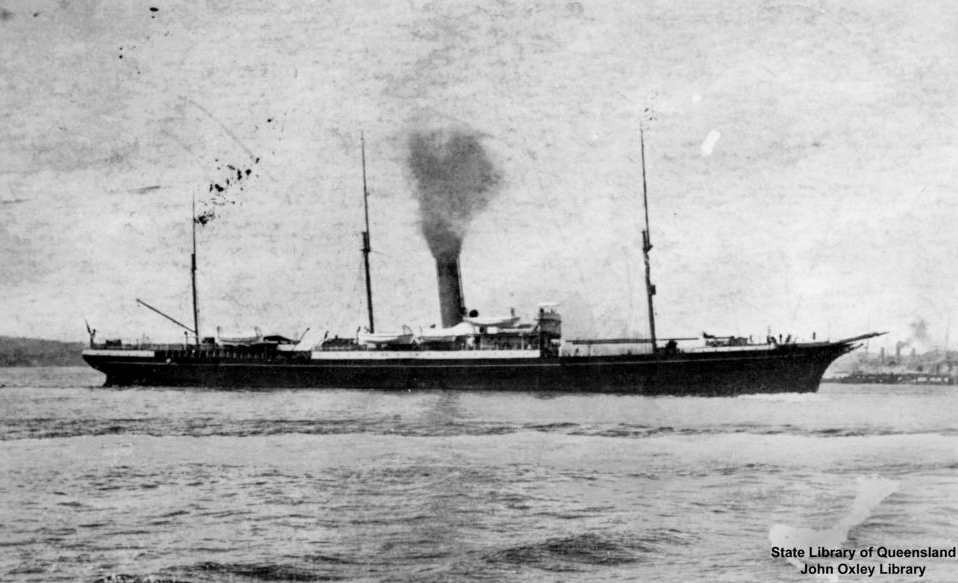
I couldn't find a photo of the actual ship so this is a similar troopship of the era. The vessel shown above (the SS Aorangi, 1883) is representative of Alexander Bixio in size and appearance. Like Bixio, it was an 1880s steamship later pressed into military service. This photograph, taken ~1905, offers an archival-quality look at the kind of steamship that Alexander Bixio was – an iron-hulled, coal-fired transport capable of carrying troops and cargo.
Alexander Bixio – The Unarmed Troopship
The Alexander Bixio was a civilian steamship swept up in the tides of conflict. This merchant vessel (likely of Italian origin, as her name suggests) was chartered or requisitioned by Colombia to assist in transporting troops to the isthmus. In 1903, Alexander Bixio would have been a fairly modern steamer, possibly a few thousand tons in size, used normally for cargo or passenger service. She had no naval armament to speak of – perhaps only small arms on board – and depended entirely on the escort of the cruiser Cartagena for protection. Her capabilities were limited to steaming at merchant speeds (perhaps 10–12 knots) and carrying a large number of passengers or troops.
When Cartagena set sail for Panama, Alexander Bixio sailed in company, loaded with a substantial portion of the 500 Colombian soldiers. By arriving in Colón together on November 3, the pair constituted Colombia’s expeditionary force. After reaching Colón, Alexander Bixio moored in the harbor near the warships. The troops aboard disembarked into Colón city, likely expecting to board trains and continue to Panama City. Instead, they became stranded, as USS Nashville’s interference halted all rail movement. For two days, the Alexander Bixio and her crew waited anxiously, watching diplomatic maneuvering unfold and undoubtedly aware that their position was precarious – a merchant ship in a potential war zone, sitting near heavily armed naval vessels on edge.
As the stalemate resolved on November 5, the Alexander Bixio fulfilled one final duty: evacuating the Colombian troops. In concert with Cartagena, the steamer took the tired, frustrated soldiers back on board. Conditions were surely cramped and miserable – hundreds of men crammed into a ship not designed for military transport – but the alternative could have been far worse. Thanks to the peaceful outcome, these troops did not have to face battle or internment; instead, Alexander Bixio ferried them safely home. The ship’s very lack of armament meant she played no combat role, but her part in the narrative is significant as a carrier of hopes and disappointments – hopes of Colombia to quickly suppress the revolt, and the bitter disappointment when that effort failed.
Gunboat Bogotá – The Last Shots of the Revolution
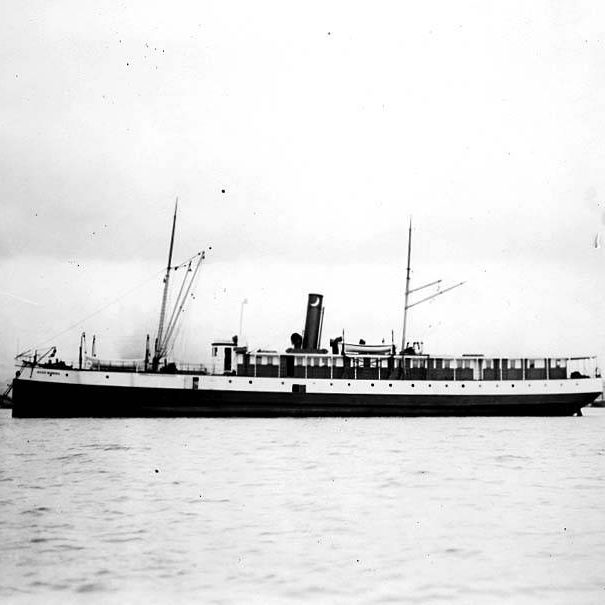
On the Pacific side of the isthmus, one Colombian vessel did engage – albeit briefly. The gunboat Bogotá was a small naval ship that will forever be noted as the only unit to fire weapons during Panama’s independence proceedings. Originally a British-built steamship (named Cutch in a previous life), she was acquired by Colombia in 1902 and converted into a gunboat. Bogotá was much smaller than the likes of Nashville or Cartagena, with an estimated tonnage under 700 and a length of around 180 feet. She could manage perhaps 10–12 knots at best, powered by a coal steam engine. As a converted civilian vessel, her armament was relatively light – the Colombian navy armed her with a handful of cannons (historical records suggest she had a couple of medium-caliber guns suitable for shore bombardment). Her crew was likely modest, maybe 50–60 sailors.
When the revolution broke out on November 3, 1903, Bogotá was stationed in Panama City’s harbor. As news came that local forces and civilians were declaring independence and had detained the Colombian governor and generals, Bogotá’s commander took drastic action. Under the cover of darkness that evening, the gunboat began shelling Panama City. Several rounds screeched over the city’s rooftops, intended as a show of force to cow the separatists or to compel the release of the captured Colombian officers. The bombardment was haphazard and brief, but it was not entirely bloodless. Sadly, one of the shells struck in the city and claimed the life of an unsuspecting civilian – a Chinese shopkeeper – and wounded a few others. That solitary fatality has the unfortunate distinction of being the only death directly attributable to combat during Panama’s independence movement.
The next morning, as the dust settled (literally and figuratively), gunboat Bogotá threatened to renew bombardment if the Colombian officials were not freed. However, by now the situation had shifted irreversibly. Panama’s new government was firmly in control in the capital, and word was spreading that U.S. recognition of the Republic of Panama was imminent. Moreover, U.S. warships were said to be heading toward Panama City (indeed, on the Pacific coast, an American gunboat or cruiser was expected to arrive any day to safeguard the city). Facing the likelihood of a confrontation with superior forces and having made her point, Bogotá ultimately ceased fire. In the following days, she withdrew from Panama’s waters, sailing away to return to Colombian ports.
Gunboat Bogotá’s fervent but fleeting action earned her a place in history. In Colombian eyes, she dutifully delivered the last riposte in a losing battle, and in Panamanian memory, her shelling was the dramatic thunderclap that fortunately did not become a storm. We commemorate Bogotá as a symbol of how close the conflict came to igniting – and how quickly it was extinguished. The restraint shown afterward, under the looming presence of U.S. naval power, ensured that the revolution remained mostly peaceful.
Conclusion: Peace Through Naval Presence
In November 1903, Panama was reborn without the protracted wars that so often accompany independence movements. This almost miraculous outcome was shaped in large measure by the presence and posture of naval ships. We honor the U.S. Navy vessels – like USS Nashville, USS Dixie, and USS Mayflower – for their steadfast commitment to protecting American and Panamanian interests, and for using deterrence rather than destruction to achieve their aims. We likewise acknowledge the Colombian ships – cruiser Cartagena, steamer Alexander Bixio, and gunboat Bogotá – whose officers and crews, despite being on the losing side of this geopolitical contest, acted with a sense of duty and, ultimately, prudence in avoiding greater bloodshed.
Each ship described here had a distinct role: Nashville stood watch in Colón and barred the door to interference; Dixie delivered reinforcement and reassurance; Mayflower carried diplomats and dignity. On the other side, Cartagena bore the weight of a nation’s last effort to hold Panama, Bixio ferried the troops caught in the middle, and Bogotá barked off a final, defiant salute. In combination, these ships and their actions ensured that the birth of Panama was swift and relatively peaceful.
As we commemorate the naval involvement in Panama’s independence for the Navy League Panama blog, we also celebrate the enduring lesson of November 1903: that naval power, wisely deployed, can prevent war as much as win one. The sight of warships in the bays of Colón and Panama City 122 years ago signaled a turning point – their guns stayed mostly silent, yet their very aura shaped the destiny of a nation. Today, looking at old photographs of those ships or tracing their routes on historic maps of the canal zone, we are reminded of the courage and restraint that prevailed. The Navy League Panama salutes those vessels and the sailors – American and Colombian – who were unwitting protagonists in the story of Panama’s independence. Their legacy is our freedom, and it sails on in our collective memory.
Sources
- Bill of Rights Institute – The Panama Canal: America’s Gateway to the Pacific.
- History of the Panama Canal – Wikipedia.
- Separation of Panama from Colombia – Wikipedia.
- USS Nashville (PG-7) – Wikipedia.
- USS Dixie (1893) – Wikipedia.
- USS Mayflower (PY-1) – Wikipedia.
- USS Marietta (PG-15) – Wikipedia.
- Colombian Navy – History and Vessels – Naval Encyclopedia.
- Buques retirados de la Armada Colombiana – Wikipedia (Español).
- French Line Fleet List – Alexandre Bixio (merchant steamer, 1880).
- State Library of Queensland, John Oxley Library – archival image of SS Aorangi (representative steamship).
- OpenEdition Journals – Ideas: Panama and the Politics of U.S. Intervention.