Interdicting the Shadow Fleet
How U.S. and U.K. Forces Seized Iranian-Linked Tankers Bound for Venezuela
In early January 2026, U.S. and British military forces undertook coordinated operations to intercept and seize oil tankers alleged to be violating international sanctions by transporting crude linked to Iran and Venezuela. These interdictions, conducted at sea and across vast maritime distances, demonstrated modern naval and maritime enforcement capabilities. From prolonged pursuits in the North Atlantic to pre-dawn boardings in the Caribbean, the operations showcased joint force integration across services and nations.
Background: Operation Southern Spear and the Sanctions Regime
Since late 2025, the United States has enforced a naval embargo and sanctions regime targeting oil exports from Venezuela, particularly those transported via a clandestine “shadow fleet” of tankers designed to evade detection and regulatory controls — vessels that often disable automatic identification systems (AIS), change names, or fly false flags to disguise their identity and origin. The U.S. government viewed this network as facilitating the financing of illicit networks and undermining sanctions aimed at curbing revenue to the Venezuelan regime. The blockade and interdiction effort has been conducted under the operational umbrella of Operation Southern Spear, which includes naval, Coast Guard, and special operations forces enforcing sanctions at sea.
Legally, the United States and United Kingdom justified their actions on the basis of their own sanctions laws and executive orders directed at Iranian and Venezuelan energy exports. From Washington and London’s perspective, these measures are lawful because the tankers were allegedly engaging in sanctions-evasion activities, including disabling ship transponders, falsifying registry information, and transporting oil from sanctioned sources. In the U.S. view, interdictions of vessels on the high seas that are demonstrably violating U.S. sanctions and continuing to facilitate restricted commerce are legitimate enforcement actions under international law, particularly when conducted with appropriate naval and Coast Guard authorities. The U.K., participating in these operations at Washington’s request, framed its involvement as support for enforcement of global sanctions compliance, asserting that “pre-planned operational support” provided to U.S. forces complied with international law.
Interception Operations: From Caribbean Seas to the North Atlantic
Olina and Other Caribbean Seizures
In Caribbean waters off Trinidad and near Venezuelan waters, U.S. naval and Marine Corps elements — operating as part of Joint Task Force Southern Spear — executed maritime interdictions of several tankers suspected of carrying sanctioned oil. These operations used helicopter insertions and boarding teams to take control of vessels such as the Olina, which had departed from Venezuelan waters laden with crude. U.S. forces, including Marines and Coast Guard personnel embarked on Navy ships, boarded the tankers without incident and secured them as part of the sanctions enforcement campaign.
These interdictions in international waters demonstrated a high degree of professional seamanship and readiness. Aviation elements — particularly ship-borne helicopters — facilitated rapid approach, surveillance, and safe transfer of boarding parties onto target ships, while naval surface units provided the command and control backbone for the operations.
Marinera (Formerly Bella 1) and the Long Pursuit
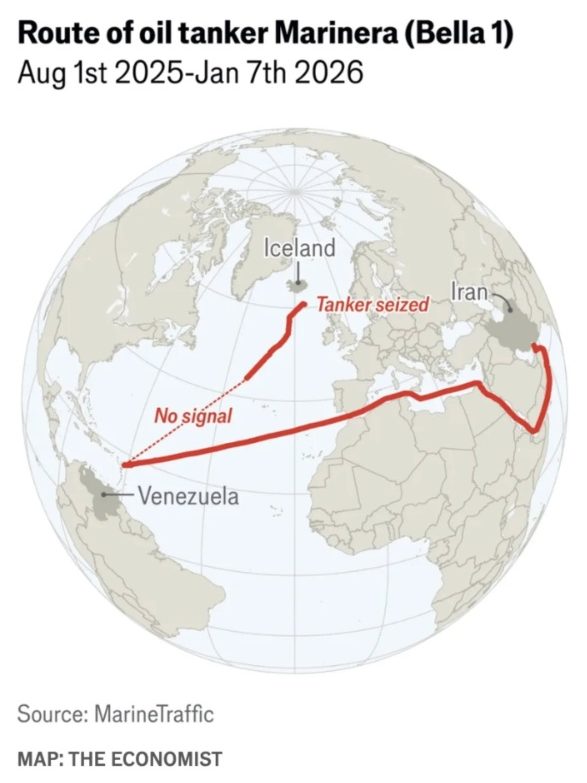
A particularly noteworthy case involved the oil tanker originally known as Bella 1, later renamed Marinera, which became the focus of a weeks-long pursuit by U.S. naval and Coast Guard assets as it attempted to transit from the Caribbean toward the North Atlantic. The vessel had reportedly sailed under a Russian flag, having reflagged in an attempt to evade sanctions enforcement, and was tracked by U.S. forces across thousands of nautical miles.
According to official statements, the pursuit involved the U.S. Coast Guard and U.S. military coordination, culminating in a boarding and seizure of the vessel in the northern Atlantic Ocean near Iceland after refusing earlier attempts to comply. During the pursuit, Russian naval units, including a Russian submarine, were reported in the general vicinity of the tanker, although there was no reported military engagement between U.S. and Russian forces.
Route of oil tanker Bella 1 (renamed Marinera)
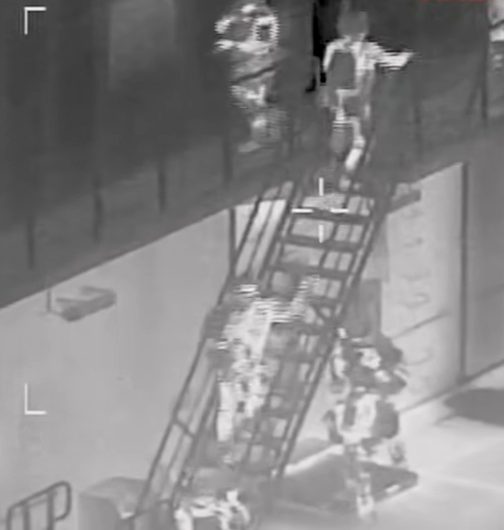
The boarding operation itself was executed by Coast Guard and military personnel trained for maritime interdiction operations, using small boats and appropriate force protection measures to secure the tanker’s deck and control areas before placing it under U.S. control.
The Marinera seizure marked one of the most ambitious maritime enforcement actions in recent years, involving sustained tracking, international coordination, and legal justification tied to sanctions enforcement rather than traditional naval combat. It also highlighted the logistical and operational challenge of conducting prolonged operations over extended sea lines of communication and in remote maritime zones.
British Support and Multinational Cooperation
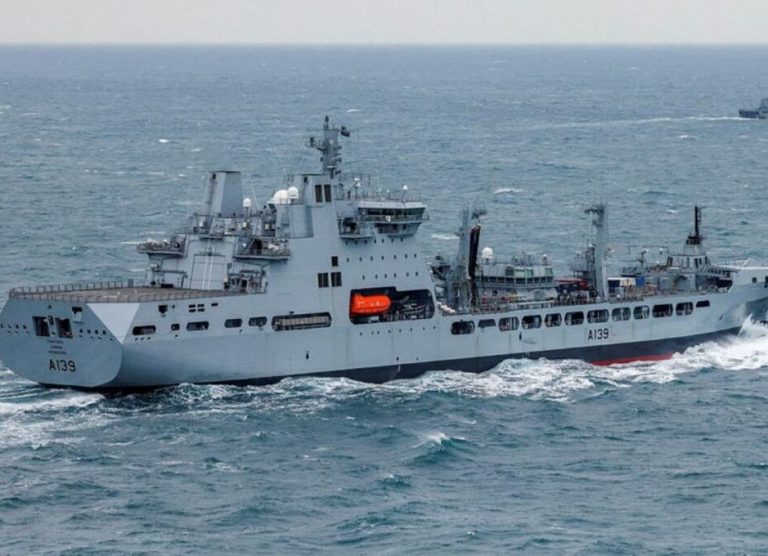
The United Kingdom played a supportive role in the Marinera operation, providing naval and air surveillance assistance to enhance tracking and interdiction capabilities. The British Ministry of Defence confirmed that a Royal Fleet Auxiliary vessel (such as the RFA Tideforce) and Royal Air Force surveillance aircraft contributed to the operation following a formal request from U.S. authorities. The U.K.’s participation was publicly described as part of cooperative efforts to enforce sanctions globally and to counter illicit oil-market activities.
British forces did not directly board the vessel but provided critical enabling support through maritime domain awareness, surface presence, and reconnaissance, which enhanced the operational picture for U.S. forces conducting the final seizure.
Legal Framework: Sanctions Enforcement at Sea
From the U.S. and U.K. perspective, the legal rationale for maritime interceptions hinges on domestic sanctions legislation and executive authorities that make it unlawful for individuals or entities to engage in specific energy trade with sanctioned countries such as Venezuela and Iran. Under these authorities, vessels that are shown to be transporting sanctioned cargoes — especially when using deceptive practices such as false flagging, disabling AIS transponders, or failing to comply with lawful boarding requests — may be interdicted even on the high seas.
U.S. officials have framed these actions as enforcement of their own sanctions regime, asserting that a ship violating a lawful embargo may be subject to seizure when there is clear evidence of wrongdoing and when enforcement actions are conducted under proper jurisdiction and established maritime procedures. The U.K. government has echoed this framing, emphasizing that cooperation with U.S. forces occurred within the bounds of international norms for sanctions enforcement and maritime safety.
Notably, these legal interpretations are contested by external critics, including the Russian government, which has characterized the seizure of the Marinera as unlawful and akin to piracy. However, the U.S. and U.K. maintain that compliance with sanctions law and maritime enforcement norms provides sufficient legal grounding for these interdictions.
Timeline and Operational Overview: Marinera Seizure
Late December 2025 — Initial Encounter & Evasion
The tanker originally known as Bella 1 was being monitored by the U.S. Coast Guard after being linked to sanctioned oil shipments involving Venezuela, Iran, and related networks. It evaded interception attempts off the Venezuelan coast when boarded was first attempted.
On about 30 December 2025, the vessel had its name changed to Marinera and was reportedly re-registered under the Russian flag, an apparent attempt to evade U.S. enforcement actions. According to open reporting, U.S. authorities viewed this flag switch as invalid since maritime law generally doesn’t permit flag changes mid-voyage without a legitimate change of registration.
Late December 2025–Early January 2026 — Multi-Week Pursuit
The Marinera was tracked by the U.S. Coast Guard and U.S. military for more than two weeks as it transited northward across the North Atlantic toward waters near the UK, Ireland, and Iceland.
During this period, the pursuit drew support from allied surveillance: U.S. Navy aircraft such as P-8 Poseidon maritime patrol aircraft and possibly ISR platforms helped maintain situational awareness. British surveillance aircraft and RAF contributions also supported tracking under a cooperative effort at the U.S. request.
Russian naval support, including the reported presence of a Russian submarine and other vessels near the region, was noted in open media as accompanying the tanker at times, although no direct confrontation with U.S. forces occurred along the route.
Early January 7, 2026 — Seizure in the North Atlantic
After the extended pursuit, U.S. European Command confirmed the boarding and seizure of the Marinera on 7 January 2026 in international waters in the North Atlantic, roughly between Iceland and Scotland. This was done under a U.S. federal court warrant issued for alleged violations of sanctions law tied to oil trafficking.
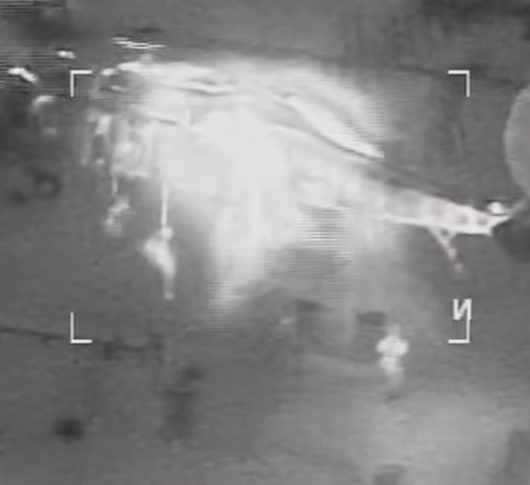
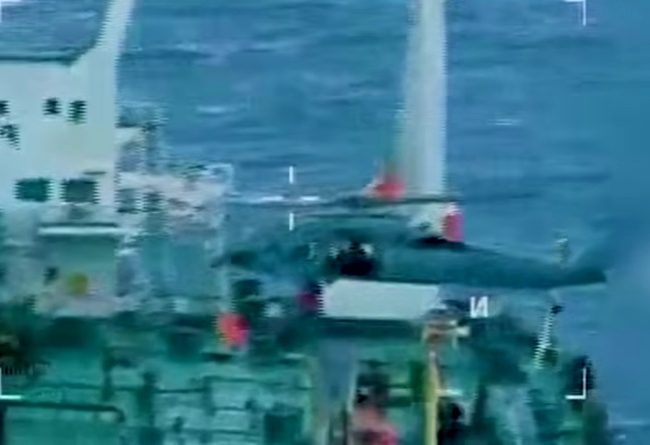
The boarding operation was carried out by a specialized team from the U.S. Coast Guard, assisted by U.S. Navy and possibly 160th Special Operations Aviation Regiment (Night Stalkers) helicopters to transfer personnel onto the tanker’s deck.
At the time of the seizure, open reporting indicates no hostile engagement occurred; the tanker was taken without reported injuries to U.S. personnel or crews beyond the boarding action itself.
Post-Seizure
The U.S. government indicated the tanker and its crew would be taken into custody under the sanctions enforcement framework. Meanwhile, Russia formally protested the seizure, citing international law and freedom of navigation under the 1982 United Nations Convention on the Law of the Sea, while the U.K. Ministry of Defence publicly confirmed its cooperative support for the operation.
Key Operational Details
Sanctions Context:
The Marinera was accused by U.S. authorities of being part of a so-called “shadow fleet” that transports sanctioned Venezuelan and Iranian oil by evading monitoring and enforcement.
Its reflagging to Russia and repeated name changes were interpreted by U.S. officials as attempts at sanctions evasion, which helped form the legal basis for seizure under U.S. law through a federal warrant.
Pursuit and Tracking:
The chase across the North Atlantic was unusually long for a maritime interdiction, involving multidomain tracking by surface cutters, maritime patrol aircraft, and allied radar/surveillance assets.
Russian Naval Presence:
Reporting suggests that at various points, the vessel was accompanied by Russian naval assets, including a submarine, highlighting the geopolitical complexity of the operation. There was no reported confrontation between U.S. and Russian forces during the seizure itself.
Allied Assistance:
The United Kingdom provided operational support (surveillance flights and basing) and confirmed the action as legal under international norms, though political debate continues in Europe about its implications.
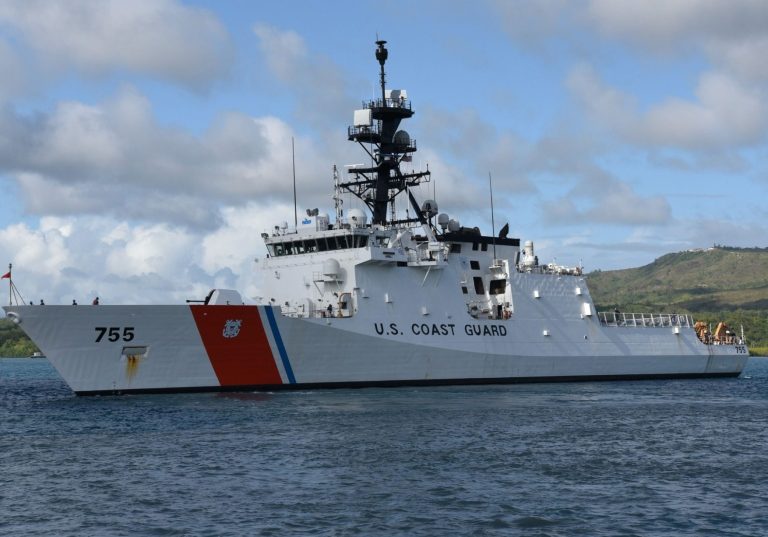
USCGC Munro credited with tracking the tanker accross the North Atlantic
USCGC Munro (WMSL-755) is a Legend Class Cutter of the United States Coast Guard. Munro is the second cutter named for Signalman First Class Douglas A.Munro (1919–1942), the only coast guardsman to be awarded the Medal of Honor.
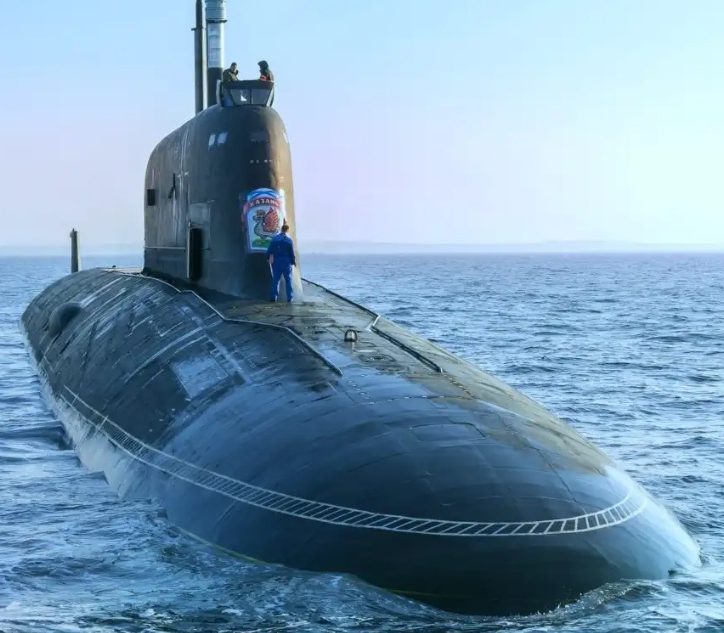
Russian submarine sent to escort MV Bella 1
RFS Kazan K-561, Yasen -M class (project 885M) nuclear-powered cruise missile submarine of the Russian Navy. Commissioned 7 May 2021.The submarine is deployed with the Russian Northern Fleet. photo 2021
UK involvement
British Royal Fleet Auxiliary replenishment tanker RFA Tideforce supported U.S. forces as they pursued and seized Russian-flagged tanker Bella 1 in the North Atlantic.
As per a statement from the U.K. Government, the RFA tanker provided logistical support during the operation to take command of the shadow fleet vessel, which had sailed from Venezuela, changing its flag and name to the Russian-flagged Marinera en route.