The Capture of Maduro
How U.S. Forces Executed a Precision Joint Operation
In early January 2026, U.S. military forces carried out a complex and meticulously planned operation in Caracas that resulted in the capture of de facto Venezuelan president Nicolás Maduro and his wife, Cilia Flores, without loss of American lives and with minimal equipment damage. The operation—conducted under the code name Operation Absolute Resolve—was a high-tempo, multi-domain mission that neutralized Venezuelan defenses and extracted the targets in a matter of hours.
Strategic Objectives and Planning
The operation was the culmination of months of interagency preparation involving U.S. Special Operations Command, intelligence agencies, and conventional forces staging near Venezuela’s borders. Forces remained in readiness through December 2025, refining plans against a replica of the primary target—Maduro’s compound at Fuerte Tiuna, one of Caracas’s largest military installations.
U.S. military leaders selected a weather window in the early hours of January 3 to minimize civilian presence and maximize surprise. The assault was preceded by coordinated strikes to suppress Venezuelan air defenses and communications, and likely included electronic warfare and cyber operations that disrupted the country’s defense networks and contributed to localized power outages.
Forces and Assets Employed
The operation blended elite special operations forces with aviation and cyber capabilities:
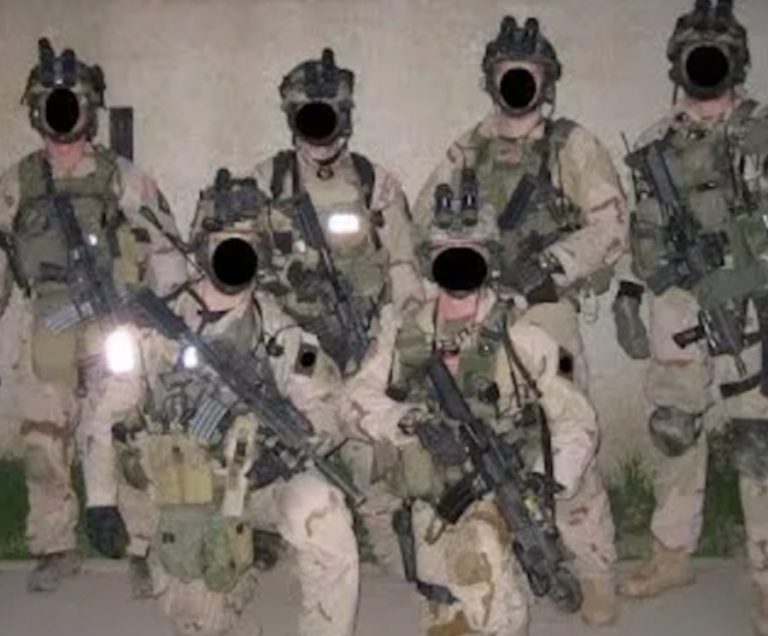
1st Special Forces Operational Detachment-Delta (Delta Force) – Conducted the decisive ground assault breach and capture of Maduro and Flores inside the compound. This unit specializes in direct action, high-value target capture, and hostage rescue, and trained extensively on the target site prior to execution.
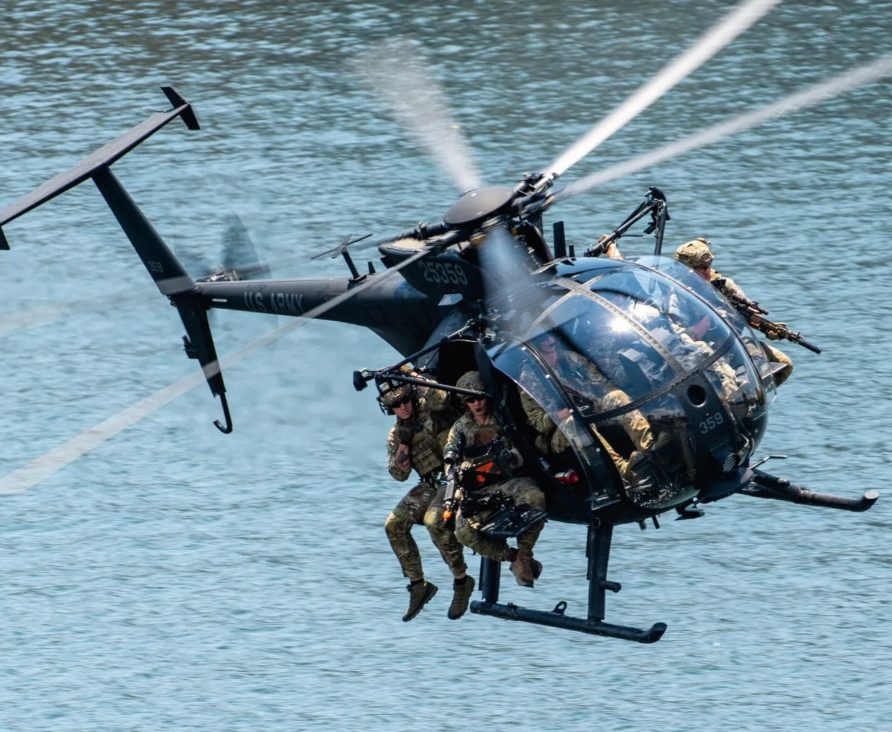
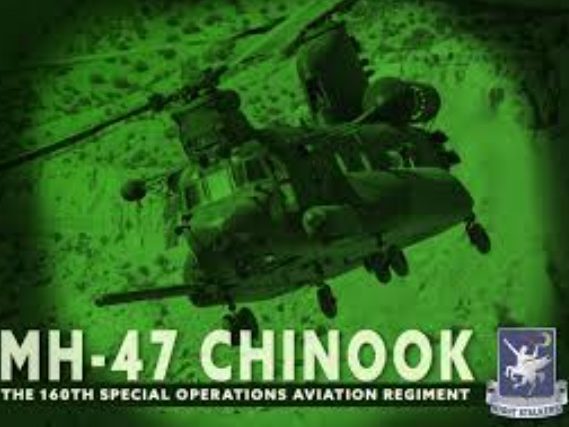
160th Special Operations Aviation Regiment (“Night Stalkers”) – Provided rotary wing support, including insertion and extraction helicopters operating at low altitude and under cover of darkness. A damaged helicopter was successfully recovered and returned to its ship without mission compromise.
Air Power and Suppression Assets – Over 150 U.S. military aircraft, including fighters, bombers, and electronic warfare platforms, were tasked with degrading Venezuelan air defenses, enabling safe ingress and egress for aviation elements while minimizing the risk to ground forces.
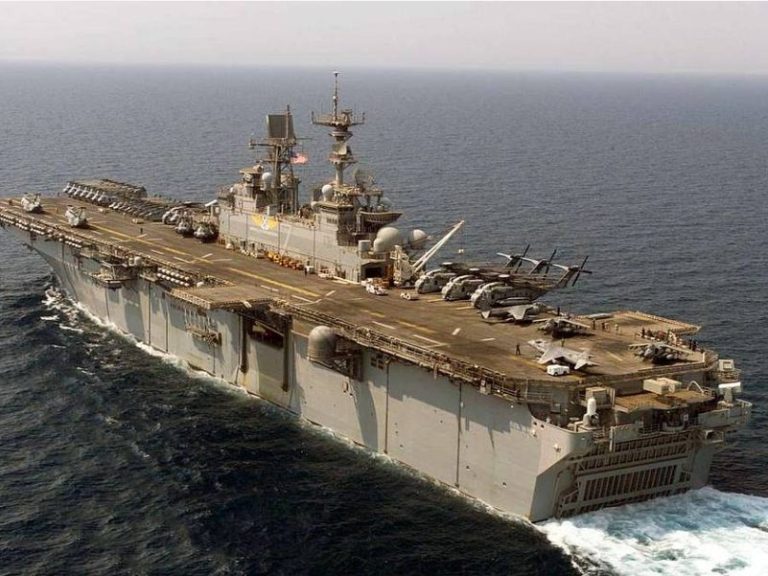
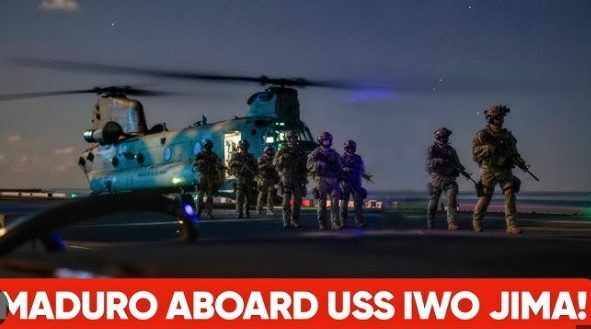
Naval Presence (Support and Extraction) – U.S. Navy amphibious assets remained on station offshore. After capture, Maduro and Flores were airlifted to the amphibious assault ship USS Iwo Jima, which served as a secure staging point before transfer to U.S. custody and subsequent transport to New York for federal prosecution.
Neutralization of Venezuelan Defenses
Venezuelan air defense systems and radar networks were systematically suppressed early in the operation, leaving anti-aircraft artillery and surface-to-air missile systems largely ineffective against coordinated U.S. aviation and electronic attack. Key military installations—such as La Carlota Air Base and other strategic nodes—were targeted to prevent coordinated Venezuelan military response.
The sudden degradation of air defenses, combined with precise timing and overwhelming air control, denied Venezuelan forces opportunities to contest the assault. Video analyses and eyewitness accounts from Caracas documented low-flying aircraft and detonations consistent with suppressive strikes against infrastructure that had been integrated into the national defense network.
Operational Outcome and Force Protection
The raid achieved its primary objective—seizing Maduro and Flores—within hours and without U.S. combat fatalities. Two U.S. servicemembers were reported injured during the ground phase, both belonging to special operations contingents, but neither injury was life-threatening. The only equipment damage noted was to a single helicopter, which returned safely to its ship.
All participating U.S. forces withdrew from Venezuelan territory soon after mission completion, and Maduro was flown ultimately to U.S. custody to face federal charges. The rapid disablement of Venezuela’s defensive grid and the professional execution of the assault reflected joint training, interagency coordination, and decisive use of overwhelming force in an urban operational environment.
Military Synopsis
The operation integrated special forces, aviation, electronic warfare, and naval assets in a synchronized assault.
Venezuelan air defenses and command networks were rendered ineffective early in the mission.
Forces executed a rapid breach and capture with no U.S. personnel killed and only minor equipment damage.
The use of naval platforms like USS Iwo Jima facilitated secure extraction and transport of high-value individuals.
This military operation underscores modern joint-force capability in planned, high-risk raids on fortified targets—demonstrating how precision, coordination, and integrated suppression of enemy defenses can enable success with minimal own-force loss.
Timeline Overview: Military Execution of the Maduro Capture Operation
Phase 1
Weeks before
Strategic Preparation
U.S. forces quietly built a layered posture around Venezuela. Naval assets remained on station in the Caribbean, while air and special operations units rehearsed against detailed mock-ups of key Venezuelan military facilities. Intelligence, surveillance, cyber, and electronic-warfare preparations focused on mapping radar coverage, command nodes, and air-defence response timelines.
Phase 2
Hours Before H-Hour
Shaping the Battlespace
In the early hours of the operation, U.S. forces initiated coordinated electronic warfare and cyber actions. Venezuelan air-defence radars, command-and-control links, and military communications were disrupted or blinded. This effectively isolated senior leadership locations and prevented coordinated response across services.
Phase 3
00:30 January 3, 2026
Air Superiority and Suppression
Phase 3 – Air Superiority and Suppression
U.S. aircraft—fighters, electronic-attack platforms, ISR assets, and drones—established complete air dominance. Venezuelan surface-to-air missile systems, anti-aircraft artillery, and airbases were neutralized or rendered ineffective. Venezuelan combat aircraft were unable to contest the airspace.
Phase 4
02:00 January 3, 2026
Special Operations Insertion
Under cover of darkness, Delta Force operators were inserted by helicopters flown by the 160th Special Operations Aviation Regiment (Night Stalkers). Low-level, terrain-masking flight profiles avoided detection. One helicopter sustained damage during the operation but remained flyable and returned safely to its ship.
Phase 5
02:17 January 3, 2026
Ground Assault and Capture
The assault element rapidly breached the target compound, overwhelming internal security with speed and precision. The objective—capture of Nicolás Maduro—was achieved swiftly. Venezuelan defensive forces were unable to mount organized resistance due to earlier suppression of communications and command authority.
Phase 6
02:20 January 3, 2026
Extraction
Captured personnel were moved immediately to extraction points and airlifted offshore. USS Iwo Jima served as the primary maritime staging and security platform. Two U.S. soldiers sustained non-life-threatening injuries during the ground phase; no fatalities occurred.
Phase 7 – Withdrawal and Transfer
+02:20 January 3, 2026
All U.S. forces withdrew from Venezuelan territory within hours of mission completion. Maduro was subsequently transferred from the amphibious task force to U.S. custody. No U.S. aircraft were lost, and no civilian casualties were reported in the execution phase.orttitor eu, consequat vitae, eleifend ac, enim. Donec quam felis, ultricies nec, pellentesque eu, pretium quis, sem. Nulla consequat massa quis enim.
Charlotte Dupont
Cargo
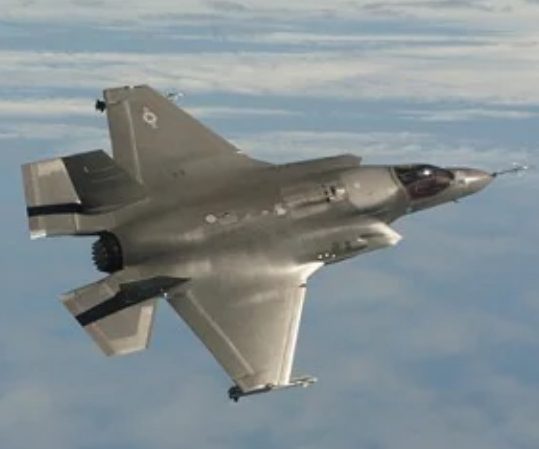
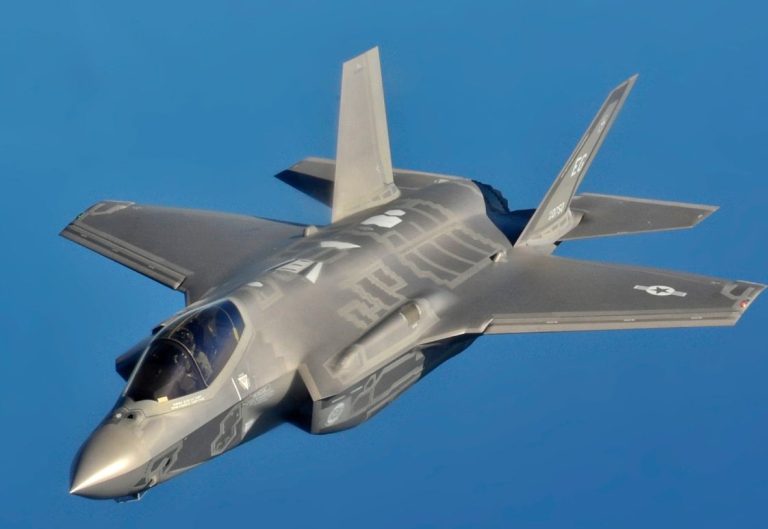
F-35A Lightning II – Used to establish uncontested air dominance and penetrate defended airspace. Its low-observable profile and sensor fusion made it well suited for suppressing Venezuelan air defenses without prolonged engagement.
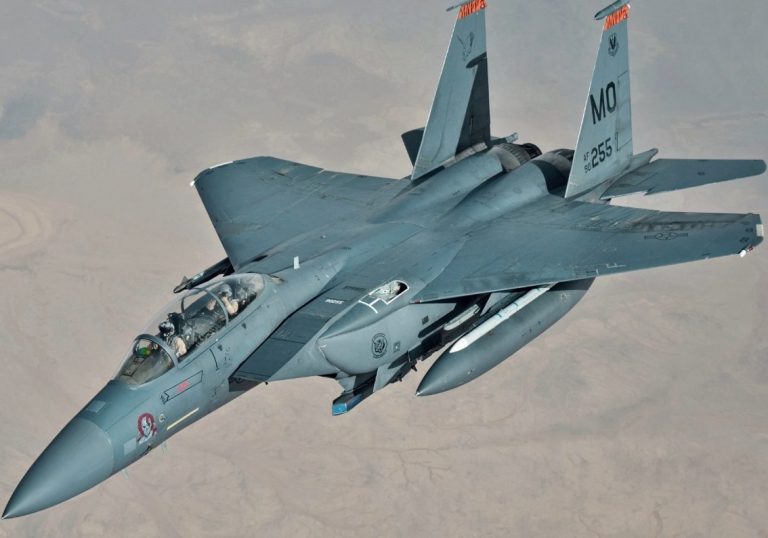
F-15E Strike Eagle (reported) – Provided long-range strike capability and overwatch, capable of engaging ground targets if required while remaining outside the reach of degraded air defenses.
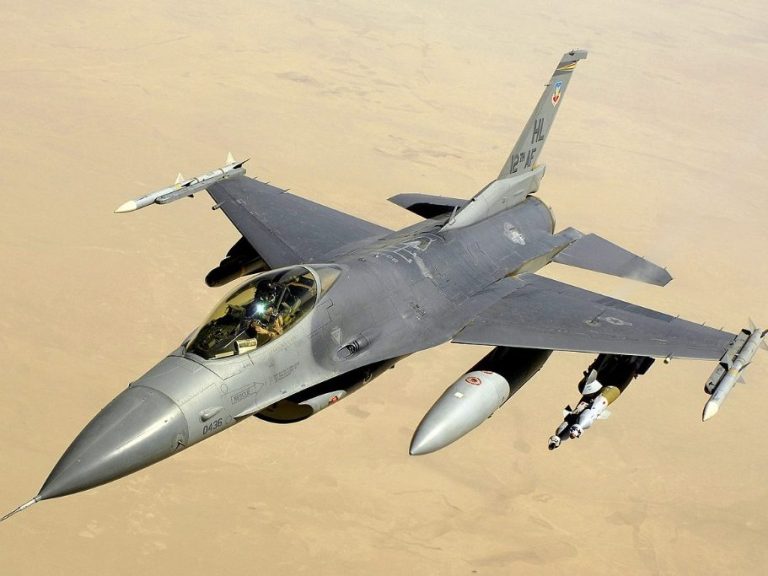
F-16 Fighting Falcon (support role) – Employed in patrol and airspace control roles, particularly around regional bases and maritime approaches.
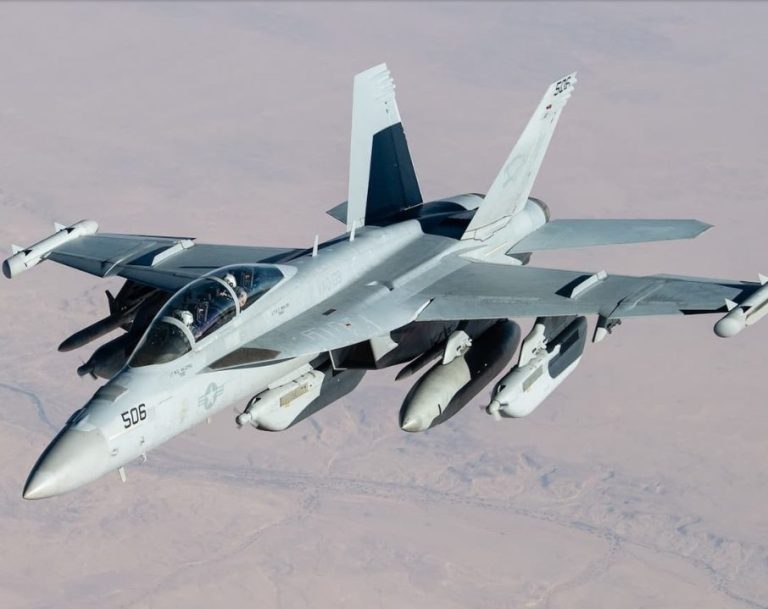
EA-18G Growler – Played a central role in electronic attack, jamming Venezuelan radar, surface-to-air missile guidance systems, and military communications. This aircraft was critical in rendering Venezuelan defenses ineffective before the ground phase began.
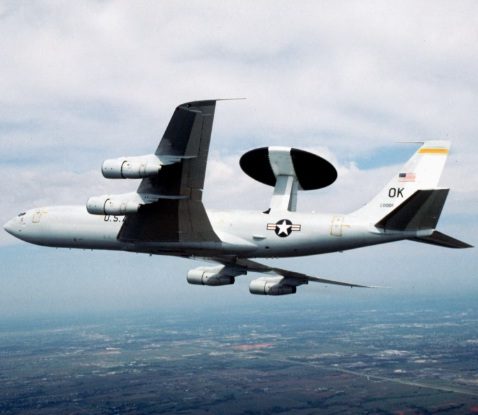
E-3 Sentry (AWACS) – Provided airborne command and control, coordinating aircraft movements and maintaining real-time situational awareness across Venezuelan airspace.
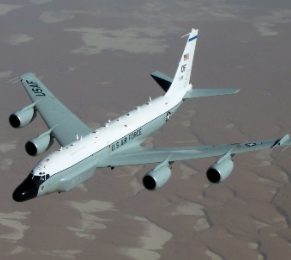
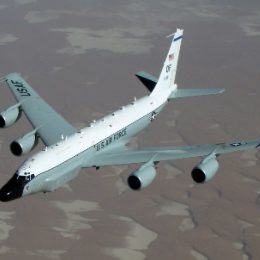
RC-135 Rivet Joint – Conducted signals intelligence (SIGINT), monitoring Venezuelan military communications and confirming the degradation of command networks.
Special Operations Aviation
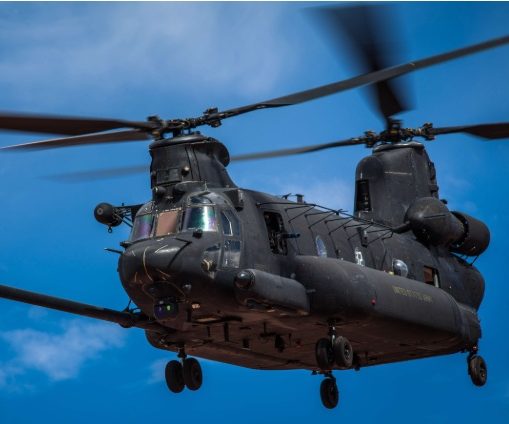
MH-47G Chinook – Heavy-lift helicopters used by the 160th Special Operations Aviation Regiment for insertion, extraction, and rapid movement of personnel.
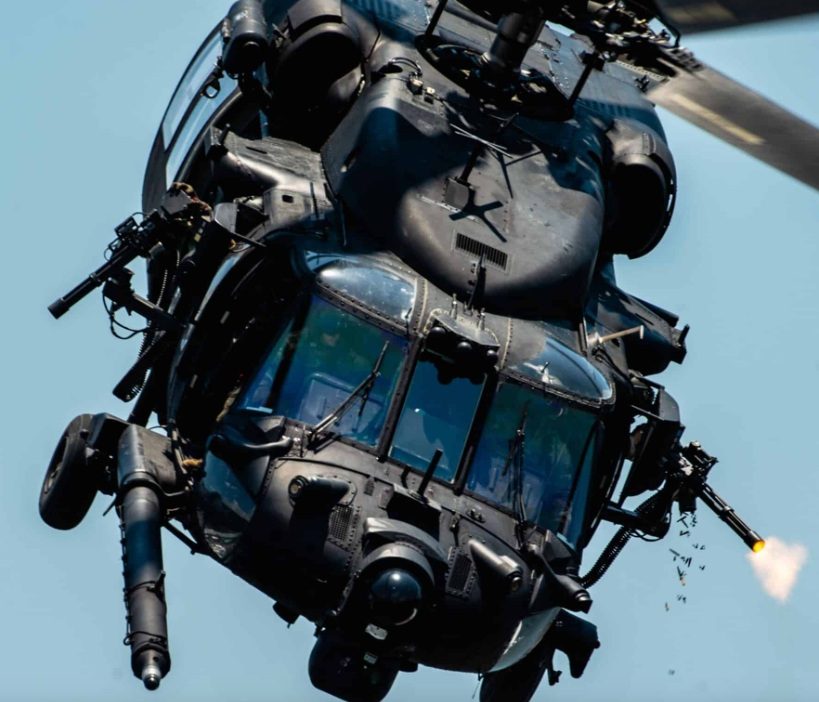
MH-60M Black Hawk – Employed for precision insertion and close-in maneuvering in urban and confined areas. Packed with advanced sensors, defensive systems, and communication gear to handle complex missions in challenging conditions.