How the U.S. Navy Wiped Out Iran’s Fleet in Days
A devastating campaign in the Gulf of Oman saw Tomahawk missiles, carrier aircraft, and helicopter gunships dismantle Iran’s naval power—destroying key vessels such as the Makran and Shahid Bagheri while U.S. forces operating from the USS Abraham Lincoln and advanced surface combatants reshaped the balance of maritime power in the region.
How the US Destroyed Iran's Entire Navy
In early 2026, the United States launched a major maritime operation against the naval forces of the Islamic Republic of Iran. Within a short period of time, the Iranian Navy’s operational fleet in the Gulf of Oman was effectively eliminated. According to U.S. Central Command statements cited in open-source reporting, eleven Iranian warships and several submarines were destroyed during the campaign.
While the broader conflict continues to evolve, the naval engagement itself represents one of the most decisive maritime actions in recent history. Much like the U.S. Navy’s Operation Praying Mantis in 1988, the operation demonstrated the overwhelming reach of modern naval power. However, unlike that earlier battle, the latest campaign relied heavily on long-range cruise missiles, advanced surveillance, and coordinated carrier strike group operations.
The engagement highlights the importance of naval power projection, the vulnerability of surface fleets without air superiority, and the decisive role of modern missile warfare.
Strategic Context
The confrontation unfolded amid rising tensions in the Strait of Hormuz and the Gulf of Oman, one of the most critical maritime chokepoints in the world. Approximately 30% of globally traded seaborne oil passes through the Strait of Hormuz, making freedom of navigation essential for global economic stability.
Iran had long relied on a naval strategy designed to threaten shipping through the strait. This strategy included:
Swarms of fast attack boats
Naval mines
Submarines
Land-based anti-ship missiles
Drone and missile attacks against commercial shipping
The goal was not necessarily to defeat the U.S. Navy in open combat but to make the region too dangerous for commercial shipping, thereby exerting geopolitical pressure.
However, the U.S. response focused on removing Iran’s ability to carry out such disruption by destroying its naval assets before they could be deployed.
Opening Strike: Tomahawk Cruise Missiles
The first phase of the campaign was conducted at long range using Tomahawk Land Attack Missiles (TLAMs) launched from U.S. Navy vessels positioned hundreds of miles away.
These missiles allowed American forces to strike Iranian ships and naval infrastructure without entering the engagement range of Iranian weapons. Unlike earlier naval battles where ships fired anti-ship missiles at each other, this operation emphasized stand-off precision strikes.
The Tomahawk missile, capable of ranges exceeding 1,000 miles, provided the U.S. Navy with the ability to:
Strike ships in port
Destroy command facilities
Disable naval bases
Attack vessels before they could sortie
The rapid launch of multiple missiles in succession overwhelmed Iranian defenses and ensured that targets were destroyed before they could maneuver or disperse.
Iranian Warships Destroyed
Iranian Frigates and Surface Combatants
Several Iranian frigates equipped with long-range anti-ship missiles were also destroyed during the campaign.
These ships were intended to serve as the backbone of Iran’s surface fleet. Their role in Iranian doctrine included:
Launching anti-ship missile salvos
Escorting naval formations
Supporting asymmetric attacks against larger fleets
However, they were destroyed before they could engage U.S. forces. The use of long-range cruise missiles meant that American ships never entered the engagement envelope of Iranian weapons.
Iranian Submarine Fleet
U.S. Central Command also reported that multiple Iranian submarines were destroyed or disabled during the strikes.
Iran’s submarines had been considered one of its most dangerous maritime assets. Operating in the confined waters of the Persian Gulf, these vessels could potentially:
Lay naval mines
Ambush surface ships
Launch torpedoes
Disrupt shipping lanes
However, modern surveillance—including persistent drone coverage and maritime patrol aircraft—allowed U.S. forces to locate and target these submarines before they could carry out their missions.
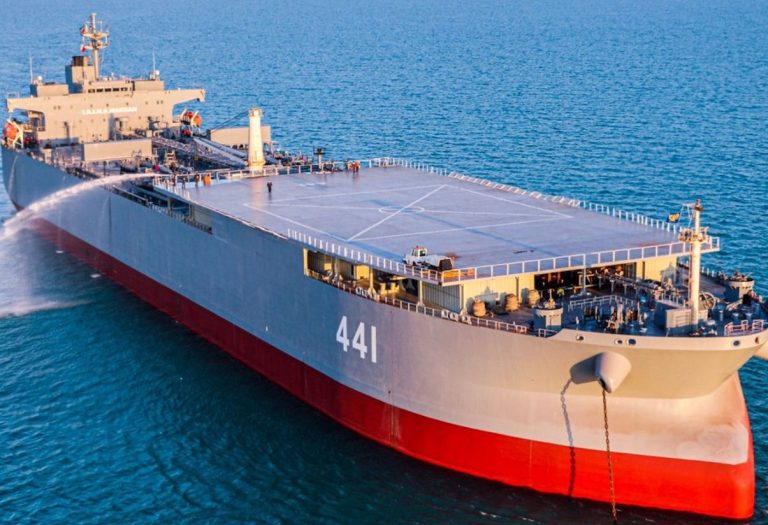
INS Makran.
Among the most significant losses for Iran was the destruction of the INS Makran
The Makran was one of the largest vessels in the Iranian fleet. Originally built as an oil tanker, it had been converted into an expeditionary mobile base capable of supporting drones, helicopters, and small attack craft.
Key characteristics:
Approximate displacement: 100,000 tons
Converted tanker hull
Drone and helicopter launch capability
Support vessel for special operations
Designed to deploy mine-laying boats and fast attack craft
Makran effectively served as a floating forward operating base, allowing Iran to project power far beyond its coastline.
During the U.S. strikes, Tomahawk cruise missiles struck the vessel, turning the massive ship into what observers described as a burning wreck. Its destruction represented a major blow to Iran’s ability to coordinate maritime operations.
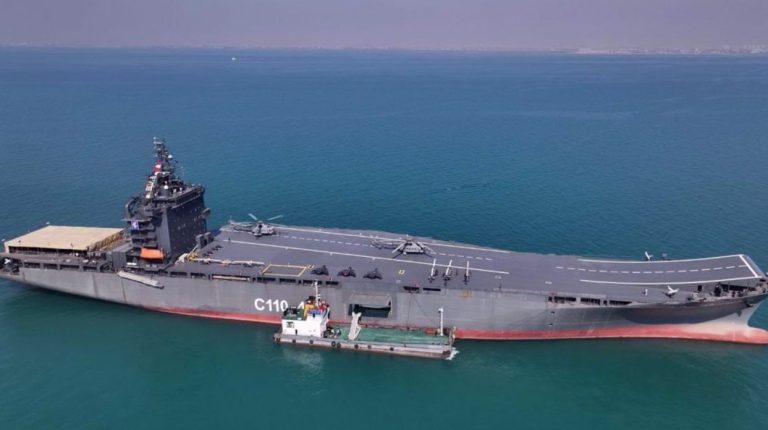
Shahid Bagheri Drone Carrier
Another major loss was the Shahid Bagheri, a ship frequently described by analysts as Iran’s drone carrier.
Although not a traditional aircraft carrier, the vessel functioned as a mother ship for unmanned aerial systems and small craft.
Capabilities reportedly included:
Launching surveillance drones
Deploying attack drones
Supporting maritime reconnaissance
Coordinating swarm tactics with fast boats
The destruction of the Shahid Bagheri was symbolically significant. Some analysts noted that it may represent the first aircraft-carrier-type vessel destroyed in combat since World War II, although the ship was far smaller and less capable than conventional carriers.
Iranian Frigates and Surface Combatants
Several Iranian frigates equipped with long-range anti-ship missiles were also destroyed during the campaign.
These ships were intended to serve as the backbone of Iran’s surface fleet. Their role in Iranian doctrine included:
Launching anti-ship missile salvos
Escorting naval formations
Supporting asymmetric attacks against larger fleets
However, they were destroyed before they could engage U.S. forces. The use of long-range cruise missiles meant that American ships never entered the engagement envelope of Iranian weapons.
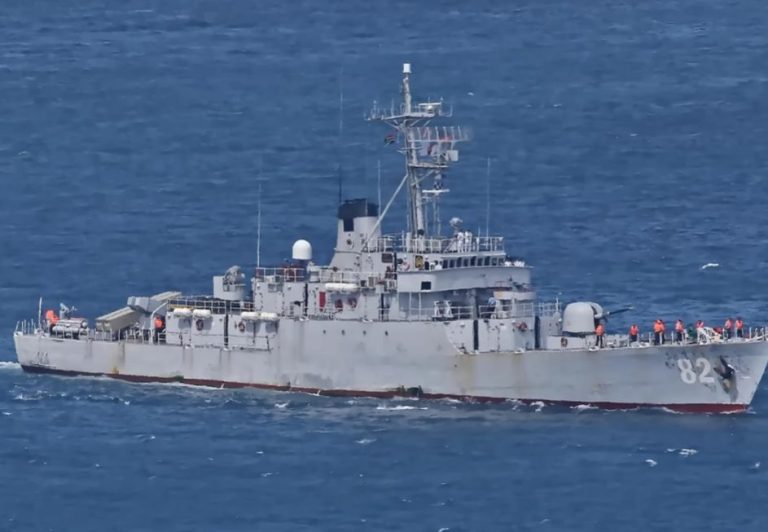
IRIS Haghdi
Naghdi was transferred to Iran by the United States under the Mutual Assistance Program. She was destroyed alongside her sister ship, IRIS Bayandor. She was armed with a 76mm Fajr-27 gun and Noor AShM launchers
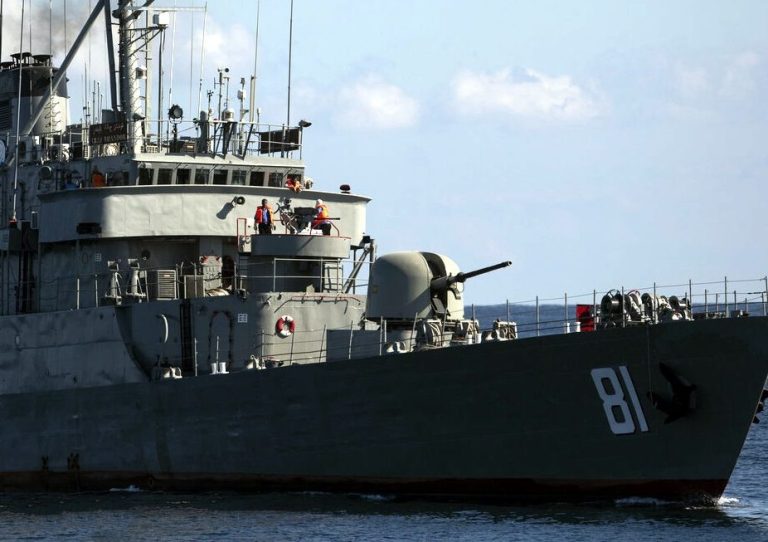
IRIS Bayendor
Bayandor was built by the American shipyard Levingston Shipbuilding Company at Orange, Texas. She was laid down on 20 August 1962 and launched on 7 July 1963 on the Sabine River, being completed on 15 May 1964
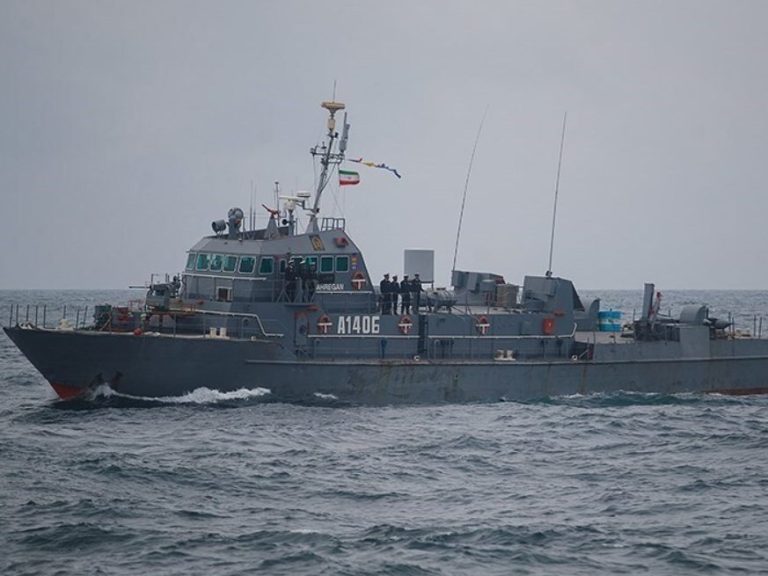
Hendijan Class
Hendijan-class vessels are reportedly equipped with one 20 mm GAM-BO1 cannon and two 12.7 mm machine guns.[1] At least two of them (Kalat and Sirik) were modified to fire for Noor anti-ship cruise missile, as of 2015. IISS mentions three equipped with AShM in 2020
U.S. Naval Forces Involved
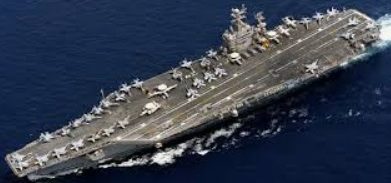
The destruction of Iran’s fleet involved several components of U.S. naval power.
Carrier Strike Group – USS Abraham Lincoln
At the center of the operation was the USS Abraham Lincoln (CVN-72) carrier strike group.
Aircraft from the carrier conducted:
Surveillance missions
Combat air patrols
Strike missions against Iranian targets
The carrier’s embarked aircraft likely included F/A-18 Super Hornets and EA-18G electronic warfare aircraft, providing both offensive and defensive capabilities.
Iran claimed it had struck the carrier with ballistic missiles, but U.S. officials stated the vessel remained fully operational and continued launching aircraft.
Seahawk Helicopters
One of the most important defensive assets against Iran’s swarm boat strategy was the MH-60R Seahawk helicopter.
Armed with AGM-114 Hellfire missiles, these helicopters specialize in:
Destroying fast attack boats
Hunting submarines
Conducting maritime surveillance
Operating from both destroyers and the aircraft carrier, Seahawk helicopters were able to neutralize small craft before they could approach American ships.
Littoral Combat Ships
The Littoral Combat Ship (LCS) also played a role in countering Iranian tactics.
The LCS class was designed specifically for operations in shallow coastal waters, such as those found in the Persian Gulf.
Equipped with the Surface Warfare Mission Package, these ships are optimized to defeat:
Fast attack boats
Small missile craft
Unmanned surface vessels
Drones
Their presence strengthened the U.S. Navy’s ability to counter Iran’s asymmetric naval doctrine.
Destroyers and Tomahawk Platforms
Although not always named individually in open-source reporting, the Tomahawk missiles used in the operation were likely launched from Arleigh Burke-class guided missile destroyers and possibly cruisers.
These ships carry the Mk 41 Vertical Launch System, which can fire:
Tomahawk cruise missiles
Standard air defense missiles
Anti-submarine rockets
The ability to launch precision strikes from hundreds of miles away allowed U.S. forces to dismantle Iran’s naval assets rapidly.
Why Iran’s Naval Strategy Failed
For decades, Iran’s naval doctrine was built around asymmetric warfare.
Rather than confronting large navies directly, the strategy relied on:
Swarm attacks by fast boats
Mine warfare
Missile ambushes
Submarine operations
However, advances in technology undermined these tactics.
Modern surveillance—including drones, satellites, and maritime patrol aircraft—meant that Iranian vessels could be detected long before they reached engagement range.
In addition, U.S. ships now deploy helicopters and precision weapons specifically designed to destroy small boats, neutralizing the swarm tactic that once posed a serious threat.
Economic and Strategic Impact
The destruction of Iran’s fleet has major strategic implications.
Most importantly, it significantly reduces Iran’s ability to threaten the closure of the Strait of Hormuz. Without a capable navy, enforcing a blockade becomes extremely difficult.
However, the conflict is far from over. Iran continues to possess:
Ballistic missiles
Drone forces
Land-based missile launchers
These capabilities still pose threats to shipping, regional bases, and energy infrastructure.
Conclusion
The 2026 naval campaign against Iran represents a striking example of modern maritime warfare. Through the coordinated use of cruise missiles, carrier aviation, helicopters, and surveillance systems, the United States rapidly neutralized Iran’s surface fleet and submarines.
Key Iranian vessels—including INS Makran and the Shahid Bagheri drone carrier—were destroyed, along with numerous frigates and submarines. Meanwhile, American naval forces such as the USS Abraham Lincoln, destroyers armed with Tomahawk missiles, Seahawk helicopters, and Littoral Combat Ships demonstrated the technological advantages of modern naval power.
While the broader conflict continues to unfold, the naval battle itself underscores an enduring reality: control of the sea remains a decisive factor in modern warfare.
For maritime nations and organizations such as the Navy League of Panama, the events provide an important reminder of how rapidly naval power can shape regional security and the stability of global trade routes.